

Wholesale Paper Bag Making Machine: How to Choose the Best Model for Your Business
2026-11-02
Choosing a wholesale paper bag making machine isn’t just about picking the biggest or cheapest option—it’s about matching capacity, paper type, and bag style to your actual production line. With ROKIN’s range, the real question is which configuration will pay off fastest in your shop. This guide cuts through the spec-sheet noise and walks you through the key decisions before you commit.
Why Your Production Speed Requirement Should Drive the Decision
Production speed is rarely a single number; it is a pattern of peak rates, sustained rates, and changeover costs. When you let the required throughput per shift drive the decision, the choice shifts from comparing machines on paper to matching a system against your actual bottleneck. A line that must deliver 4,000 units in a ten-hour window cannot tolerate a nominal speed that only works for two hours before heat buildup forces a slowdown.
That requirement should push you toward equipment with enough headroom above the target, not just one that meets it on the best day. Consider how the speed interacts with material feeding, operator loading, and downstream packing. If the filler runs at 300 bottles per minute but the labeler caps at 180, the extra filler speed is wasted capital. The production speed requirement, therefore, forces you to evaluate the whole flow rather than a single spec.
There is also a financial side to this. Higher speed often carries a higher purchase price and more frequent maintenance, but if it eliminates a second shift or prevents outsourcing, the return becomes clear. Let the required output per shift set the floor, then compare total cost per thousand units at that volume. This approach avoids both underbuying and overbuying, because the decision stays anchored to the pace your operation must actually sustain.
Paper Bag Dimensions and Material Thickness: What Most Buyers Miss
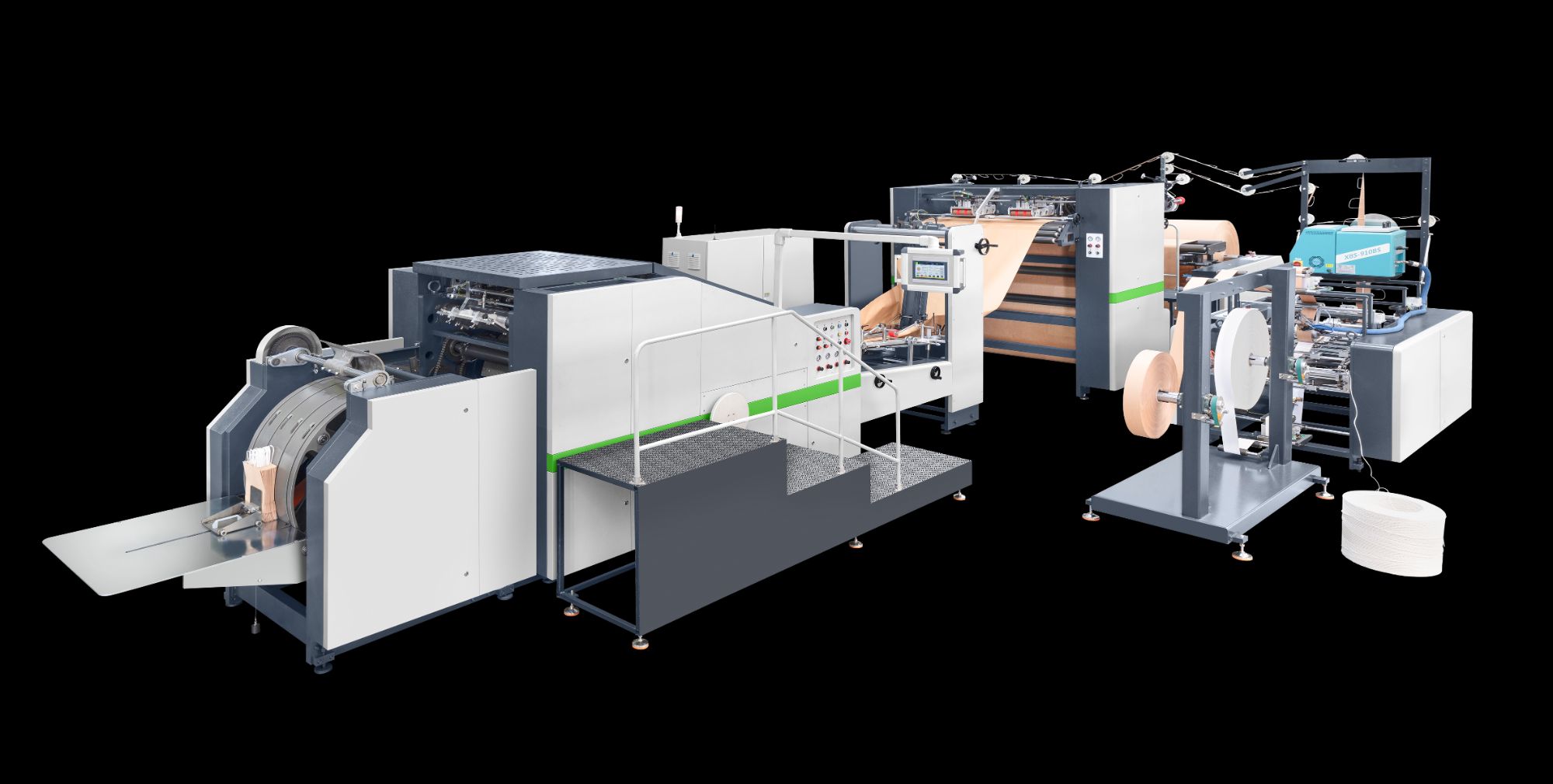
Most purchase orders list a bag's width, gusset, and height without clarifying whether those numbers describe the outside or the inside of the finished bag. The difference can be significant once side seams and bottom folds eat into usable space. A bag quoted as 16 by 6 by 12 inches externally might only offer 15.5 inches of flat width and a narrower gusset when filled, so a product that barely fits the spec sheet can arrive at the warehouse with torn corners or a bag that won't sit upright.
Material thickness is another place where buyers rely on a single number and get misled. Kraft paper is often quoted in basis weight—pounds per ream or grams per square meter—but two sheets with the same GSM can have different caliper depending on fiber density and finish. A 70 GSM machine-finished kraft will feel thinner and fold flatter than a 70 GSM ribbed or extensible kraft. If the bag has a twisted paper handle or a reinforced bottom patch, the effective carrying capacity also changes, even though the body sheet weight stays the same.
Before approving a sample, check the internal dimensions with the bag fully opened, not just laid flat. Fill it with the actual product, lift it by the handles, and watch what happens at the side creases and bottom fold. That quick test catches most mismatches in gusset depth, wall stiffness, and handle anchoring—details that never show up in a written quote.
Automation Level That Actually Pays Off for Small to Mid-Sized Shops
Most small to mid-sized shops don't need a fully lights-out operation to see real gains. The sweet spot usually sits somewhere between a few manual steps and total robotic takeover. It’s about automating the repetitive, time-consuming tasks that chip away at your margins—order entry, inventory sync, follow-up emails, or basic job scheduling—while leaving the judgment calls in human hands. This partial automation lowers labor costs without demanding a six-figure software overhaul or hiring a dedicated integration specialist you can’t afford.
What actually pays off is automating around the bottlenecks that happen every single day. For a small machine shop, that might mean connecting your quoting tool to your material supplier so prices update without a phone call. For a mid-sized bakery, it could be routing online orders directly to the production schedule and notifying the customer when their pickup window changes. These are unglamorous fixes, but they add hours back to your week. The shops that see the fastest payback aren’t the ones chasing the newest tech—they’re the ones who map out one painful manual process, automate just that, and then move to the next.
It also helps to think in terms of failure tolerance. A big enterprise can absorb a bot that misfiles a hundred invoices. A small shop can’t. So aim for automation that is narrow, reliable, and easy to override. If a scheduling rule misfires, you want a human to catch it in ten seconds, not spend a Tuesday undoing a mess. The right level of automation for your shop is the one that removes drudgery but still lets your team step in when a customer calls with a special request. That balance is where the real money gets saved.
Build Quality Checks You Can Do Without Visiting the Factory
You don't need a plane ticket to catch most quality problems. Ask the supplier to set up a live video call from the production floor at critical steps—like final assembly, welding, or testing. Have a worker hold a calibrated caliper to a key dimension and read the number on camera. It's not perfect, but it's immediate, and you'd be surprised how often a simple live walk-through reveals sloppy handling or tooling wear that polished reports hide.
Request a physical sample box before bulk production. Have the factory send first-off, last-off, and mid-run pieces pulled straight from the line, not specially prepared ones. Once they arrive, run your own dimensional checks, material hardness tests, or a quick tear-down in your lab. Pair this with paperwork that actually matters: material certificates, heat treatment logs, and process capability charts (Cpk). If the Cpk values dip below 1.33, that's a red flag for consistency—even if the samples look fine.
When you can't be there in person, hire a local third-party inspector to act as your eyes. Give them a punch-list of the exact defects you're worried about, and have them shoot timestamped video of random cartons being opened, not staged ones. Combine that with a daily data feed from the factory—hourly yield, top defect categories, downtime minutes. Watching those numbers trend upward or downward tells you more about real quality than a glossy audit summary ever will.
Hidden Costs That Show Up After the Machine Arrives
Once the crate is opened and the machine is bolted down, a wave of smaller invoices tends to follow. Often the facility itself isn't ready: you may need to reinforce the floor, run a new electrical line, add a dedicated air compressor, or install extra ventilation. Contractors rarely quote these modifications upfront, and if the machine's footprint doesn't match the existing layout, moving walls or rerouting utilities becomes an unplanned project.
Training is another recurring expense that gets underestimated. Operators don't become productive on day one, and while they're learning, output usually dips. If the supplier charges per day for on-site instruction or limits the number of trainees, you could be paying for multiple sessions. Software licenses, especially for CAD/CAM integration, often carry yearly renewal fees that weren't highlighted in the purchase agreement.
Finally, maintenance and consumables add up faster than expected. Spare parts for critical components aren't always included in the warranty, and lead times for replacements can force you to keep an expensive inventory. Energy consumption may be higher than the spec sheet suggested, especially if the machine runs at peak load often. And when an unexpected breakdown halts production, the real cost isn't the repair bill—it's the downtime that no spreadsheet accounted for.
How to Test Vendor Responsiveness Before You Commit
Your first inquiry can double as a responsiveness test, but it only works if you make the request specific and note the clock. Send a short email with a clear question—say, asking for a lead time on a custom order or a clarification about a warranty clause—and give a reasonable window, like two business days. Watch not just how fast they reply, but whether the reply actually answers what you asked or just promises a follow-up that never arrives.
Pick up the phone during their advertised business hours and ask something that can’t be answered with a canned FAQ response. For example, ask how they handle a partial shipment delay or whether they can adjust a service schedule mid-contract. A responsive vendor will either give you a straight answer on the spot or transfer you to the right person and follow up the same day. If you get voicemail, note how long it takes for a return call and whether the callback comes with a real name, not just a generic department line.
Before signing anything, ask for two or three references and then call them with one pointed question about communication: “When something went wrong, how quickly did this vendor get back to you?” Also ask the vendor to outline what happens after you raise a concern—there should be a clear point of contact and a stated response window. If they hesitate or keep the process vague, that’s usually a preview of how hard they’ll be to reach once the contract is signed.
FAQ
For a small workshop, 50 to 150 bags per minute is usually a sensible starting point, but only if that matches real order flow. Pull your average monthly orders from the last six months, then add a 20 to 30 percent buffer for growth. Buying a machine just because it is the fastest on paper often leads to idle capacity and higher upfront spending.
Bag style changes everything. Flat bottom, square bottom, V-bottom, and bags with windows or handles all need different forming stations, molds, and sometimes extra modules. Before you compare machines, list the exact bag types your customers actually order—especially any food-grade or custom designs. A general-purpose model may save money now but lock you out of higher-margin specialty bags later.
Fully automatic lines cut labor costs but bring a steeper learning curve and more complex setup for small batches. If your monthly output is under 300,000 bags and your product range changes frequently, semi-automatic equipment often gives faster payback and more flexibility. Reserve full automation for stable, high-volume runs where labor is expensive.
Air compressors, printing units, die or mold changes, freight, installation, operator training, spare blades, and voltage adapters are commonly left out of quotes. Ask the supplier for a complete landing cost checklist that includes workshop power requirements and any special foundation or piping work. Otherwise, you may face several thousand dollars in surprise expenses after delivery.
Never rely on brochure specifications. Send your own paper rolls or sheets to the factory and ask them to run a trial while recording video, or visit in person with your material. Insist on continuous running for at least one hour at both the lowest and highest weight you intend to use, and watch how well the bottom seals and the bag keeps its shape.
At minimum, look for a one-year warranty, a clear list of wearable parts, an English operator manual, remote video diagnosis, and a local or regional service contact. Ask how fast they can respond to a critical breakdown—ideally with a concrete solution within 48 hours. Also confirm whether PLC or control software updates are free or paid.
Long automatic lines can easily need 15 to 20 meters of floor space plus three-phase power. Measure your door width, column spacing, and floor load capacity before shortlisting models. If your space is rented, older, or hard to modify, choose a modular design that can be moved in sections and expanded later without major construction.
Be cautious when a quote is far below the market average, the supplier refuses a real trial run, hides the brands of core components like motors or PLCs, or demands unusually high prepayment. Vague answers about existing customers are another warning sign. Ask for a live video walkthrough of the factory floor and at least three customer references from your region before signing anything.
Conclusion
Too many buyers start by comparing horsepower or price, but the machine that pays for itself is the one matched to how many bags you actually need per shift. If your current order volume is, say, 8,000 bags a day, don't buy a machine rated for 30,000 just because the price looks close—you'll be paying for speed you never use and dealing with more complex changeovers. Instead, list your three best-selling bag sizes and the paper GSM you commonly run. Thin 40gsm paper behaves very differently in the folding and gluing stages than 80gsm kraft, and a model optimized for light snack bags may wrinkle or jam when you switch to heavier grocery sacks. For small to mid-sized shops, mid-level automation—auto count, simple PLC touchscreen, quick size change—usually beats full servo-driven lines. You rarely need automatic stacking with robot arms if you have two people on the floor.
When you can't visit the factory, ask for a video of the exact model running your target paper weight and size, not a promotional clip. Look for wobble in the unwind stand, how smoothly the bottom patch is applied, and whether the operator has to hand-adjust anything mid-run. After arrival, the hidden costs show up: customs broker fees, voltage transformer, spare parts that wear out sooner than promised, and training days that eat into production. Before committing, test vendor responsiveness by sending a technical question on a Friday evening or asking for a replacement part quote; if they take four days to answer with a vague reply, that's what you'll get when the machine is down. Choose a supplier who asks about your specific bag dimensions and paper type, not one who just sends a generic spec sheet.
Contact Us
Contact Person: CARA
Email: [email protected]
Tel/WhatsApp: +8619519778302
Website: https://www.rokinmachinery.com