

Top Preserved Flower Bouquets to Elevate Your Space with Eternal Charm
2026-09-29
Let’s be honest: fresh flowers are lovely until they start drooping by day three. Preserved bouquets, though? They keep their petals, texture, and color intact for months—no water, no wilt, just eternal charm. If you want that lasting lift without the upkeep, PHLEEYA’s top picks turn any shelf or table into a statement. Here’s what to look for.
Where preserved blooms outshine fresh-cut stems
There is a quiet magic in stems that never wilt. Preserved blooms carry the memory of their garden days, yet they stay suspended in time—no drooping petals, no cloudy vase water, no hurried trips to the florist before guests arrive. They ask for nothing but a spot out of direct sunlight, and in return they offer months, sometimes years, of color and texture that fresh flowers can only promise for a week.
What makes preserved arrangements truly outshine their fresh-cut counterparts is the freedom of form. Dried grasses, bleached ferns, dyed hydrangeas, and sculptural seed heads can be bent, trimmed, and layered into shapes that would be impossible with living stems. You can hang them upside down from a beam, tuck them into a ceramic urn that never holds water, or build an airy centerpiece that won't shed pollen onto the tablecloth.
There is also a certain honesty in their fading. A preserved bloom doesn't pretend to be something it is not. It stands exactly as it was when cut—no slow decline, no guilt over forgetting to change the water. In a world that constantly pushes us toward the next fresh thing, these quiet stems reward the eye that lingers and the room that asks for beauty without the upkeep.
Matching your bouquet to the mood you want to keep
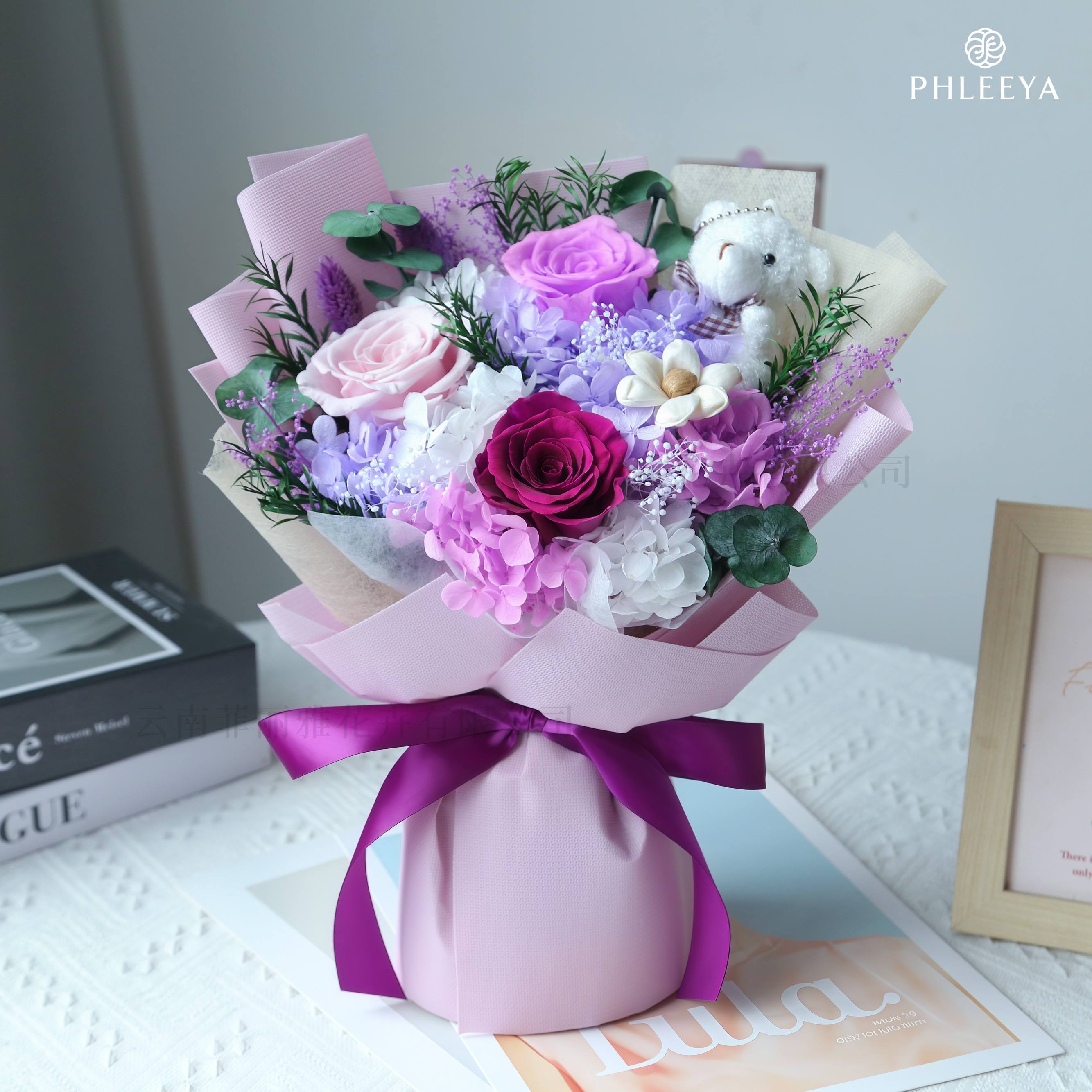
The first thing to consider is color temperature, but not in the way most guides frame it. Instead of assigning fixed meanings to pink or red, look at the overall saturation and brightness. A bouquet washed in pale, dusty tones—lavender grey, buttercream, sage—tends to slow your breathing and keep the room feeling soft, almost like a visual exhale. For a mood you want to preserve as calm and unhurried, lean into these low-contrast palettes. If the mood is more about momentum or playful energy, choose blooms that sit close together on the color wheel but vary in intensity: coral next to tangerine, magenta next to plum. The slight tension between hues keeps the eye moving without tipping into chaos.
Texture and form carry just as much emotional weight as color. A bouquet heavy with rounded, full-petaled flowers—ranunculus, peonies, garden roses—feels generous and comforting, almost like a visual embrace. To hold onto a mood of warmth and safety, cluster these soft shapes and let them spill slightly over the vase. On the other hand, if you want to keep a sense of clarity or gentle alertness, mix in spiky or upright elements: veronica, snapdragon, or even a few bare branches. Their vertical lines create a quiet structure that prevents the arrangement from becoming too sleepy. Avoid the temptation to overfill; negative space between stems lets each texture speak, which in turn keeps the mood from feeling cluttered.
Finally, consider scent and movement as invisible mood setters. A bouquet that includes a few stems of eucalyptus, mint, or rosemary releases a clean, green fragrance that can anchor a room in a state of focused calm. If the mood you want to keep is more nostalgic or intimate, choose blooms with a faint, sweet perfume—stock, freesia, or a single gardenia tucked low. Watch how the stems move in the air from a window or fan; a loose, asymmetrical shape with trailing greenery will sway gently and keep the atmosphere feeling alive rather than staged. The goal is not to match a color to an emotion like a formula, but to build a small ecosystem of stems that quietly reinforces the way you want the space, and yourself, to feel.
Placing flowers so they soften a room’s hardest lines
A stark rectangular room can feel like a box. Flowers are one of the simplest ways to break that rigidity, but only if you place them with intent. Instead of centering a vase on the coffee table, push it toward a sharp corner or let a low bowl sit against a long, unbroken wall. The organic sprawl of stems and petals interrupts the straight edge, drawing your eye away from the harsh boundary and into the soft, irregular shape of the arrangement.
Think about the lines you want to soften. A tall, narrow vase on an entryway console might echo the verticality of a nearby doorframe, but if you fill it with trailing greenery that spills over the rim, it cuts across that vertical line. On a windowsill, cluster three small vessels of different heights rather than one symmetrical piece. The uneven clusters create gentle visual noise, softening the hard horizontal line of the sill without blocking the light.
Choose blooms with soft, cloud-like silhouettes—hydrangeas, ranunculus, or even dried grasses—and avoid trimming every stem to the same length. Let one or two stems lean out at an odd angle. Position them where two hard planes meet, like the corner where a wall meets a kitchen counter, or at the end of a long rectangular dining table. The goal isn't a perfect arrangement, but a small interruption that makes the room feel less measured and more lived-in.
What makes preserved petals feel soft for years
The softness doesn't come from a coating. Fresh petals feel silky because their cells are pumped full of water. Cut them and that water vanishes within days, leaving a crisp shell. Preserved petals keep their give by trading that water for glycerin. The petals are stood in a warm glycerin solution, and as the water evaporates from their edges, the glycerin is drawn up through the stem and into every cell. It acts like a built-in cushion, keeping the cell walls from collapsing into sharp, brittle folds.
This isn't the same as drying. A dried petal loses all internal structure and becomes paper-thin. With glycerin, the petal actually gains a little weight and density. The surface stays smooth, and if you rub it between your fingers, it has a plush but firm feel—more like fine suede than fresh silk, but never crunchy. The waxy cuticle on the outside also remains intact, which helps lock in that supple texture.
What keeps it soft for years is that glycerin is hygroscopic. It slowly exchanges moisture with the air, absorbing a bit when humidity rises and releasing it when the room turns dry. That constant, tiny adjustment prevents the petals from stiffening or cracking. So the softness isn't static; it breathes with your room. Keep them away from direct sun and extreme dryness, and that tactile softness can outlast most fresh bouquets by a decade or more.
Mixing dried textures without losing that airy look
Dried stems, seed heads, and papery blooms hold their shape forever, but too often they end up looking heavy and flat once combined. The trick is to treat every piece as if it still had a bit of wind moving through it. Start with a base of something feathery—like pampas or bunny tails—and let it take up more visual space than its actual mass suggests. Then add just one or two stiffer elements, such as dried eucalyptus seed pods or small twigs, but push them to one side rather than centering them. The asymmetry keeps the arrangement from feeling like a museum display.
Another move that works well is to scatter pieces of different scale rather than grouping them by type. A single tall grass stem next to a small cluster of immortelle flowers creates a rhythm that mimics the way plants grow in open fields. Avoid packing anything tightly—if you can see through parts of the arrangement, that's what gives it the airy quality. A good test is to place the dried mix near a window and watch how the light falls through the gaps. If the shadows are solid blocks, pull a few stems out and let the air back in.
The five-minute ritual that keeps stems looking new
Fresh-cut stems often fade faster than they should, not because they are old, but because the water around them turns cloudy and sour within a day or two. A five-minute ritual can reverse that decline: empty the vase, rinse the stems under cool running water, and snip off the bottom inch at a sharp angle with clean scissors or shears. While the stems are out, scrub the vase with warm water and a drop of mild dish soap, then refill it with lukewarm water and the measured amount of flower food. Slip each stem back in before the cut ends have a chance to seal over, and they will drink as if they were just brought home from the market.
What makes this ritual so effective is that it attacks the two main causes of wilt at once. Bacteria and debris cling to the submerged part of the stem, blocking the tiny channels that pull water upward. A fresh cut removes that clogged section, while rinsing and a clean vase keep new contaminants from moving in right away. Doing this every two or three days, rather than waiting for the water to look dirty, keeps the stems in a steady state of easy hydration. It feels like a small chore, but over the course of a week it can add several days of upright, vibrant life to a bouquet that would otherwise begin to droop by midweek.
The beauty of the five-minute ritual is that it works with almost any stem, from sturdy roses to delicate ranunculus, and it requires no special tools. Even a quick re-cut under running water and a swish of the vase can make a visible difference overnight. As you repeat the routine, you begin to notice which stems drink fastest, which ones prefer cooler water, and which leaves should be stripped away so they do not sit below the waterline. That small bit of attention turns a passive decoration into a living arrangement that keeps looking new long after the first day’s freshness has passed.
FAQ
Preserved flowers go through a process where their natural sap is replaced with a glycerin-based solution, so they keep a soft, fresh feel and vibrant color instead of turning brittle and faded like typical dried blooms.
With proper care, most preserved bouquets last between one and three years. Humidity and direct sunlight are the main enemies, so keep them in a cool, dry spot away from windows.
Yes. The preservation process typically removes or neutralizes pollen, and since the flowers don't shed or release allergens into the air, they're often a comfortable option for allergy sufferers.
They shine in spaces with indirect light and stable temperature, such as a bedroom shelf, living room console, or a desk away from heating vents. Avoid bathrooms and kitchens where moisture can shorten their lifespan.
Absolutely. You can arrange them in dry vases, weave them into wall hangings, tie them with velvet ribbon as a standalone piece, or mix them with dried grasses and seed pods for a more textured, sculptural look.
Not really. A gentle pass with a soft brush or a cool hairdryer on low speed removes dust. Avoid water, misting, and direct sun, and they'll stay beautiful without any other maintenance.
Fresh flowers wilt within a week, but a preserved bouquet becomes a lasting reminder of the occasion. You can also choose colors and shapes that match the recipient's personality, creating something far more personal than a generic supermarket bunch.
Conclusion
Preserved flower bouquets have a quiet way of reshaping a room, and the best arrangements do far more than mimic fresh-cut stems—they outlast them without demanding water, trimming, or worry. When you choose a preserved bouquet, you're not just buying decor; you're capturing a specific emotional register. Soft blush and cream tones hold a calm, romantic atmosphere, while deeper burgundy or eucalyptus greens anchor a space in grounded warmth. Matching the palette to the feeling you want to keep is half the charm. Place a rounded arrangement near a stark corner or along a sharp-edged console, and watch how it softens those rigid architectural lines, making the whole room breathe a little easier.
What makes these petals stay touchably soft for years is the glycerin-based preservation process, which replaces natural sap while keeping the texture supple. To keep that airy look, mix preserved roses with dried grasses, bunny tails, or lunaria—just avoid overcrowding so each stem has room to move. And when dust settles, a five-minute ritual is all you need: use a soft-bristle brush or a cool hair dryer on low to gently lift particles, never water, never direct sun. With that light upkeep, your bouquet remains as vivid as the day you placed it, proving that eternal charm isn't a myth—it's just good plant chemistry and a little thoughtful placement.
Contact Us
Contact Person: Mr. Luo
Email: [email protected]
Tel/WhatsApp: 86 18100895505
Website: https://www.feiliyaflowers.com/en/