

Top Landing Craft Barge Manufacturer for Heavy-Duty Marine Projects
2026-07-26
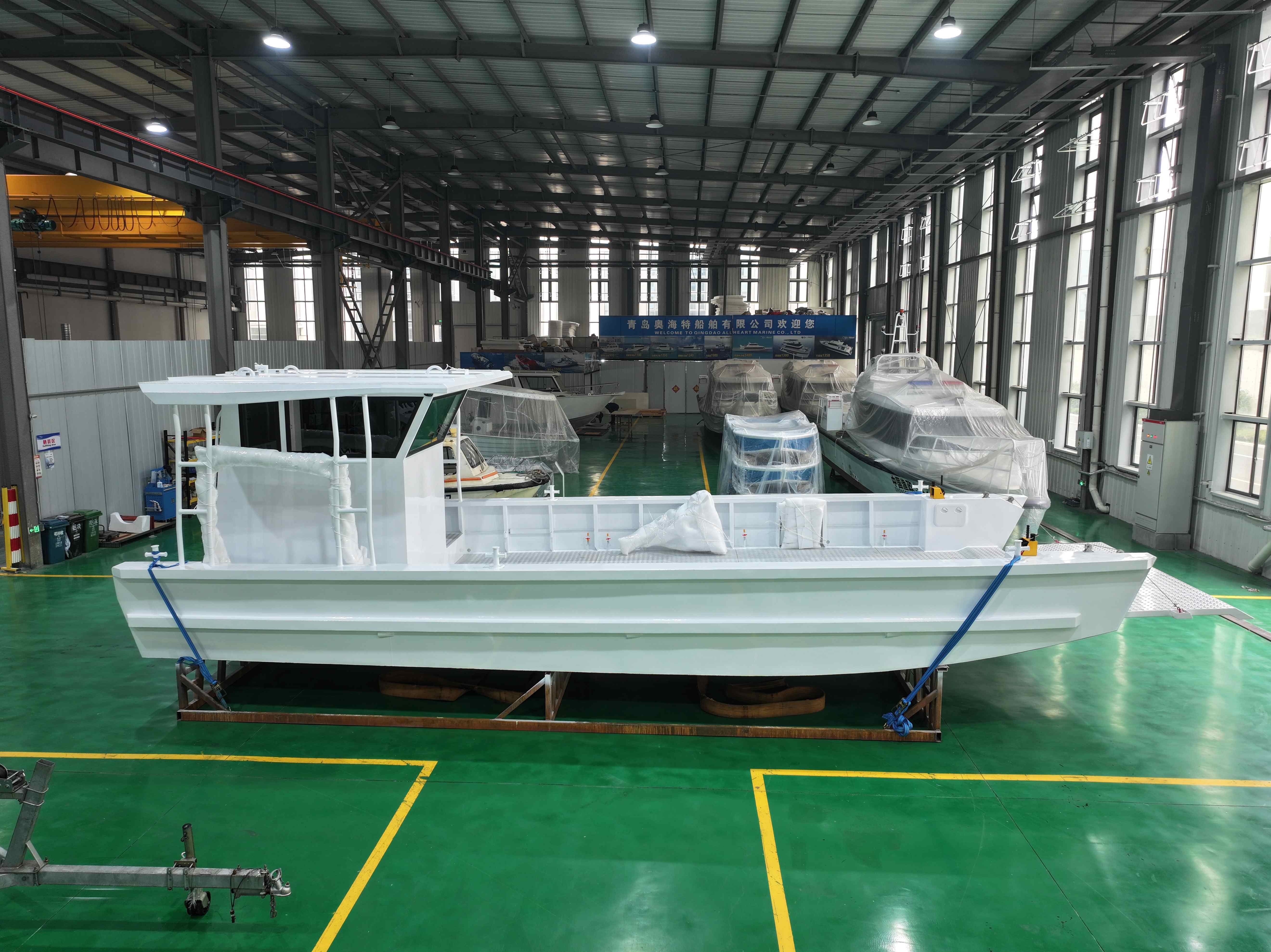
When heavy-duty marine projects demand reliability, the choice of landing craft barge manufacturer can make or break your operation. Allheart isn't just another name in the industry—it's the partner you need when the job requires rugged performance and unwavering dependability. From transporting oversized equipment to navigating challenging waters, their craft are engineered to excel where others fall short. What sets them apart? It's not just about building barges; it's about understanding the real-world demands of marine logistics and delivering solutions that keep your projects moving forward. Discover how Allheart redefines heavy-lift capability with a fleet designed for the toughest assignments.
The Anatomy of a Barge Built for Heavy Lifting
A heavy-lift barge isn't just a floating platform—it's a carefully engineered vessel where every structural element serves a specific purpose. The hull often features a double bottom and multiple longitudinal bulkheads, creating a network of watertight compartments that add stiffness and redundancy. This cellular construction distributes immense concentrated loads, such as a 3,000-ton module, across the entire structure while keeping the deck remarkably stable, even in less-than-ideal sea states.
Above the main deck, the reinforcement becomes visible. Massive longitudinal girders, sometimes over two meters deep, run the length of the cargo area, providing the backbone needed to resist bending moments. Transverse web frames are spaced at close intervals, tying the girders together and preventing localized buckling. On many barges, the deck itself is an integral part of the strength system—a thick, stiffened steel plate that works in tandem with the under-deck framing to carry loads without excessive deflection.
The ballast system is what transforms raw strength into precise control. Powerful pumps, often capable of moving thousands of cubic meters of water per hour, feed a network of segregated tanks located along the sides and bottom. By selectively flooding or emptying these tanks, operators can trim the barge to offset uneven loads, counteract the weight of cargo being skidded aboard, or even partially submerge the deck for float-over installations. This level of adjustability ensures that the center of gravity stays low and the vessel remains within its stability envelope, no matter how awkward the payload.
Tailored to the Task: Why Off-the-Shelf Won’t Cut It
Generic solutions come with a hidden cost: they force your workflow to bend around their limitations. Every organization has its own rhythm, its own set of priorities and quirks that off-the-shelf tools rarely accommodate. When you have to juggle workarounds just to make a basic process fit, you're not just wasting time—you're inviting errors and frustration that compound over time.
A tool built specifically for your needs doesn't just check boxes; it anticipates the next step. Instead of wading through features you'll never use, a tailored system puts the controls you actually rely on front and center. The result is less cognitive load, fewer missteps, and a workflow that feels almost invisible because it mirrors the way your team already thinks and operates.
There's also the matter of growth. Off-the-shelf might look affordable upfront, but scaling it often means paying for seats you don't need or hacking together integrations that break with the next update. A custom approach is built with your trajectory in mind, adapting as you expand rather than forcing you to constantly switch platforms or settle for rigid constraints.
Steel, Welds, and Coatings: The Triple Defense Against Corrosion
Corrosion protection in steel structures typically relies on a layered approach. The base material itself can be engineered to resist rust—weathering steel develops a dense patina that slows further attack, while stainless grades use chromium to form a self-healing oxide film. These choices set the stage, but they’re rarely enough on their own, especially in harsh environments.
Welds introduce a new set of challenges. The heat-affected zone can have altered microstructure and residual stresses, making it more prone to corrosion. Matching filler metals carefully and controlling heat input during welding help maintain uniformity. Post-weld treatments, like pickling and passivation for stainless steel, restore the surface’s protective layer. When combined with coatings—such as zinc-rich primers that provide galvanic protection and top coats that block moisture and oxygen—the steel, weld, and coating work together. This triple layer of defense minimizes the risk of early failure and extends service life without overcomplicating maintenance routines.
From the Shipyard to the Sea: A Timeline You Can Trust
Every vessel begins as a skeleton of steel, forged and welded in the controlled chaos of the shipyard. From the initial keel laying to the final coat of paint, each stage is meticulously documented. We’ve cut through the noise to bring you a timeline that’s grounded in verified milestones—no marketing fluff, just the real story of how a ship transforms from a blueprint into a seaworthy giant.
Our sources are ship engineers, port authorities, and the shipbuilders’ own logs. This isn’t a glossy brochure timeline; it’s a record that reflects the delays, the breakthroughs, and the quiet moments when a vessel first floats. Whether it’s the installation of a massive propeller or the nerve-wracking sea trials, we track the events that truly matter. You’ll see how one decision in the dry dock can ripple across years of service at sea.
The timeline doesn’t stop at launch day. We follow the ship into its operational life, noting refits, reroutes, and unexpected detours. This is a living document, updated when satellite data and shipping registries confirm a change. For anyone who’s ever watched a cargo ship disappear over the horizon and wondered about its story, this timeline is your backstage pass—built on data, not guesswork.
Stories from the Deck: Barges That Transformed Projects
Every seasoned project manager knows that the right equipment can make or break a timeline. In our early days working on a remote river crossing, we had to deliver over 200 tons of structural steel to a site with zero road access. The solution came in the form of a modular deck barge we customized on the fly—adding ramps and anchor points overnight. It wasn't just a floating platform; it became the beating heart of the operation, shuttling materials, crews, and even a mobile crane back and forth for six weeks straight.
Another project had us facing a tight deadline on an offshore wind farm installation. The weather window was brutal, and conventional vessels couldn’t handle the constant loading and unloading of turbine blades. We deployed a specially fitted deck barge with a dynamic positioning system that kept it steady in choppy waters. What stood out wasn’t the technology, though—it was the crew’s inventive use of the deck space, turning it into a staging area that doubled our daytime productivity.
Perhaps the most dramatic transformation happened during a flood-relief bridge rebuild in a flood-ravaged valley. With roads washed out, we rigged a pair of old deck barges together as a makeshift floating factory. Welding stations, storage containers, and even a break room were lashed onto the deck. That setup not only shaved three months off the recovery schedule but also inspired a permanent shift in how we approach logistics in disaster zones. Sometimes the simplest platforms carry the heaviest loads—and the best stories.
Keeping Your Fleet Afloat: Support That Goes Beyond the Build
When a vessel leaves the shipyard, the real test begins. We stay by your side long after delivery, providing hands-on support that keeps operations smooth and downtime minimal. Our team embeds with yours—whether troubleshooting a propulsion anomaly dockside or guiding crews through complex system overhauls at sea. It’s not just about fixing things; it’s about anticipating needs before they become crises.
Every fleet has its own rhythm, and our support molds around it. From round-the-clock technical assistance to on-demand parts delivery in remote ports, we make sure you’re never left waiting. Our engineers don’t just read manuals—they know every weld and wire of your vessel, because they were part of the build. That depth of familiarity translates into faster resolutions and practical advice that only comes from living and breathing the project.
We’ve pulled all-nighters alongside captains, redesigned workflows to save fuel, and even retrofitted systems mid-voyage when it mattered most. Our commitment doesn’t tick down with a warranty clock—it grows with your trust. When you call, you get a partner who’s invested in your mission, not a ticket number in a queue. That’s the difference between a builder and a lifetime ally on the water.
FAQ
The ideal manufacturer combines decades of hands-on engineering experience with a deep understanding of how these vessels perform under extreme loads. They use high-tensile steel and reinforced welding techniques, offer tailored deck layouts, and provide ongoing support that goes beyond the sale—like on-site training and spare parts readiness. It’s about building a barge that won’t let you down when you’re pushing its limits day after day.
They start with materials that resist corrosion, like marine-grade aluminum or specially treated steel, and then apply multi-layer protective coatings. The design itself is rugged—reinforced bow ramps, double-bottom hulls, and sacrificial anodes are standard. Real-world testing in choppy seas and constant exposure to saltwater is part of the process, not an afterthought.
Look beyond the payload number. A hydraulically operated bow ramp with a wide clearance, sturdy deck lashing points, and a ballast system that keeps the vessel stable while loading uneven weights are critical. Also, a propulsion package that delivers enough thrust to move fully loaded barges against strong currents makes all the difference.
No two projects are the same. A barge hauling construction equipment to a wind farm needs a different deck strength and crane foundation than one ferrying vehicles to a remote island. Top builders work through your operational scenarios and modify the design—be it adding a moon pool, reinforced beaching legs, or extra accommodation—so the vessel fits the job instead of the other way around.
It’s a fine line. They optimize hull shape, often using a wide, shallow-draft design that provides stability without sacrificing speed. Advanced propulsion, like twin waterjets or azimuth thrusters, allows tight turns even when carrying near-maximum loads. Computational fluid dynamics simulations are used to tweak the flow and ensure you don’t lose control when the deck is full.
The hull does the heavy lifting—literally. A well-designed hull reduces drag, which cuts fuel consumption and lets you operate efficiently in both shallow rivers and open seas. Features like a wave-piercing bow and tunnel stern protect the propellers and improve seakeeping. When you’re working in two-meter swells with a hundred tons on deck, that design keeps you moving safely.
They treat electronics as core components, not add-ons. During the build, they pre-wire for radar, GPS, AIS, and communication suites, making sure the bridge layout gives the operator clear sightlines and easy access. Safety systems like fire suppression, bilge alarms, and man-overboard recovery are woven into the deck plan. It all runs through a central monitoring system that can be serviced by any qualified technician.
The go-to materials are high-strength, low-alloy steels with certified impact resistance for the hull and ramp. For decks, they often use anti-slip steel plate or aluminum tread plate that won’t warp under tracked vehicle traffic. In areas prone to wear, like the ramp hinges and towing bits, stainless steel or hardened bushings are common. Every weld is inspected, and the entire structure is designed so that if a section gets damaged, it can be cut out and replaced without compromising the barge’s integrity.
Conclusion
In heavy-duty marine projects, the landing craft barge is more than a vessel—it’s a precision tool engineered from the keel up. A leading manufacturer starts with a robust anatomy: reinforced hulls, extra-strength frames, and wide, stable decks designed to bear immense loads without flex. Unlike generic off-the-shelf models, these barges are tailored to specific missions—whether hauling 200-ton excavators, setting wind turbine components, or serving as floating work platforms in remote anchorages. The build process marries advanced steel grades with deep-penetration welds and multi-layer high-solids coatings, forming a triple defense against saltwater corrosion and abrasion. This focus on material integrity and custom design means every barge leaving the shipyard is a bespoke asset, not a compromise.
Beyond the build, the manufacturer’s value shines in reliable timelines and real-world performance. With streamlined project management and in-house fabrication, delivery stays on schedule—critical when mobilization windows are tight. Stories from the deck prove the point: a landing craft that turned a logistical nightmare into a smooth transport operation for a bridge construction crew, another that enabled year-round maintenance on an offshore oil platform. And the partnership doesn’t end at delivery; dedicated support teams provide spare parts, technical advice, and periodic refits to keep fleets operational for decades. This holistic approach—combining heavy-lift capability, anti-corrosion engineering, and lifecycle support—is what sets the top landing craft barge manufacturer apart in the demanding world of marine infrastructure.
Contact Us
Contact Person: Benny Hu
Email: [email protected]
Tel/WhatsApp: +8618354225697
Website: https://www.allheartmarine.com/