

Top 10 Heterocyclic Intermediates Essential for Drug Synthesis
2026-11-02
Every blockbuster drug hides a structural secret—heterocyclic rings that bind, block, or activate biological targets. Yet only a handful of these intermediates carry the real synthetic load. In this list, we’re moving past textbook examples to the ten heterocyclic workhorses that repeatedly appear in drug pipelines. From pyridine to pyrimidine and beyond, each entry earns its place through versatility, availability, and hard-won reliability. DSL Chemicals has tracked these demand patterns across global synthesis projects, and the results might challenge your current go-to intermediates.
Pyridine’s Quiet Reign in Drug Synthesis
Most discussions of medicinal chemistry gravitate toward flashy functional groups or exotic ring systems, yet pyridine slips into more approved drugs than almost any other heterocycle. The six-membered ring with a single nitrogen looks deceptively simple, but that lone pair and the ring's electron-poor nature let it tune solubility, block metabolic hot spots, and engage in hydrogen bonding without dominating a molecule's character. It often acts as a silent partner, improving pharmacokinetics while letting other fragments drive potency.
Scan the labels of blockbuster drugs and you will find pyridine hiding in plain sight: esomeprazole, imatinib, nifedipine, and loratadine all lean on this ring to balance polarity and target binding. In kinase inhibitors, a pyridine nitrogen frequently grabs the hinge region of ATP-binding pockets, giving selectivity with minimal extra bulk. Even when the pyridine is not part of the final pharmacophore, chemists use it as a temporary directing group in C–H activation or cross-coupling steps, then remove it after the heavy lifting is done.
The quiet part comes from how rarely pyridine gets credit. It rarely makes headlines, yet its electron-withdrawing character stabilizes reactive intermediates, its basicity can be fine-tuned by substitution, and its planar shape slots neatly into aromatic stacks. That combination of modest size and versatile electronics means medicinal chemists reach for pyridine not because it is exotic, but because it works so often that it has become a default choice—a background workhorse that keeps drug candidates alive through the gauntlet of development.
Piperidine: More Than Just a Simple Ring
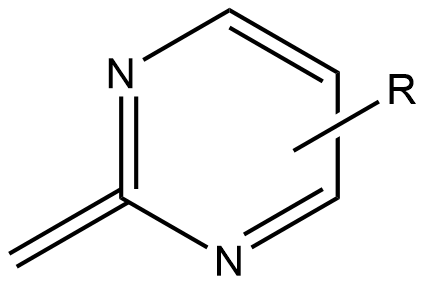
Piperidine is often dismissed as little more than a saturated six-membered ring with a nitrogen atom, but that view overlooks the conformational and electronic nuances that make it a workhorse in organic and medicinal chemistry. The nitrogen lone pair is not locked in place; rapid inversion between chair conformers occurs, and the preferred orientation of substituents on nitrogen can affect both basicity and reactivity. Unlike its aromatic cousin pyridine, piperidine offers a degree of three-dimensional flexibility that can be tuned through ring substitution or by placing the nitrogen within fused or bridged systems.
In drug design, the piperidine motif appears in an astonishing range of bioactive molecules, yet its contribution is rarely passive. The secondary amine can serve as a hydrogen bond donor or acceptor, adjust the pKa of the molecule to improve solubility or membrane permeability, and impose a conformational bias that helps a ligand adopt its bioactive shape. A single methyl group added to the ring can dramatically shift metabolic stability or receptor selectivity, illustrating why medicinal chemists treat piperidine not as a simple scaffold but as a finely adjustable module.
Beyond its role as a building block, piperidine participates directly in synthesis as an organocatalyst and a base. Its use in Knoevenagel condensations and as a precursor to enamines highlights a reactivity profile that extends beyond what one would expect from a simple secondary amine. The ring also appears in numerous alkaloids and pharmaceuticals, where stereochemical control around the piperidine core often dictates biological activity. Whether in catalysis, medicinal chemistry, or natural product synthesis, piperidine consistently proves that its structural simplicity belies a remarkable functional depth.
Indole’s Journey from Tryptophan to Therapeutics
Indole begins as an unremarkable fragment tucked inside tryptophan, but a single enzymatic clip by microbial tryptophanase in the gut sets it free. What emerges is no mere byproduct—this bicyclic molecule drifts across the intestinal lining, slips into circulation, and nudges receptors that guard barrier integrity, quench inflammation, and even shape the behavior of distant organs. The same scaffold that gives jasmine and orange blossoms their intoxicating notes turns out to be a quiet chemical messenger, running errands between our resident bacteria and our own cells.
That dual life is what makes indole a magnet for drug discovery. Medicinal chemists have spent decades grafting halogens, methyl groups, and polar arms onto its core to sharpen affinity for targets like the aryl hydrocarbon receptor, GPCRs, and kinase pockets. Some derivatives hold back neutrophil swarms in models of acute lung injury; others coax anti-inflammatory cytokines from macrophages or calm hyperactive gut motility. The challenge has never been a shortage of leads—it is that indole’s ubiquity in biology makes selectivity hard to earn, and many promising analogs stall on the climb from petri dish to patient.
Yet the journey keeps paying dividends. From the indole-3-carbinol found in cruciferous vegetables to engineered prodrugs that release active species only inside tumors, this humble tryptophan fragment has become a versatile platform rather than a finished answer. Its story is a reminder that therapeutic breakthroughs sometimes hide in plain sight—waiting inside an amino acid, shaped by evolution, and waiting for chemists to listen.
Quinoline’s Aromatic Edge in Modern APIs
Few heterocycles manage to balance synthetic tractability, metabolic stability, and target-binding geometry as cleanly as quinoline. Its fused benzene–pyridine system offers a rigid, planar core that can be decorated at nearly every position, yet the nitrogen’s lone pair remains available for hydrogen bonding or coordination without imposing an excessive basicity penalty. This subtle electronic gradient, electron-rich carbocycle paired with electron-poor pyridine, gives medicinal chemists a way to tune solubility and off-target interactions while preserving the scaffold’s shape.
In contemporary kinase programmes, quinoline has moved well beyond its antimalarial legacy. The ring appears in a string of approved multikinase inhibitors, where its aromatic edge contributes to a compact, hinge-binding motif that tolerates substituents extending into solvent or hydrophobic pockets. The C-4 and C-7 positions, in particular, have become reliable attachment points for solubilising groups or halogens that exploit halogen-bonding contacts, letting teams dial in selectivity among closely related kinases without rebuilding the core.
That versatility explains why quinoline keeps reappearing in late-stage portfolios, from oncology to anti-infectives. Rather than being a default choice, it tends to earn its place when a flat, electron-tunable aromatic system is needed to bridge two pharmacophoric regions. The result is a scaffold that feels neither dated nor overused, but rather like a quietly resilient tool in modern API design.
Imidazole and Triazole: Small Rings, Big Binding Payoffs
The five-membered azole rings pack a surprising amount of binding versatility into a very small footprint. Imidazole, with its two nitrogen atoms arranged in a 1,3-pattern, can slip into tight enzyme pockets and simultaneously donate and accept a hydrogen bond. That dual character lets it mimic both the hydrogen-bonding face of an amide and the proton-shuttling side chain of histidine. Triazoles push this further: the 1,2,3-isomer adds a third nitrogen, stiffening the ring and creating a strong dipole that can pick up additional polar contacts without enlarging the scaffold. Even the 1,2,4-isomer, with its nitrogen pair separated by a carbon, offers a different vector for metal chelation or π-stacking.
Medicinal chemists have learned to lean on these rings when replacing larger, more flexible groups. A triazole can stand in for a metabolically labile amide bond, keeping the same approximate distance between two pharmacophore elements while resisting hydrolysis. In kinase inhibitors, an imidazole often reaches into the adenine pocket and grabs the hinge region with a single, well-placed hydrogen bond. The payoffs show up in binding assays as tighter Kd values, but also in pharmacokinetic profiles: these rings add polarity without piling on heavy atoms, and they avoid the rotatable bonds that often hurt oral bioavailability. They are not inert spectators, though; an imidazole can be protonated at physiological pH, shifting its hydrogen-bonding preference and sometimes altering selectivity between closely related targets.
The small rings, big payoffs theme rests on a simple thermodynamic argument. Preorganized, rigid scaffolds lose less entropy upon binding, and the azole rings deliver that rigidity at the cost of only two or three non-hydrogen atoms. When a drug candidate replaces a flexible chain with a triazole, the resulting complex can gain several kilocalories per mole in binding free energy purely from reduced conformational sampling. That advantage often translates into better target occupancy at lower doses, fewer off-target effects, and a cleaner path through preclinical development. In fragment-based screening, imidazole- and triazole-containing fragments consistently rank among the most efficient starting points, precisely because their small size belies their capacity for high-quality interactions.
Morpholine and Piperazine: The Pharmacokinetic Fixers
Morpholine and piperazine rarely get the spotlight, but they quietly sort out a molecule's worst pharmacokinetic habits. Both rings sit in that sweet spot between rigid aromatic systems and floppy aliphatic chains, giving medicinal chemists a way to tune basicity, solubility, and metabolic stability without rebuilding the entire scaffold. Morpholine's oxygen pulls electron density away from the nitrogen, knocking the pKa down roughly two units compared to piperidine. That single shift often means the difference between a compound trapped in acidic lysosomes and one that slips across membranes. Piperazine, with its second nitrogen, offers a built-in handle for further substitution - keep it basic when you need solubility, cap it when you want to dial back hERG or boost brain penetration.
The real value shows up in late-stage optimization. A lead with decent potency but poor oral exposure might get a morpholine for a piperidine and suddenly show acceptable clearance and absorption. The oxygen also blocks a common metabolic soft spot, reducing oxidative dealkylation, while the slightly lower basicity lowers phospholipidosis risk. Piperazine works differently: it can swing from very basic to nearly neutral depending on what hangs off the distal nitrogen. That flexibility explains why it appears in drugs as diverse as sildenafil and imatinib, where the piperazine is doing very different jobs - solubilizing in one case, fine-tuning binding and PK in another. Neither ring is a magic bullet, but when a series needs a fast pharmacokinetic fix, these two are usually the first replacements tried.
Choosing between them is rarely about potency. Morpholine tends to improve passive permeability and reduce off-target cardiovascular effects, which makes it attractive for CNS and oncology programs. Piperazine can rescue poorly soluble compounds or act as a linker, but an uncapped basic nitrogen sometimes drags along hERG liability and high tissue distribution. Experienced teams will test both early, not because they expect a dramatic change, but because small pKa and solubility shifts often compound into meaningful improvements in exposure and half-life. That is why morpholine and piperazine show up again and again in clinical candidates - they are the closest thing medicinal chemistry has to a reliable pharmacokinetic patch.
FAQ
It usually comes down to how many different drug scaffolds can be built from that single intermediate. A compound like 4,6-dichloropyrimidine is a good example: the two chlorine atoms can be replaced selectively with amines, boronic acids, or alcohols, giving access to kinase inhibitors, antivirals, and anti-inflammatory agents. Essential intermediates also tend to be stable enough to store and ship, yet reactive enough for late-stage diversification without protecting group nightmares.
Yes, a common set would include 2-chloropyridine, 4,6-dichloropyrimidine, piperazine, 1-Boc-piperidin-4-one, indole-3-carboxaldehyde, 2-aminothiazole, 5-bromopyrimidine, imidazole-4-carboxaldehyde, quinoline-3-carboxylic acid, and morpholine. Each one serves as a hub: for example, 2-chloropyridine handles SNAr and cross-coupling to build pyridine-containing drugs, while piperazine introduces a solubilizing basic nitrogen and is often used to link aromatic fragments.
Time and reliability. Constructing a pyrimidine or indole from acyclic precursors can take six to ten steps with harsh conditions and poor regiocontrol. In contrast, buying 4,6-dichloropyrimidine or indole-3-carboxaldehyde lets you start with the ring already formed and functionalized, so the team can spend its effort on exploring SAR rather than troubleshooting heterocycle synthesis. This is especially critical in early discovery where dozens of analogs are needed quickly.
One recurring headache is residual palladium from cross-couplings, which requires extra scavenging steps to meet ICH limits. Another is over-reaction: an intermediate like 4,6-dichloropyrimidine can undergo double substitution if the temperature or stoichiometry drifts, leading to a bis-adduct impurity that is hard to purge. Nitrogen-rich intermediates such as piperazine also tend to be hygroscopic and can form sticky salts that complicate filtration. Chemists usually address these by tightening process controls and choosing protecting groups that crystallize well.
It is rarely just about reactivity. 2-Chloropyridine is more electron-rich and less prone to nucleophilic attack at the chlorine, while 2-chloropyrimidine reacts faster but can also undergo ring opening with strong nucleophiles. Medicinal chemists also look at the final drug's properties: pyrimidine lowers logP more than pyridine and offers additional hydrogen-bond acceptors, which can improve solubility but may hurt permeability. Patent landscape matters too, since many pyrimidine scaffolds are heavily claimed, making pyridine a smarter choice for freedom to operate.
Photoredox catalysis has made it practical to functionalize C-H bonds on heterocycles directly, so an intermediate like quinoline-3-carboxylic acid can be decorated at positions that used to require a total synthesis. Electrochemical oxidation is also gaining traction for installing amines or alcohols on electron-rich rings like indole without heavy metals. And continuous flow has turned risky reactions, such as high-pressure amination of chloropyrimidines, into routine operations. These advances mean chemists can start from simpler intermediates and add complexity late, which cuts the total number of isolated intermediates.
Look closely at the impurity profile, not just the assay. A 98% pure 2-aminothiazole might contain 1.5% of the regioisomeric 4-aminothiazole, which is nearly impossible to remove downstream. Also check for residual solvents like DMF or dioxane, because they can poison metal catalysts in the next step. Crystal form and particle size matter for handling, and a supplier that cannot provide batch-to-batch consistency data will eventually cost more in revalidation than the intermediate itself.
Conclusion
Heterocyclic intermediates form the backbone of modern drug synthesis, and among them pyridine quietly exerts an outsized influence. Its electron-deficient aromatic ring appears in countless APIs, serving as a bioisostere for benzene while fine-tuning solubility and metabolic stability. Piperidine, often dismissed as a simple saturated ring, actually provides conformational rigidity and basicity that shape receptor binding in analgesics and antipsychotics. Indole, derived biosynthetically from tryptophan, offers a privileged scaffold for kinase inhibitors and antimigraine agents, its fused bicyclic system enabling precise hydrogen bonding. Quinoline brings an aromatic edge to antimalarials and anticancer drugs, where its extended π-surface improves stacking interactions and cellular uptake. Small azoles like imidazole and triazole punch above their weight, acting as potent metal binders and amide bond mimics in antifungals and antiviral protease inhibitors. Meanwhile, morpholine and piperazine serve as pharmacokinetic fixers, adjusting pKa and polarity to boost oral bioavailability and blood-brain barrier penetration. Together, these six ring systems illustrate why medicinal chemists rely on a tight set of heterocyclic motifs to solve diverse challenges in lead optimization.
Beyond their individual merits, the true power of these intermediates lies in their modular pairing. A piperazine linked to a quinoline can transform a flat, insoluble hit into a developable candidate; an indole capped with a triazole gains metabolic robustness. Pyridine and morpholine frequently appear in the same molecule to balance lipophilicity and solubility. This combinatorial logic drives high-throughput parallel synthesis and fragment-based design, where a handful of heterocycles generate thousands of analogs. The quiet reign of pyridine, the understated versatility of piperidine, and the evolutionary heritage of indole all reflect a deeper truth: drug discovery does not need exotic new rings, but rather a deep understanding of how classic heterocycles can be strategically deployed. By mastering these ten intermediates—spanning the six highlighted families—chemists gain a reliable toolkit for tuning potency, selectivity, and pharmacokinetics without reinventing the wheel.
Contact Us
Contact Person: Wei Zhang
Email: [email protected]
Tel/WhatsApp: 862163529955
Website: https://www.dslchem.com