

Stainless Steel Lag Bolt Factory Guide to High-Quality Fasteners and Reliable Supply
2026-11-02
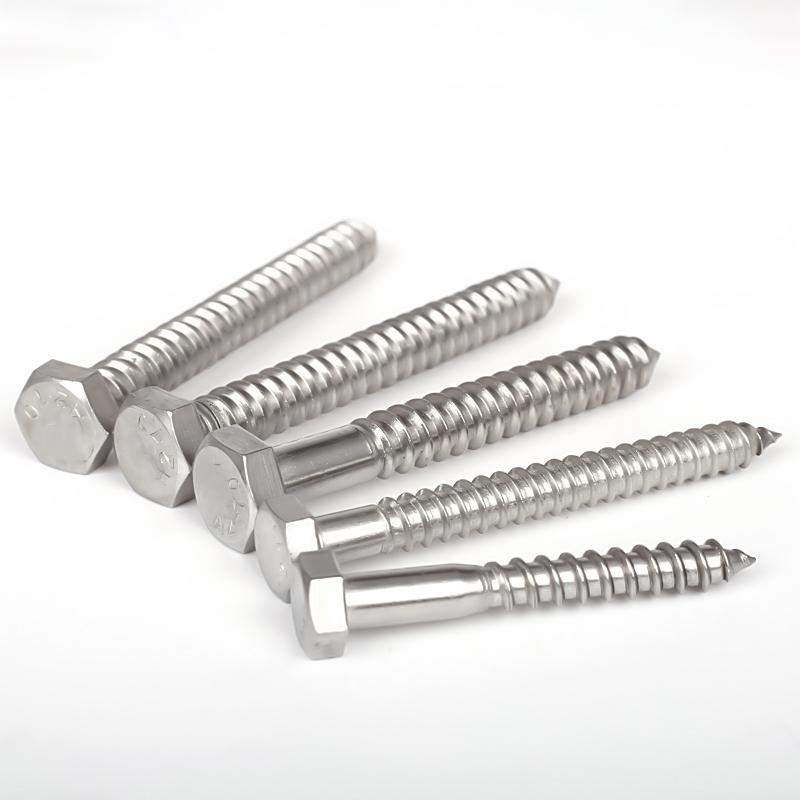
Choosing the right lag bolt is where durability starts, not ends. A stainless steel lag bolt factory might look identical on paper, but the difference shows up in salt spray, torque tests, and on-time shipments. This guide walks you through what to look for—from raw material certifications to thread geometry—and why Wanluo treats every batch like it's holding something critical together.
What Stainless Steel Actually Does Under Load
When you apply force to stainless steel, its crystal structure doesn't just sit there—it rearranges itself to resist. The alloy's chromium and nickel atoms lock into a face-centered cubic lattice that lets dislocations glide in specific directions, which is why a thin sheet can bow noticeably before springing back. Unlike plain carbon steel, the austenitic grades work-harden rapidly under repeated loading, so a bent bracket becomes progressively stiffer at the crease without cracking.
Look closer at a loaded beam and you'll see stress spreading unevenly through the cross-section, concentrated near any notch or thread root. This is where stainless earns its reputation: even as micro-cracks try to initiate, the surrounding grains stretch and rotate, absorbing energy that would otherwise snap a more brittle material. At elevated temperatures the story shifts—creep deformation starts to matter above roughly 500°C for common 304, though duplex grades hold their shape far longer under the same load.
Practical testing shows that a fully reversed bending load will eventually cause fatigue failure, but the crack growth rate stays predictable for millions of cycles if the stress amplitude stays below the endurance limit. What surprises many engineers is how much deflection stainless tolerates before permanent set, especially compared to aluminum of the same section modulus. That's why handrails, marine fittings, and surgical instruments all rely on this quiet toughness under everyday loads.
Inside Our Forging Floor Without the Marketing Speak
Most plant tours start with polished floors and a scripted speech about industry leadership. Ours starts with the smell of hot steel and the sound of a 4,000-ton press hitting metal hard enough to shake the concrete under your boots. That’s not an accident — it’s the whole point. We’d rather show you a cracked floor tile and a finished forging with real grain flow than hand you a brochure full of adjectives.
Walk past the induction heaters and you’ll see operators checking billet temperatures with handheld pyrometers, not trusting a screen. One guy might be grinding a flash line by eye while another adjusts die alignment with a feeler gauge. Nobody’s posing. Every station has a scrap bin, and yes, it gets used — because when you forge near-net shapes, the difference between good and scrap is sometimes a quarter-inch of material movement you can only feel with a thumb.
We don’t hide the hard parts. If a die needs a repair weld mid-run, you’ll see the TIG torch come out. If a new alloy fights us, you’ll hear about it from the shift lead in plain terms: “We lost three billets figuring out the preheat window.” That’s the real process — no stage lighting, no stock photos. Just steel, heat, pressure, and people who’ve learned to read both.
The Tolerance Checks That Send Bolts Back to the Furnace
A digital micrometer snaps shut on a bolt shank, and the reading lands six microns over the upper limit. That single measurement triggers a quiet walk to the scrap bin, then a ride on a cart back toward the induction furnace. No rework, no filing, no hope of salvage. The tolerance window is written into the alloy's destiny before the first strike, and anything outside it simply becomes raw material again.
Thread gauges are less forgiving than the people who operate them. A go/no-go ring that stops one turn early marks the part for remelting. Pitch diameter, major diameter, root radius, even the angle of the thread flank must align within a few thousandths of an inch. Once a bolt fails any of these checks, its identity is erased. The furnace does not care that it was almost perfect, only that it was not perfect enough.
Some batches never reach the loading dock. After the first inspection reveals a drift of just 0.02 millimeters across a dozen samples, the shift supervisor orders the entire lot back to the melt. It costs less to re-pour the steel than to argue with a customer's incoming QC department. So the bolts go back—not as failures, but as feedstock for a tighter run tomorrow.
Custom Orders That Don't Require a Phone Call Marathon
Placing a custom order used to mean clearing an afternoon, dialing a number, and hoping the person on the other end could understand exactly what you had in mind. Not anymore. With a few quick clicks, you can specify dimensions, materials, finishes, and even upload a sketch or reference photo. The whole process feels less like a negotiation and more like filling in the blanks on a well-designed form—because that's exactly what it is.
The real difference comes from how the details are handled. Instead of jotting down notes over a crackly connection, you get a live preview of your choices, a running total that updates as you tweak options, and a written summary you can review before anything goes into production. No repeating yourself three times, no wondering if the rep got the measurements right, no phone tag with someone in a different time zone. Everything is logged, so if you need to make a change later, you're not starting from scratch.
What makes this approach work is that it treats your time as part of the product. The fewer back-and-forth calls, the faster your item gets into the queue—and the less chance there is for a misinterpretation that leads to a costly redo. You still get human support if you want it, but it becomes an option rather than a requirement. That's the kind of convenience that turns a custom project from a marathon into a quick lap around the block.
Why Our Inventory Stays Fresh Instead of Gathering Dust
A lot of places treat inventory like a long-term investment, but we treat it like produce. Our buyers place smaller, more frequent orders instead of loading up on bulk deals that sit around. That means the item you browse on Monday might have arrived the previous Thursday, and if something isn’t moving quickly, it gets marked down or rotated out before it has a chance to feel stale.
We also keep a close eye on what people actually reach for, not just what looked good in a catalog. Slow sellers get dropped from the next order, and customer requests shape what comes in. It keeps the racks tight, the colors current, and the whole space from feeling like a museum of forgotten trends.
The result is simple: you’re not sifting through leftovers from two seasons ago. Each visit tends to surface recently sourced pieces, and the stuff that doesn’t find a home quickly gets cleared out to make room for better options.
Matching Bolt Grade to Weather, Salt, and Vibration
Temperature swings and moisture aren't just background noise for a bolted joint—they directly shape which grade makes sense. A plain carbon steel like Grade 2 or A307 will rust quickly in humid or freeze-thaw conditions, and repeated thermal cycling can relax preload as the bolt and clamped parts expand at different rates. Alloy steels such as Grade 8 or A193 B7 handle higher clamping loads and a wider temperature range, but they typically need a protective finish like zinc flake or hot-dip galvanizing to survive outdoor exposure. Stainless grades (304 or 316) resist corrosion without a coating, though their thermal expansion differs from carbon steel structures, so joint design must account for slightly lower preload at elevated temperatures or use Belleville washers to maintain tension.
Salt spray and marine atmospheres punish fasteners through pitting and galvanic corrosion more than simple rust. Grade alone won't save a joint if the bolt and the clamped material sit far apart on the galvanic series—stainless bolts on aluminum, for instance, can accelerate corrosion of the aluminum rather than the bolt. For chloride-rich environments, 316 stainless with molybdenum outperforms 304 against pitting, and duplex or super duplex grades offer even higher resistance for continuous immersion. Carbon and alloy steel bolts can work if the coating is robust and intact, but thread forming or tightening often breaches the plating, leaving bare steel exposed. That's why many engineers specify a sealant or anti-seize compound along with the coating, and avoid high-strength grades like 12.9 in salt-laden air because their susceptibility to hydrogen embrittlement rises sharply when corrosion cells form.
Vibration is a fastener's endurance test—it doesn't care about tensile strength alone, but about fatigue resistance and the joint's ability to hold preload. Grade 8.8 or 10.9 fasteners often outperform 12.9 in vibrating equipment because the ultra-high-strength material is more notch-sensitive and less forgiving of minor surface defects or corrosive pitting. A fine-thread pitch reduces the risk of self-loosening compared to coarse threads under transverse vibration, and pairing the bolt with a prevailing-torque lock nut or thread-locking adhesive is more reliable than a split lock washer. For critical connections, engineers sometimes specify a lower static grade with a higher fatigue rating—like a 10.9 bolt with rolled threads—and set an inspection torque interval rather than relying on any single locking feature to stay tight.
FAQ
Quality starts with the raw material. Look for 304 or 316 stainless, with 316 offering extra corrosion resistance for coastal or chemical exposure. The threading should be rolled rather than cut, which keeps the grain structure intact and prevents stress cracks. A proper heat treatment and passivation process also matter—cheap bolts often skip passivation, leaving free iron on the surface that rusts quickly. Finally, check the hex head and shank for clean, consistent dimensions; sloppy tolerances cause installation problems.
A dependable supplier keeps buffer stock of common sizes and maintains long-term contracts with steel mills. They usually run multiple production lines so one order doesn't block the rest. Some factories also hold semi-finished blanks that can be threaded to exact lengths on short notice. It's worth asking for their capacity reports and backup plans for raw material shortages. If they hesitate to share that, treat it as a warning sign.
For most outdoor furniture, decks, and general construction, 304 stainless is enough—it resists rust in normal weather. If the bolts will be near saltwater, road salts, or industrial chemicals, choose 316. The molybdenum in 316 prevents pitting corrosion better than 304. For freshwater docks or shaded humid areas, 305 can work, but it's less common. Ask the factory for a chemical test report to verify the grade, since some suppliers mislabel 201 as 304.
Yes, most established factories can customize diameter, length, thread length, and even the head style—hex, square, or flanged. They can also do partial threading or full threading depending on the application. Custom tooling for unusual thread pitches may have a one-time setup fee and higher minimum order quantity. Provide a drawing or sample and ask for pre-production samples before mass production.
A serious factory tests raw material composition with a spectrometer, checks hardness after heat treatment, and runs salt spray tests for corrosion resistance. During production, they should inspect thread fit with go/no-go gauges and measure dimensions with calipers or optical comparators. Final inspection often includes checking for surface defects, burrs, and proper packaging. Ask for mill test reports and third-party inspection certificates like SGS or TUV if you need extra assurance.
Price differences usually come from raw material cost, production precision, and surface treatment. Genuine 316 costs more than 304, and rolled threads cost more than cut threads but last longer. Passivation and proper cleaning add to the price but prevent premature rust. A factory offering suspiciously low prices may be using recycled or off-spec steel. Compare the per-unit cost with expected lifespan—cheap bolts often fail early and lead to costly replacements.
Good packaging prevents damage in transit and makes inventory management easier. Look for moisture-resistant cartons, inner plastic bags or desiccants for stainless parts, and clear labeling with grade, size, and lot number. Reliable factories also provide pallet wrapping and proper export documentation. If the bolt heads are loose in a carton without separation, that's a red flag for cosmetic scratches and thread damage.
Conclusion
Stainless steel lag bolts earn their reputation only when you understand how the alloy behaves under real tension and shear. Instead of simply snapping at peak load, 304 and 316 grades stretch slightly before ultimate failure, and this ductility gives installers a warning window that carbon steel simply doesn't offer. On our forging floor, that behavior starts with controlled heating and upsetting, not with polished brochures. We track each batch from wire drawing through thread rolling, and if a single dimension drifts more than a few thousandths of an inch, the entire lot goes back to be remelted. Those tolerance checks aren't a formality; they catch ovality, shallow threads, and off-center heads before they ever reach a crate.
Custom work shouldn't mean spending a week on hold. We keep a running production schedule that allows for mixed thread lengths, drilled heads, or unusual drive types without derailing standard runs. Because inventory turns over quickly, bolts don't sit in humid warehouses developing surface tea staining that later gets mistaken for corrosion. Every grade we stock is matched to a specific environment: 316 for salt spray and coastal decks, 304 for general outdoor use, and hardened variants where vibration and lateral loads are constant. That way, what leaves the factory is not just a box of fasteners but a supply plan that fits the job, whether it's a single marine piling or a hundred-unit solar array.
Contact Us
Contact Person: Shane
Email: [email protected]
Tel/WhatsApp: 8613357785029
Website: https://www.wanluohardware.com