

Professional DEUTZ Generator Set Delivers Reliable Power for Demanding Applications
2026-10-31
When every second of downtime costs you money, you need a power source that never blinks. The professional DEUTZ generator set from Hichai Power delivers exactly that—rock-solid reliability for the toughest industrial and commercial jobs. But don't just take our word for it. Here's why operators across demanding applications are making the switch.
What Makes a DEUTZ Generator the Go-To Choice for Critical Backup?
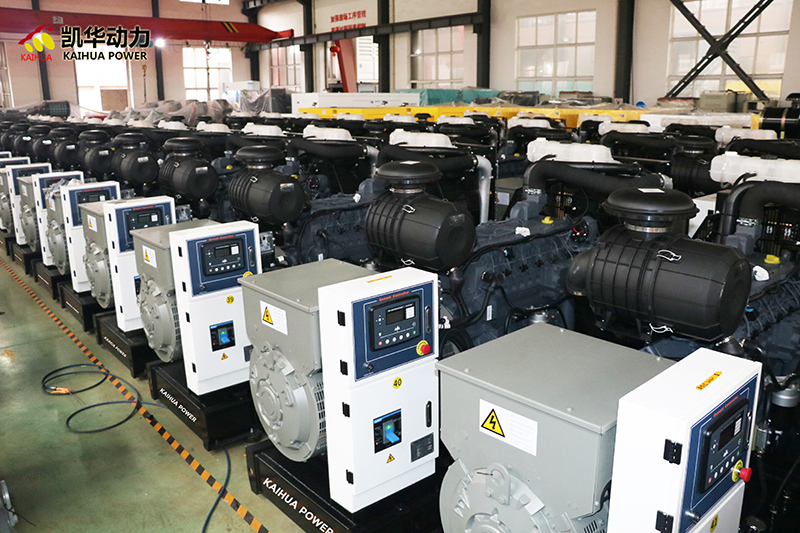
DEUTZ generators earn their reputation in critical backup roles not through flashy features, but through an almost stubborn focus on mechanical simplicity and endurance. The engine block and core components are designed and built by DEUTZ themselves, which means the generator isn't a patchwork of third-party parts. That vertical integration pays off when the grid fails: fewer compatibility headaches, tighter tolerances, and a cooling system that actually holds up under continuous load in places where maintenance windows are rare.
Another reason facility managers keep returning to DEUTZ is the way these units handle less-than-ideal conditions. Dust, high altitude, temperature swings, or fuel that isn't perfectly refined—DEUTZ engines are tuned to tolerate real-world operating environments without derating dramatically. That matters for critical backup because an emergency is exactly when you discover whether your standby power was spec'd for a lab or for a loading dock.
Finally, the service story is often overlooked but decisive. DEUTZ has a dense network of trained technicians and parts depots, and the engines themselves use widely understood, field-repairable designs. When a generator is your last line of defense, knowing that a local crew can actually fix it—not just diagnose it over the phone—changes the calculation entirely.
Inside the Engine: High-Torque Performance Without the Extra Fuel Burn
High torque doesn't have to mean high fuel consumption. Many modern powertrains achieve this by running a very high static compression ratio and using late intake valve closing to shorten the effective compression stroke. The expansion stroke remains long, so more of the combustion pressure is converted into crankshaft rotation instead of being wasted as heat. The result is a strong pull from low rpm without the fuel penalty usually associated with big displacement.
The turbocharger setup plays an equally important role. Instead of relying on a large turbine that only wakes up at high rpm, these engines use a smaller, faster-spooling unit paired with an electric wastegate. The wastegate stays closed a bit longer under light load to keep boost available, but the engine management system keeps the air-fuel mixture at stoichiometric levels far more often than older turbo engines. That means you get the low-end shove you want without the rich-mixture cooling that quietly drains the tank.
Inside the block, friction reduction is aggressive but invisible. Low-viscosity oil, diamond-like carbon coatings on piston skirts and wrist pins, and a variable-displacement oil pump all work together to cut parasitic drag. Less energy lost to internal resistance means a larger share of each combustion event reaches the wheels. It's the sort of detail that never shows up on a spec sheet, but you feel it every time you press the accelerator.
Built to Take a Beating: How the Frame and Components Hold Up on Site
The first thing you notice on a rough site is how quickly lesser gear gives up. Our frame doesn't. We over-spec the corner gussets and run the main rails through a full-penetration weld instead of the usual stitch pattern, so a dropped hammer or a misjudged forklift tap leaves a scuff rather than a crack. The powder coat isn't just for looks—it's baked on thick enough to shrug off gravel spray and the occasional scrape against rebar.
Components get the same treatment. Every hinge pin is case-hardened and paired with a greasable bushing, which means the access panels keep swinging true after months of dust and rain. Latches are recessed so they don't snag on passing loads, and the electrical enclosures use a double-gasket seal that kept fine silica out during a week-long demo job. Even the mounting feet have a replaceable wear pad, because that's the one spot site abuse always finds first.
It's not about surviving one big hit. It's about the hundred small ones that happen before lunch. We've had units come back from a year on a highway project with bent handrails and faded labels, but the frame alignment still checked within spec. That's the difference between gear you fix and gear you forget is there.
Noise Levels You Can Actually Work Around
Plenty of people assume a quiet room is the only way to get real work done, but that overlooks how quickly the brain adapts to steady background sound. The low whir of a ceiling fan, a neighbor's lawnmower two houses down, or the rhythmic tapping of rain on a window can all become almost inaudible after a few minutes. What matters more than silence is whether the sound stays predictable.
Sudden changes cause most of the damage. A door slamming in a hallway, a notification pinging at random, or a half-heard phone conversation pulls your attention far more than a continuous hum at the same volume. If your workspace has those spikes, adding a consistent layer of noise—like a small desk fan or ambient instrumental tracks—can smooth them out. The aim isn't to drown everything but to level the sound so nothing jumps out.
The usable range varies from person to person, and even from task to task. For repetitive work, the chatter of a busy café can actually help by keeping the mind lightly engaged. For deep reading or writing, you might prefer something closer to the low end of that range, maybe 40 to 50 decibels, roughly the level of a refrigerator running in the corner. Once you stop expecting total silence and focus on removing unpredictable peaks, far more spaces become fit for work.
Remote Start and Load Monitoring That Keep You in Control
You can fire up the generator from your kitchen table while the storm is still rolling in. No flashlight, no wet shoes, no guesswork about whether it will catch on the first pull. The remote start gives you a direct line to the unit from your phone, so it's already warming up before you even reach the breaker panel.
Load monitoring isn't just a number on a screen—it shows you exactly how much power your essentials are pulling in real time. Watch the wattage climb as the sump pump kicks on, or see it dip when the refrigerator cycles. If you're pushing too close to the limit, the system flags it before something trips or overheats.
That visibility changes how you run your backup power. Instead of wondering whether the well pump and freezer can share a circuit, you'll know for sure. And when the utility comes back, you can shut things down remotely with the same calm control you had at startup.
From Data Centers to Mining Camps: Demanding Jobs These Units Handle Daily
Inside data centers, these units wrestle with the relentless thermal output of high-density server racks while holding temperature and humidity within tight bands. Compressors, fans, and control boards run at full tilt around the clock—any slight drift can trip overheat safeguards. They also absorb rapid load swings as compute demand spikes and ebbs with user activity, never missing a beat.
Out at mining camps, the picture flips completely. The same units are subjected to ambient temperatures ranging from minus forty to plus fifty Celsius, all while eating dust, rain, and thin mountain air. They power crushers, conveyors, and lighting rigs, often kicking heavy motors to life on unstable off-grid voltage. Vibration and grit are constant, so intake filters need daily cleaning or swapping just to keep airflow adequate.
Whether humming in a pristine data hall or rattling at the edge of an open pit, these units carry out tasks that demand bulletproof reliability and built-in redundancy. They switch to backup modes unattended, log operational data, and hold output steady when conditions turn hostile. That leap from controlled environments to raw wilderness is exactly where their design gets tested hardest.
FAQ
The engines are built with a compact, modular design that prioritizes cooling efficiency and component protection. That translates to steady output even when dust, heat, or heavy vibration are part of the daily routine.
They are engineered for sustained operation rather than short bursts. The DEUTZ power unit maintains stable speed under changing load, and the alternator is matched to prevent overheating during long runs.
Most DEUTZ generator sets in this class run on diesel, though some configurations can be adapted for biodiesel blends. Always check the specific engine series to confirm the approved fuel mix.
Service intervals generally fall between 250 and 500 operating hours, but dusty or high-temperature sites may need more frequent air and oil filter checks. Following the hour meter rather than a calendar keeps maintenance practical.
You will find them on construction sites, in mining operations, at agricultural facilities, and as backup power for small industrial plants. Anywhere grid power is unreliable or absent, these sets fit well.
Opt for a block heater or cold-start package if temperatures drop below freezing. Keeping the battery fully charged and using the right oil viscosity also reduces strain on the starter motor.
If it will sit idle for more than a month, run it under load until the engine reaches operating temperature at least once every two weeks. Treat the fuel with a stabilizer and keep the tank full to limit condensation.
Low oil pressure shutdown, high coolant temperature alarms, and overload protection are standard on most models. These safeguards automatically stop the engine before minor issues turn into expensive failures.
Conclusion
A DEUTZ generator earns its place in critical backup roles because the engine underneath doesn't just idle along—it pulls hard when the load spikes. The high-torque design means you get immediate response without watching the fuel gauge drop unnecessarily. On job sites where the equipment gets knocked around, the frame and internal components are overbuilt enough that a dented panel or a dusty intake doesn't turn into a failure. It's the kind of machine that gets bolted to a skid, driven over rough ground, and still fires up on the first crank months later. That's not by accident; it's a deliberate choice to use heavier castings and simpler, proven subsystems rather than chasing every last gram of weight.
What often gets overlooked is how livable these units are on a daily basis. The enclosure keeps noise down to a level where you can hold a conversation a few feet away, not something you'd expect from a generator this size. Remote start and load monitoring mean you can check status from the cab of a truck or a control room without walking out into the weather. And the range of places these units show up—server rooms that can't afford a second of downtime, mining camps running around the clock, construction trailers in the middle of nowhere—tells you they're not a one-trick pony. They're built to be ignored until the power fails, then expected to carry the whole load without drama.
Contact Us
Contact Person: Ms. Lu
Email: [email protected]
Tel/WhatsApp: 8618917899306
Website: https://www.hichaipower.com