

Pressure Vessel Factory: Inside the Engineering and Manufacturing Process
2026-06-04
Step inside a pressure vessel factory, where raw steel meets precision engineering. From thick plates rolled into seamless cylinders to welds tested under extreme conditions, every stage demands expertise. At DYE, we don't just build vessels—we engineer safety into every joint and seam. Discover how controlled environments, robotic automation, and rigorous inspections shape the backbone of high-stakes industries.
From Drafting Table to Digital Model: The Design Journey
Every line once began with the scratch of graphite on vellum, a ritual where hesitation was permanent and erasure left ghosts. The drafting table was a physical anchor—pens, compasses, and parallel rules governed a pace that allowed ideas to steep. Mistakes were costly, but they taught a discipline that modern software sometimes insulates us from. That tactile feedback, the weight of the paper, the smell of ammonia from blueprints, shaped a generation of designers who learned to see space in two dimensions before they ever orbited a 3D model.
Then screens flickered to life, and coordinates replaced pushpins. Early CAD platforms were clunky translators—turning mouse clicks into lines that floated on glass, detached from the hand but endlessly editable. The shift wasn’t just technical; it rewired how designers thought. Sketching went from a private conversation with the page to a performance recorded in command histories. Layers, snaps, and parametric constraints crept in, offering undreamed-of precision but also a new kind of anxiety: the model could now be perfected to death, iterated until the original spark was smothered by optimization.
Now the journey loops oddly back toward the physical. Digital models feed CNC routers, laser cutters, and 3D printers, making the screen a drafting table for atoms. Virtual reality puts us inside the sketch, letting us walk through lines before walls exist. Yet the best work still carries traces of that old dance between hand and eye. The design journey isn’t a straight line from analog to digital—it’s a spiral, where each turn renegotiates the relationship between intuition and algorithm, between the smudge of charcoal and the glow of pixels.
Choosing Materials That Can Take the Heat (and Pressure)
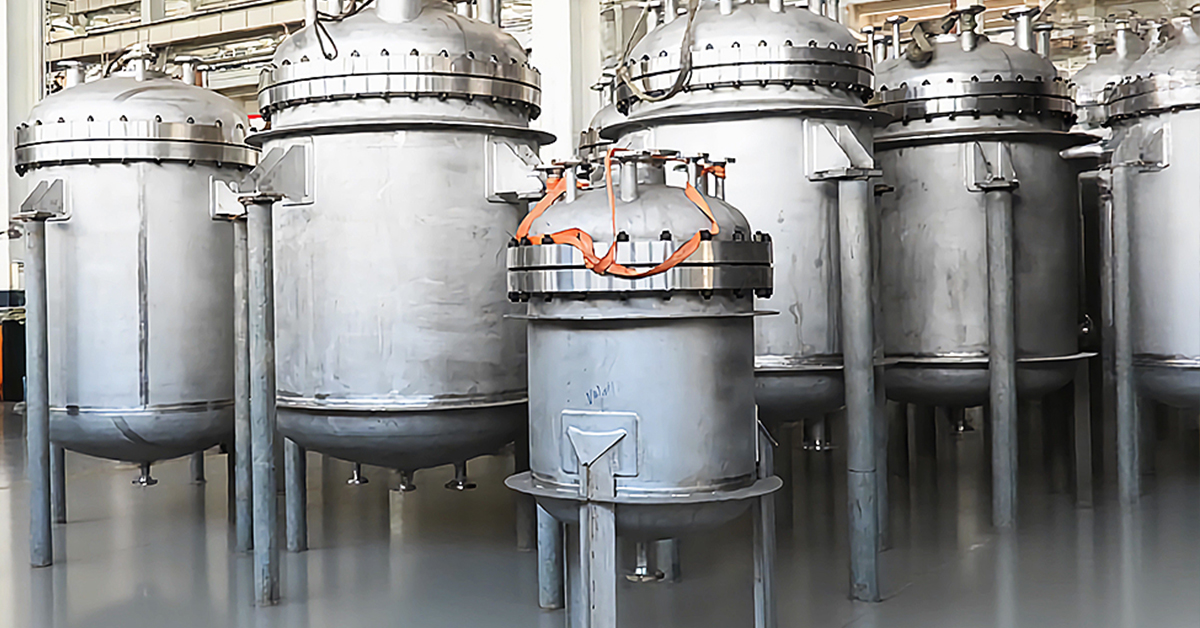
When you’re pushing components into environments where both temperature and pressure soar, the usual material rulebook goes out the window. It’s not just about picking something with a high melting point—thermal shock resistance, creep behavior, and oxidation stability all start to dominate the conversation. A ceramic might laugh at 2000°C in a static test, but bolt it into a cycling high-pressure gas stream and microcracks can spread before you’ve finished your coffee. Engineers often lean toward superalloys for their ductility and fatigue life, yet even these need careful coating strategies once sulfur or hydrogen enters the mix.
The real trick is matching the material’s expansion personality to the rest of the assembly. A turbine blade that grows two millimeters more than its housing under full load isn’t just an efficiency loss—it’s a disaster in slow motion. That’s where gradient materials or clever joint designs come in, letting you essentially cheat the thermal mismatch. Meanwhile, the tools for verifying all this have gotten quieter but sharper: instead of guesswork, we now bake test coupons in realistic atmospheres and watch grain boundaries morph in real time. It’s a far cry from the old days of simply throwing more nickel at the problem and hoping for the best.
Where Welding Meets Wizardry: Joining Thick Steel
There's a quiet thrill in watching a thick steel joint come together—not with brute force, but with an almost magical precision that feels less like industrial work and more like alchemy. When you're dealing with plates several inches deep, the usual rules start to bend. Heat travels in unpredictable ways, molten pools behave like living things, and every subtle movement of the torch can make the difference between a flawless bond and a hidden flaw. It’s in this demanding territory that experience transforms into instinct, and technique takes on the finesse of a craftsman who knows the metal's secrets.
Mastering heavy-section welding means embracing the peculiar physics at play. Preheat temperatures rise into the hundreds of degrees, not just as a precaution but as a ritual that opens the steel’s grain structure to accept the filler without cracking. The arc itself becomes a tool of controlled chaos—long, steady passes that weave a molten trail, carefully building layers in a precise sequence to counter distortion. Welders often speak of “reading the puddle,” a skill that no manual can fully teach, where the color, fluidity, and surface tension of the liquid metal reveal whether penetration is deep enough or if a slag inclusion lurks below. It’s knowledge earned through burnt gloves, strained eyes, and countless hours under the hood.
What truly sets this work apart is the invisible dance between man and machine. Advanced power sources with pulsed waveforms can shape the droplet transfer, but they're only as clever as the hands guiding them. In the tight spaces of a ship hull or the towering structure of a pressure vessel, the welder must contort, adapt, and often weld by feel when visibility fails. The result is a joint that can withstand hurricanes, ocean depths, or the trembling of a thousand-ton press—a testament not just to metallurgy, but to the wizardry of those who fuse steel with equal parts science and art.
Bending and Forming: Shaping Metal Without Breaking It
Metal doesn't need to be melted or cut to take on a new shape. In bending and forming, controlled force is applied to permanently deform the material, coaxing it into angles, curves, and complex profiles while preserving its structural integrity. The trick lies in working within the metal's limits—understanding how far it can be stretched or compressed before cracks or thinning compromise the part.
Different metals behave uniquely under stress. Softer alloys like aluminum can handle tight radii with relative ease, while high-strength steels demand more generous bends to avoid fracture. Springback, the tendency of metal to partially return to its original shape after the load is released, is another variable that separates guesswork from precision. Skilled fabricators compensate by overbending or using specialized tooling, ensuring the final angle matches the design intent.
Whether done on a press brake, through roll forming, or by hand with a hammer and form block, the essence remains the same: shaping metal through calibrated pressure rather than subtraction. It's a process rooted in material science and experience, where the operator reads the metal's feedback and adjusts technique to achieve the desired contour without crossing the line into failure.
Inspecting Every Inch: How We Ensure Zero Defects
From the moment raw materials arrive, nothing escapes our scrutiny. Every spool of yarn, every bolt of fabric, is checked against a list of standards that goes well beyond industry norms. We don't just look at sample swatches—we unroll and examine entire batches under calibrated lighting, feeling for inconsistencies that machines might miss.
On the production floor, inspection stations are placed at every critical junction, not just at the end of the line. Operators are given the authority to stop the process the instant they spot an anomaly, triggering a root-cause analysis before a single flawed piece moves forward. It's a culture where catching a defect is celebrated, not penalized.
By blending skilled human observation with precision scanning technology, we create overlapping layers of defense. The final inspection is simply the last confirmation in a system designed to catch imperfections when they're easiest to fix—early and often. This meticulous path means 'zero defects' isn't a slogan; it's a daily result.
Final Assembly: The Moment All Parts Become One
It starts with a quiet rhythm—pieces that once sat in isolation now find their place, guided by hands that know the shape of every curve. There's no rush, just a slow-steady weave of metal, plastic, and intent. Each screw turns with a whisper, each snap sounds like a lock clicking home. The bench smells of oil and ozone, a scent that gathers in the air as fragments align into something that starts to breathe on its own.
You can almost hear the shift—when a collection of parts stops being a collection. The frame stiffens, the joints settle, and suddenly the thing in front of you holds its own weight. It's not just built; it's become whole. A strange sort of quiet descends, the kind that comes after a long conversation when everything's been said. That's when you know the assembly has tipped over into existence.
What's left is a kind of afterglow—wires tucked in, surfaces wiped clean, a final check that feels less like inspection and more like greeting an old friend. The room hums with the presence of something new, something that carries the memory of all those separate journeys. In that moment, the lines between maker and made blur, and you're left standing beside a thing that never existed before, now ready to meet the world.
FAQ
Most pressure vessels use carbon steel or stainless steel, but sometimes alloys like Hastelloy or titanium get involved for corrosive environments. The choice hinges on the pressure and temperature demands, plus chemical compatibility with whatever's inside—safety margins are baked into every decision.
Welding is the backbone of vessel fabrication, but it also introduces stress points. Factories rely on qualified weld procedures, preheating to slow cooling, and post-weld heat treatment to reduce hardness. Every seam then undergoes radiography or ultrasonic testing to catch flaws invisible to the eye.
Thick steel plates get rolled into cylinders on massive plate-rolling machines. For dished ends, they either spin-form or press the crown and knuckle sections. The real trick is keeping thickness uniform—operators use templates and profile gauges constantly.
Nozzles are typically set-in or set-on, with reinforcement pads added around openings to compensate for lost material. The fabrication sequence matters a lot; often they weld the nozzle first, then add the pad. Alignment is checked with laser tools to prevent field-fit issues.
You'll see a hydraulic pressure test—usually 1.3 times the design pressure—held for a set duration. Before that, non-destructive examinations like dye penetrant or magnetic particle tests cover all welds. A final dimensional check confirms flange flatness, nozzle positions, and support tolerances.
They split the vessel into manageable sections with temporary shipping saddles and blind flanges. Field welds are planned at strategic points, and often a factory team goes on-site to oversee the final assembly and NDE. It adds cost, but it's unavoidable for oversized equipment.
Post-weld heat treatment relieves residual stresses from forming and welding. The entire vessel gets loaded into a furnace, heated gradually to around 1100–1200°F, soaked, and cooled at a controlled rate. This prevents brittle fracture and extends fatigue life, especially in thick-walled units.
Conclusion
Inside a pressure vessel factory, the journey from concept to completion is a meticulous blend of art and science. It starts on the drafting table, where engineers transform performance requirements into detailed digital models, running simulations to anticipate stress points and thermal expansion. Material selection is a critical next step—steels with high tensile strength and corrosion resistance are chosen to withstand extreme pressures and temperatures without fracturing. Fabrication then moves to the welding bays, where skilled technicians use automated submerged-arc and TIG processes to join thick plates with precision, creating seams that are often stronger than the base metal. Before any vessel takes shape, massive steel plates are rolled and formed using hydraulic presses, carefully controlling the bend radius to avoid micro-cracks and ensure perfect geometry.
Every stage is under constant scrutiny: non-destructive testing such as radiography and ultrasonic scans hunt for hidden flaws, while hydrostatic tests push the vessel beyond its design limits to confirm integrity. In the final assembly area, nozzles, manways, and internal components are integrated, transforming raw metal into a unified system ready for service. This orchestration of design foresight, material science, and craft-like workmanship ensures that each pressure vessel leaves the factory not just as a product, but as a guarantee of safety and reliability in the most demanding environments.
Contact Us
Contact Person: Ada Xu
Email: [email protected]
Tel/WhatsApp: 0577-86806088
Website: https://www.dayuwz.com/