

Offshore Aluminum Work Boats: A Durable Solution for Marine Operations
2026-08-06
When the sea tests your limits, your vessel should rise to the challenge. Offshore aluminum work boats from Allheart redefine durability, blending lightweight agility with uncompromising strength for the toughest marine operations. What makes them the go-to choice for crews who refuse to compromise on safety and performance?
Why Aluminum Outperforms Traditional Materials in Harsh Marine Environments
When it comes to battling the relentless assault of saltwater, humidity, and UV exposure, aluminum possesses a natural advantage that steel and iron simply can’t match. Its secret lies in the way it reacts with oxygen—instead of rusting away, aluminum forms a thin, transparent oxide layer that acts as a shield, self-repairing if scratched. This passive protection means less maintenance and no need for heavy coatings that can fail over time.
Weight is another factor where aluminum leaves traditional materials behind. Marine structures and vessels benefit enormously from a lighter framework, which translates directly into improved fuel efficiency, easier handling, and reduced stress on components. Unlike composite materials that might absorb water or degrade under constant wave impact, aluminum maintains its structural integrity without adding unnecessary bulk.
Perhaps most critically, aluminum’s performance in the thermal and galvanic realms gives it an edge. It dissipates heat quickly, preventing hot spots that can weaken other metals, and when properly isolated, it plays well with a variety of fasteners and fittings. The material’s innate corrosion resistance, combined with modern alloying techniques, creates a solution that endures decades of pounding surf and corrosive mist while keeping fabrication and lifecycle costs remarkably manageable.
Design Innovations That Maximize Efficiency on Offshore Work Boats
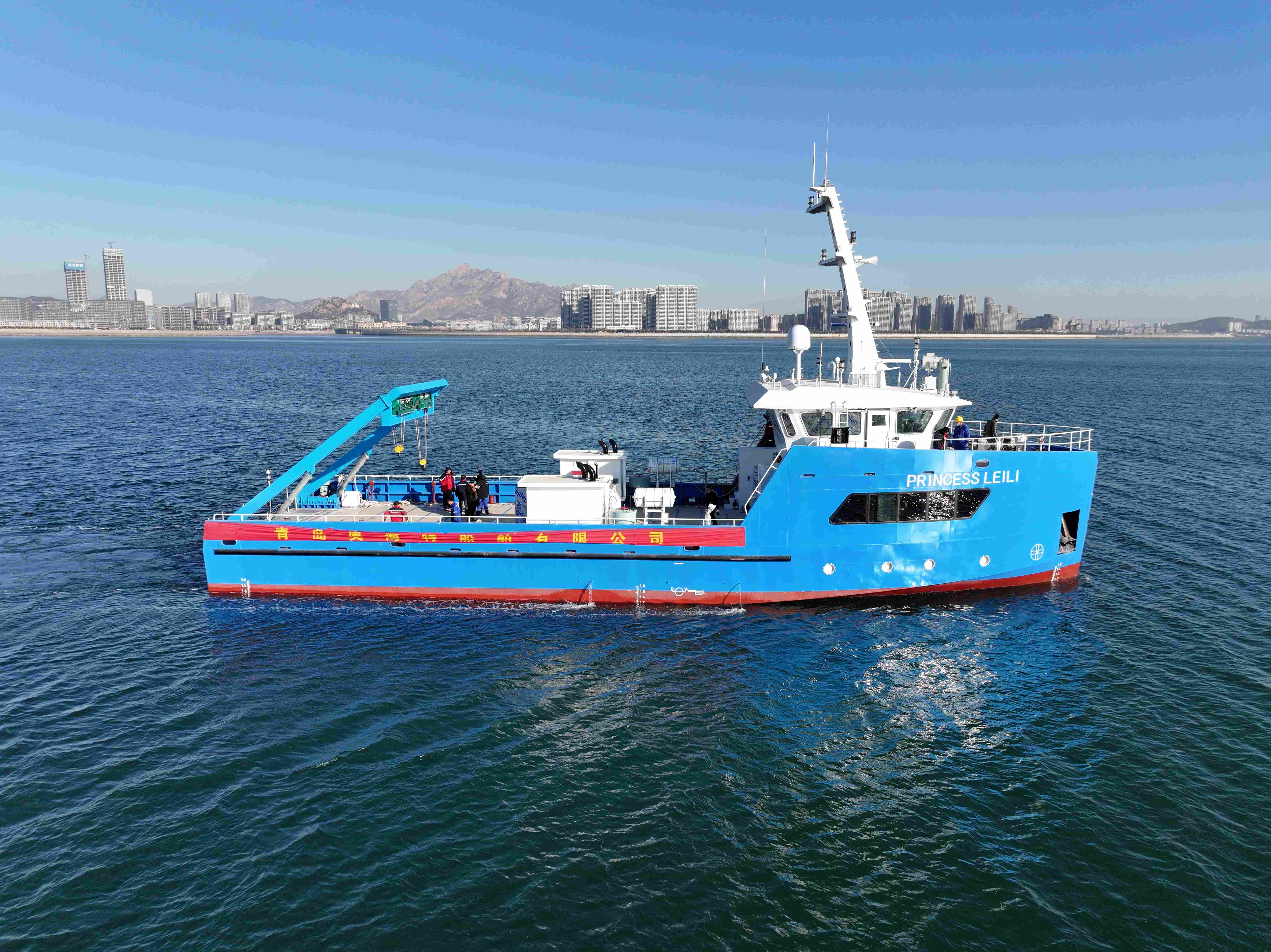
Modern offshore work boats are shedding traditional design constraints to unlock unprecedented operational efficiency. Hull forms have evolved beyond simple displacement shapes into advanced wave-piercing and semi-planing profiles, which reduce drag and fuel burn while maintaining stability in rough seas. Computational fluid dynamics now allows shipyards to optimize every curve for specific missions, whether it’s crew transfer or supply runs, resulting in boats that slice through swell instead of fighting it.
The integration of lightweight composites and high-strength aluminum alloys is another quiet revolution. By shedding deadweight without compromising structural integrity, these vessels achieve higher service speeds with smaller, cleaner-burning engines. Less weight also means a reduced draft, opening up access to shallow-draft ports and offshore installations that were previously reachable only by smaller, less capable craft. It’s a materials game where every kilogram saved translates directly into fuel savings and extended range.
Perhaps the most noticeable change inside the wheelhouse and engine room is the shift toward integrated digital platforms. Dynamic positioning systems tied with predictive weather routing and real-time fuel monitoring give captains a holistic view of operations. The data loop feeds back into maintenance planning, allowing crews to address potential issues before they become breakdowns at sea. When hull design, lightweight materials, and smart systems merge, the result is a new breed of work boat that does more with less—and that’s exactly what offshore operators demand.
Real-World Applications Where Aluminum Boats Excel
In the demanding world of commercial fishing, aluminum boats are the undisputed workhorses. Their lightweight hulls allow for greater fuel efficiency during long hauls, while the metal's innate resistance to corrosion handles constant saltwater exposure without costly maintenance. Fishermen rely on the durability of aluminum to shrug off impacts with docks, rocky shores, and submerged debris that would easily crack fiberglass. The ability to weld custom mounts and storage directly onto the deck also makes these vessels endlessly adaptable for specific fishing methods, from trawling to lobstering.
For adventurers exploring shallow rivers and backcountry waterways, the shallow-draft capability of aluminum boats opens up passages that deeper-hulled vessels simply cannot access. The material's high strength-to-weight ratio means even a heavily loaded boat can skim over sandbars and navigate rocky rapids without fear of catastrophic hull failure. Should a leak occur from a rare puncture, field repairs are straightforward with basic tools, unlike composite alternatives that often require specialized facilities. This ruggedness and self-reliance make aluminum the go-to choice for remote expeditions where reliability trumps all else.
Emergency response teams frequently turn to aluminum boats for flood rescues and swift-water operations. The hulls can be dragged across pavement or debris without disintegrating, and their reduced weight allows for quicker launch times from trailers or even manual carry by a crew. In firefighting applications, aluminum's ability to withstand extreme heat without losing structural integrity provides a safety margin when maneuvering near burning docks or waterfront structures. These life-saving advantages stem directly from aluminum's unique combination of lightness, toughness, and thermal resilience.
A Closer Look at Corrosion Resistance and Longevity
Corrosion isn't just a surface blemish; it's a slow, structural betrayal that can compromise safety and escalate costs. The difference between a material that succumbs to rust and one that stands firm often comes down to the invisible shields we engineer—microscopic barriers that repel moisture, salts, and industrial chemicals. These protective layers, whether naturally formed like the passive film on stainless steel or synthetically applied through advanced coatings, actively arrest the electrochemical reactions that lead to decay. In environments where humidity, chlorides, or temperature swings are relentless, the quality of this defense determines whether a component lasts a season or a generation.
Longevity, on the other hand, is about more than just surviving corrosive attacks. It's a measure of how a material's core properties—tensile strength, fatigue resistance, dimensional stability—hold up over time under combined mechanical and environmental stress. A perfectly corrosion-resistant alloy can still fail early if it's brittle or prone to creep. The most robust solutions are those where corrosion mitigation and inherent mechanical endurance work in tandem, often through meticulous alloying or composite design. By understanding failure mechanisms at the grain level and selecting materials that naturally resist both pitting and stress corrosion cracking, engineers can design parts that not only last longer but also require less maintenance, reducing total lifecycle costs without over-engineering.
Balancing Weight, Strength, and Fuel Economy
Striking a harmony between weight, strength, and fuel economy is a tightrope walk that defines modern vehicle design. Shaving off kilograms directly cuts fuel consumption, but engineers can’t simply strip a car down to its skeleton—safety and durability demand a backbone of steel, or something even smarter. The real innovation lies in rethinking structures from the ground up, using advanced high-strength steels that let thinner sections carry the same load, or aluminum where it slashes mass without turning the cabin into a tin can. This isn’t just about picking light materials; it’s about placing them exactly where they count, so the car feels planted and protective while sipping less fuel at every stoplight.
Powertrain choices and clever aerodynamics also twist the weight-strength-efficiency triangle in unexpected ways. A downsized, turbocharged engine can pack the punch of a bigger block while being featherweight, but it also demands a rigid chassis to handle the torque without flexing. Composite body panels or magnesium subframes might drop the scale reading further, yet the real payoff comes when every component—from suspension arms to seat frames—is scrutinized for excess mass. These pursuits don’t just chase gas mileage numbers; they make the car more agile and responsive, so the driver feels the difference as much as their wallet does.
The irony is that chasing better fuel economy often leads to a stiffer, safer structure rather than a flimsy compromise. When a vehicle sheds fat in all the right places and keeps muscle where it’s needed, the outcome is a platform that handles crashes with more finesse, not less. The trick is to avoid the trap of simply “adding lightness” without considering real-world abuse—potholes, rust, and years of use. So the next time you admire a car’s sleek lines and impressive mpg, remember it’s likely hiding a quiet rebellion against the old rule that strength must come with heft.
Choosing the Right Aluminum Work Boat for Your Fleet
Every fleet has its own rhythm—whether you're hauling gear to a remote job site, shuttling crew across choppy harbors, or working shallow rivers where draft matters. An aluminum work boat needs to feel like it was built for your specific day-to-day, not just off a generic spec sheet. Start by mapping out your most common missions, the loads you carry, and the water conditions you face. That clarity makes it easier to match hull shape, deck layout, and power options without overbuying or cutting corners.
Construction details often tell the real story. Look for continuous welding on seams, reinforced transoms if you're pushing heavy outboards, and decking that can handle dropped tools and constant foot traffic without warping. Paint systems matter too—a quality marine coating over properly prepped aluminum resists the peeling and bubbling that cheaper finishes show after a season or two. And don't overlook how the boat feels under way: an intuitive helm layout, clear sightlines, and solid nonskid surfaces make a long day on the water far less exhausting.
Finally, think beyond the build sheet to what happens when things go wrong. A manufacturer that stands behind their work with a real warranty and accessible service network can save you weeks of downtime. Talk to other fleet operators about their experiences—not just the performance numbers but how the boat ages, how easy it is to modify for new tasks, and whether the builder understands commercial work cycles. The right choice doesn't just check boxes; it slots into your operation so smoothly that you almost forget it's there, until you realize how much more you're getting done.
FAQ
Aluminum combines light weight with exceptional strength, resisting corrosion in saltwater environments better than steel. Its natural oxide layer provides built-in protection, reducing maintenance costs over the vessel's lifetime.
While steel is strong, it requires constant upkeep to prevent rust. Aluminum doesn't rust like steel; instead, it forms a protective patina. This gives aluminum boats a longer service life with less intensive maintenance, especially in harsh marine settings.
They're ideal for crew transfers, supply runs, surveying, and light cargo transport in offshore oil and gas, wind farms, and aquaculture. Their agility and fuel efficiency make them perfect for tasks where speed and reliability are crucial.
Absolutely. Modern aluminum hulls are designed with deep-V or multihull configurations that cut through waves smoothly. Combined with the metal's natural flexibility, they absorb shocks better than rigid materials, ensuring a safer, more comfortable ride in heavy seas.
With proper care, an aluminum work boat can easily last 30 years or more. There are many examples from the 1970s and 1980s still in active service, showcasing the material's longevity when compared to fiberglass or steel alternatives.
Builders can tailor everything from deck layouts and crane placements to specialized equipment mounts and safety features. The flexibility of aluminum fabrication allows for unique designs that optimize workflow, whether for diving support, firefighting, or research.
Conclusion
Aluminum work boats have quietly reshaped offshore operations by solving problems that steel and fiberglass simply can't overcome. In salt-laden air and constant spray, 5000-series marine-grade aluminum forms a self-protecting oxide layer that halts rust before it starts, leading to decades of service without heavy coatings. The metal's innate lightness—roughly one-third the weight of steel—cuts fuel consumption by up to 40% on a like-for-like hull, while advanced extrusion techniques and robotic welding create stiff, deep-V hulls that haul heavier payloads without pounding through waves. Crews notice the difference: less fatigue, quieter transits, and lower maintenance budgets that make aluminum a life-cycle bargain rather than an upfront splurge.
Beyond material science, today's aluminum workboats pack smart design features that multiply their usefulness. Modular deck layouts with recessed tie-downs and drop-in console pods let a single vessel shuttle technicians to a wind farm at dawn and carry dive gear for subsea inspections by noon. In the North Sea, crew transfer vessels log thousands of hours with minimal corrosion, while Gulf of Mexico liftboats rely on extruded beams to remain stable on soft seabeds. When choosing a hull, fleet operators increasingly look past initial price tags to the total cost of ownership—factoring in payload flexibility, resale value, and the ability to adapt to emerging roles like drone support or aquaculture. The result is a fleet asset that evolves with the mission, not one that locks you into yesterday's capabilities.
Contact Us
Contact Person: Benny Hu
Email: [email protected]
Tel/WhatsApp: +8618354225697
Website: https://www.allheartmarine.com/