

OEM Vibration Plate: What Every Fitness Brand Should Know Before Choosing a Supplier
2026-10-26
Choosing the right OEM vibration plate supplier can make or break your fitness brand. From motor quality to plate amplitude, the details you overlook today will define your customers' results tomorrow. XINGBU has spent years refining what matters most, and this guide will walk you through the critical factors before you sign any contract.
Vibration plates look alike until you compare amplitude, frequency, and noise levels
At first glance, most vibration plates on the market seem to offer the same thing—a flat platform that shakes. But that surface similarity hides huge differences in the three numbers that actually matter: amplitude, frequency, and noise. Amplitude tells you how far the platform moves in each oscillation, typically measured in millimeters. A unit claiming 10 mm of amplitude might deliver only half that once you step on it, because the motor can't maintain displacement under load. Frequency, measured in hertz, determines whether the vibration hits your slow-twitch or fast-twitch muscle fibers. High-end plates let you adjust both independently; budget models often lock you into a narrow range that feels more like a buzz than a training stimulus.
Noise levels are where many look-alike plates fall apart. A well-built vibration plate should stay under 60 decibels at moderate settings—about as loud as a normal conversation. Cheaper models with plastic frames and exposed motors can easily hit 75 decibels or more, which makes them unusable in apartments or early-morning workouts. The difference often comes down to damping materials and how the motor is mounted. If a plate rattles on hardwood floors or forces you to raise your voice to talk over it, that's a sign the manufacturer cut corners on isolation and structural rigidity.
When you compare amplitude, frequency, and noise side by side, the real story emerges. One plate might advertise 30 Hz but drift erratically under load, while another holds a steady 30 Hz with only a 0.5 mm drop in amplitude. Another might claim a "quiet" motor but emit a high-pitched whine that resonates through walls. These aren't small details—they determine whether you get deep muscle activation or just a noisy surface to stand on. Next time two plates look identical, pull up the spec sheet and check those three metrics. That's where the honest difference lives.
A prototype with your exact specs beats a catalog full of promises
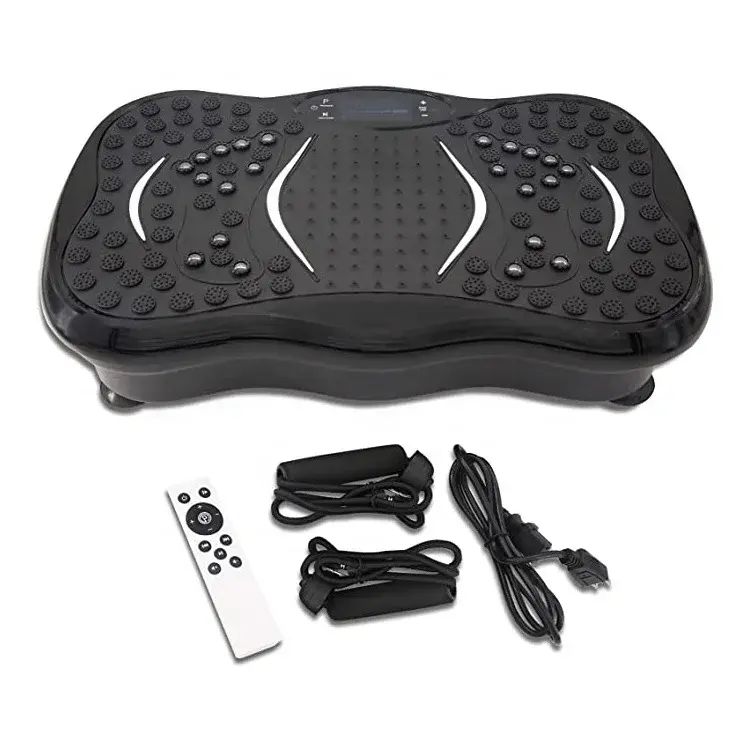
Most manufacturers will show you a glossy brochure and ask you to imagine what their standard model might feel like in your hands. That's not how we work. We build a working prototype to your exact specifications before we ask for a single purchase order. You get to hold it, test it, and confirm every dimension, material choice, and functional detail. No guesswork, no vague assurances.
A catalog full of promises can't reveal how a part actually performs under your load, in your environment, or with your assembly process. Our prototype stage eliminates those unknowns. We machine the real components, assemble the real mechanism, and put it through the same motions you will. If something needs adjusting, we adjust it now—not after you've committed to a production run.
This approach costs us more upfront, and that's intentional. We would rather spend time proving the design than spend your money chasing a mismatch. When the prototype matches your specs exactly, the conversation shifts from "we think it should work" to "here it is, working." That difference is what turns a one-time order into a long-term partnership.
Customized platform size and weight limits matter more than a logo
When a platform has to fit into a cramped warehouse aisle or sit on a mezzanine with a strict load rating, the physical envelope matters far more than any branding. A logo won’t stop a lift from jamming against racking, and it won’t make a 900-kilogram unit safe on a floor rated for 600. Clients who run tight operations ask about deck height, turn radius, and overall width before they ever glance at the nameplate.
Weight limits ripple through everything from shipping cost to battery runtime. A customized platform that shaves off 40 kilograms might allow two units per pallet instead of one, or let a facility avoid expensive floor reinforcement. These are the details that show up in the budget and the daily schedule, not in a marketing brochure. If a supplier can hit an oddball dimension or a lower tare weight, that practical flexibility beats a polished emblem every time.
Real customization means adjusting beams, casters, or frame gauge to suit a specific load and footprint — not slapping a customer’s logo on a stock model. A machine that slides through a 72-inch doorway and stays under the elevator’s 1,000-kilogram capacity will be remembered long after the logo fades. In the end, the numbers stamped on the spec sheet do the heavy lifting that branding cannot.
CE and FCC are just the start—ask for the test reports behind the marks
A label on the housing doesn't tell you much about what happened inside a test chamber. CE and FCC marks appear on all kinds of electronics, yet the underlying documentation can range from a full third-party lab report to a one-page self-declaration with no measured data. If you're buying in volume, the only way to know which situation you're in is to ask for the actual test reports behind those marks—not just certificates, not just a photo of the label.
Look at the report itself before you approve a shipment. Check that the model number and input ratings match the product you're actually ordering. Look for the lab's name, the standard version, and real pass/fail values for conducted emissions, radiated emissions, or whatever the applicable rule requires. A vague "passed" page with no numeric results is often a marketing sheet in disguise.
And don't be shy about pushing back. A legitimate supplier can usually pull those files in a day or two, because they've done the work. If you get excuses, missing pages, or a report that's three years old for a "new" model, treat that as a supply-chain warning, not a paperwork hiccup.
Unit price is not your final cost: packaging, freight, and duties add up fast
The number on the invoice rarely matches what leaves your bank account. A low unit price from an overseas supplier can quietly double once you add reinforced cartons, palletizing, and the fuel surcharge buried in the freight quote. Many first-time buyers forget that duties are calculated on the commercial value—not the discounted price you negotiated—and that customs brokers charge per line item, not per shipment.
Packaging alone can surprise you. Standard export boxes may not survive a cross-border trip, so you end up paying for crating, moisture barriers, or double-wall corrugate. Freight forwarders often quote a base rate, then layer on terminal handling, documentation, and security fees. If your goods sit in a warehouse waiting for inspection, storage charges start accruing within days. These costs compound quickly, especially for smaller orders that can't spread the expense across thousands of units.
Before you commit to a purchase, request a full landed-cost breakdown. Ask your supplier to specify packaging weight and dimensions, then get a door-to-door quote from a forwarder that includes all accessorials. Check the harmonized tariff code to estimate duties and any anti-dumping or countervailing fees. Compare that final figure against your local wholesale price—sometimes the "cheaper" overseas option ends up costing more once everything is tallied.
Warranty terms reveal how much the supplier trusts its own motors
A lengthy warranty isn't just paperwork; it's a quiet admission of engineering confidence. When a motor supplier offers five years of coverage without hideous conditions, they're betting on their own assembly lines and bearing choices. Short, loophole-heavy terms often hint at expected failures.
Compare two suppliers: one covers only 12 months and excludes seals, windings, and thermal damage; another runs 36 months with no exclusions beyond deliberate misuse. The second has likely stress-tested rotors at overload, tracked insulation aging, and knows exactly how long brushes survive. That knowledge shows up in the fine print.
Savvy buyers read warranties backwards. Instead of asking what's covered, note what's excluded—every exclusion is a component the maker doesn't fully trust. A supplier that stands behind its motors won't hide behind separate clauses for capacitors, shafts, or ambient temperature. The terms themselves become a spec sheet for reliability.
FAQ
Look beyond specs. A dependable partner will have in-house engineering that can tweak motor placement, platform materials, and frequency ranges based on your target market—not just offer a catalog of fixed models. Ask for a documented failure rate under typical use and request samples that have already passed drop tests and continuous run trials. If they hesitate to share test data or only talk about price, walk away.
Far more than changing the logo. You can specify the motor type (e.g., brushed vs. brushless), amplitude range, control panel layout, preset programs, Bluetooth module, weight capacity, and even the texture of the platform surface. Some factories will also adjust the plate size and frame shape to fit your brand’s aesthetic. However, deeper changes like motor internals usually require higher order volumes and tooling fees.
For truly custom OEM work, most mid-size factories start around 300 to 500 units. If you only need a small batch with your logo printed, some suppliers can handle 100 to 200 units, but you’ll pay a premium per unit. Be wary of quotes below 100 units for full custom specs—they often come from trading companies that mark up prices without controlling production quality.
For North America, ETL or UL certification is essential for electrical safety, along with FCC compliance if the plate includes wireless functions. In Europe, look for CE marking backed by a legitimate test report, plus RoHS and REACH for material restrictions. If the supplier cannot provide valid certificate numbers that you can verify with the issuing body, don’t proceed.
Request a written warranty policy that covers motor, control board, and frame separately. Then ask how they handle spare parts: can they ship a replacement motor within 30 days? Do they provide troubleshooting videos or live remote support? The best suppliers will offer a parts stocking program for your top-selling models and assign a dedicated account manager rather than routing you through a generic sales email.
Tooling fees for custom handles or control panels, package design and drop-test certification, extra charges for third-party inspection, and shipping costs that vary significantly based on plate weight and material. Also factor in warranty return reserve—if you sell 1,000 units, expect 2–4% to require servicing in the first year. A low unit price can disappear quickly if the supplier doesn’t cover initial defects or charges for firmware updates.
Ask for a live video tour of the assembly line, showing motor testing stations and quality control checkpoints. Request the names of two or three current brand clients who have imported at least one container within the past 12 months and are willing to share a brief reference. Also use third-party inspection services like QIMA or SGS to audit the facility before first shipment. If the factory refuses live video or references, that’s a red flag.
Both matter, but motor type affects long-term reliability more. Brushless motors run cooler and last longer under frequent home use, while brushed motors are cheaper but need replacement sooner. Amplitude determines how intense the vibration feels—most home users prefer 0.5 to 2 mm, with higher amplitudes for athletic training. The right choice depends on your customer base, not on what the factory has in stock.
Conclusion
When fitness brands start sourcing OEM vibration plates, the first thing they notice is how similar the machines look in photos. That similarity disappears the moment you compare actual amplitude, frequency range, and noise output under load. Two plates with identical casings can feel completely different in a studio, and customers will notice the difference long before they read a spec sheet. This is why asking for a prototype built to your exact requirements matters far more than browsing a catalog full of polished promises. A real sample lets you test the motor's behavior, the stability at higher speeds, and whether the control panel matches your brand's usability standards. Beyond performance, the physical platform itself needs attention: customizing the platform size and maximum user weight limit is a functional decision, not just a branding exercise. Adding a logo to a standard machine is easy, but changing the footprint or reinforcing the frame for heavier users is what actually sets your product apart in a crowded market.
On the compliance side, CE and FCC marks are often treated as a final stamp of approval, but they are only the starting point. Request the underlying test reports for electromagnetic compatibility, electrical safety, and vibration emission—these documents show whether the supplier actually tested the unit or simply printed a label. The same scrutiny applies to pricing. A low unit price can be misleading once you factor in packaging materials, freight charges, and import duties, which vary significantly depending on the shipping route and product weight. Request a complete landed-cost breakdown for your target market before comparing quotes. Finally, warranty terms act as a quiet signal of motor quality. A supplier that offers a long, clear warranty on the motor and drive system is telling you they trust their own components, while a vague or short warranty often hides higher failure rates. Reading these details carefully can save a brand from expensive after-sales problems down the line.
Contact Us
Contact Person: Hannah
Email: [email protected]
Tel/WhatsApp: +86 18266954198
Website: https://www.okmassager.com/