
ODM AS/RS Warehouse Pallet Company: Smart Automated Storage and Retrieval Solutions
2026-10-25
Behind every high-efficiency warehouse is a storage strategy that no longer relies on guesswork. As more companies look for ODM AS/RS pallet systems, the real differentiator isn't just automation—it's how well the solution fits the way you already move goods. At Lanyuda, smart automated storage and retrieval isn't a one-size-fits-all pitch. It starts with pallet flow, aisle constraints, and the daily pressure of picking accuracy. In this post, we explore what makes a modern AS/RS warehouse pallet system genuinely responsive, from design flexibility to retrieval speed, so you can decide with confidence.
Pallet Handling Reimagined for High-Volume Warehouses
Most warehouses still move pallets the way they did thirty years ago: a person on a forklift, a queue at the dock, and a lot of hoping the next shift shows up. When order volumes spike, that model doesn't bend—it breaks. Reimagining pallet handling starts with treating every pallet move as a data point, not a manual decision. Assignments shift dynamically based on dock congestion, rack availability, and real-time labor, so a pallet never waits for a driver who's already overloaded.
The real change comes from decoupling pallet movement from fixed routes. Instead of long conveyor runs or dedicated lift trucks, high-volume sites use compact autonomous carts that slip under pallets, lift them a few centimeters, and route themselves through aisles nobody designed for wide-aisle equipment. That frees up floor space for more pick faces and cuts the distance a pallet travels by up to 40%—not because the carts are faster, but because they never take a coffee break or wait for a clear path someone else has to give them.
What makes this work in a high-volume setting isn't just the hardware; it's the way exceptions get handled. If a pallet arrives damaged or a slot is suddenly blocked, the system reroutes in seconds and flags the issue for a human only when needed. The result is a flow that feels less like a warehouse operation and more like a controlled but quiet stream—predictable enough to plan around, flexible enough to absorb the next surge without hiring another wave of temporary labor.
What Actually Happens When You Switch to Smart AS/RS
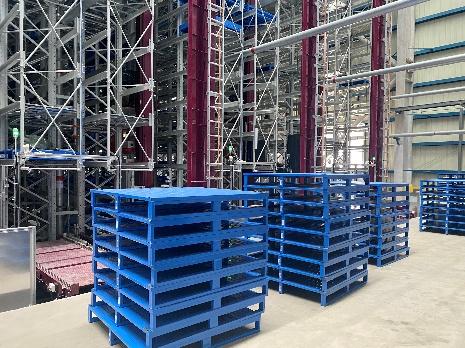
The first thing you notice is silence. Not the kind you get from a shutdown, but the kind where the constant beeping of guided forklifts and the low rumble of manual retrieval runs fade into something closer to a quiet office. Smart AS/RS doesn't just replace your racking, it replaces the noise, the near-misses, and the daily guesswork of where a pallet actually is. Operators stop chasing inventory and start managing exceptions. The system already knows what's coming in, what's going out, and what's been sitting too long. That shift alone changes the conversation from "where is it?" to "why is it still here?"
Then there's the speed curve nobody warns you about. For the first week, your team will be slower, not faster. They'll second-guess the interface, hover near the pick stations, and try to find the old manual override. By the third week, the muscle memory flips. Orders that used to take forty minutes from wave release to dock door now take twelve. Not because the machine moves faster than a human, but because it never stops to check a clipboard, never takes a wrong turn, and never forgets a bin location. That's when you realize the bottleneck was never your racks, it was the space between decisions.
What happens after that is less visible but more important. You stop building safety stock for chaos. Inventory accuracy jumps from maybe 95% to over 99.8%, and suddenly your buyers trust the numbers enough to cut buffers. The warehouse stops being a cost you tolerate and becomes a flow you tune. Smart AS/RS doesn't give you a magic number on a dashboard; it gives you a system that behaves the same way on a Tuesday at 2 a.m. as it does during peak season. And once you've lived with that consistency, going back feels like trying to drive a car with one eye closed.
The Hidden Costs of Manual Pallet Storage
Manual pallet storage often looks like the low-cost option because it skips upfront automation, but the real expense hides in labor hours spent walking, searching, and re-stacking. A warehouse worker can lose a quarter of each shift just locating a pallet that was put in the wrong aisle. Those extra minutes compound into overtime pay and delayed departures.
Damage and safety incidents add another layer that rarely appears on a standard budget. Pallets get bumped by forklifts during tight turns, product gets crushed, and every mishap triggers paperwork, replacement orders, and sometimes injury claims. Racking repairs and climbing insurance premiums are recurring costs that manual operations simply accept.
Inventory accuracy also degrades when pallets are moved by hand and logged later from memory. Miscounts force emergency cycle counts that freeze picking, create stockouts, and leave customers with a reason to look elsewhere. The hidden cost is not a single line item; it is the slow erosion of throughput, trust, and usable floor space.
How ODM AS/RS Cuts Retrieval Time Without Adding Staff
ODM AS/RS replaces the old routine of walking aisles and scanning shelves with automated shuttles and vertical lifts that bring items straight to a fixed workstation. Every storage location is recorded in real time, so when a pick order is released, the nearest available robot moves immediately. What used to take several minutes of searching now happens in under thirty seconds, and the operator never leaves the packing area.
Because the system can handle multiple retrieval tasks at once, it assigns each shuttle or lift to the next job without waiting for a worker to finish the previous one. Order spikes no longer force supervisors to call in extra staff; throughput rises because the equipment works continuously. Employees stay at their stations for scanning, packing, or quality checks, which reduces physical strain and cuts picking errors caused by fatigue or misreading shelf labels.
Over time, ODM AS/RS also learns which SKUs move fastest and automatically shifts those items to storage positions closest to the retrieval point. This quiet, ongoing rearrangement shortens travel paths even further without any manual interference. The result is a warehouse where the same crew handles significantly more orders per shift, simply because the system keeps the most-needed inventory within arm's reach of the automated pickup point.
A Closer Look at the Robotics Behind ODM Pallet Solutions
You rarely see the real complexity until a robotic pallet cell starts handling mixed SKUs in a single shift. ODM pallet solutions lean heavily on six-axis articulated arms paired with custom end-of-arm tooling that swaps between vacuum, clamp, and fork-style grippers without pausing the line. The trick is not just picking a box; it is deciding how to place it when the incoming carton sizes drift by a few millimeters and the pallet stack is already three layers high. Onboard vision and force sensing feed small corrections back to the motion controller, letting the arm nudge a case into a tighter corner than any pre-programmed coordinate ever could.
Under the hood, these systems depend on layered planning. A low-latency PLC handles safety interlocks and conveyor handshakes, while a separate industrial PC runs the pallet pattern generation. That software does not just follow a fixed recipe. It recalculates layer layouts on the fly when a product runs short or a damaged pallet gets rejected, keeping throughput steady instead of sending the cell into a fault loop. What separates better ODM builds from generic integrator kits is how they tune acceleration curves and wrist orientation for fragile loads, like shrink-wrapped trays that bow if gripped too hard near the edge.
Maintenance is where the design philosophy really shows. Good ODM pallet solutions route cables through the arm's interior, mount servo drives in forced-air enclosures away from shrink-wrap dust, and use quick-release tool changers so a shift technician can swap grippers without recalibrating the whole cell. Remote diagnostics pull torque and temperature trends long before a reducer starts grinding, which matters more than raw speed when a single robotic cell runs three shifts six days a week. The goal is not flashy automation; it is making a pallet that survives a bumpy truck ride and a forklift driver in a hurry.
Making the Business Case for Automated Storage and Retrieval
Warehouse leaders often hesitate when the price tag for automation lands on their desk. Yet comparing that upfront cost against years of manual picking errors, overtime wages, and wasted aisle space reveals a different picture. Automated storage and retrieval systems compress the same inventory into a fraction of the footprint, while cutting the time workers spend walking—which typically accounts for more than half of a picker's shift. The result isn't just faster order turnaround; it's a measurable drop in labor hours per order and fewer damaged goods from repeated handling.
Beyond the spreadsheet, there's a risk angle that rarely gets enough attention. Manual operations depend on a shrinking pool of reliable labor, and every unfilled position forces existing staff into longer shifts and rushed movements. Automation shifts that dependency toward a system that can run two or three shifts without fatigue, training bottlenecks, or safety incidents tied to forklift traffic. When presenting the case, frame the investment as a hedge against labor volatility rather than a simple equipment purchase—one that stabilizes throughput during peak seasons and labor shortages alike.
The strongest arguments pair hard numbers with a phased rollout plan. Start with a high-density storage zone for slow-moving SKUs, then expand to faster movers once the payback is visible in cycle counts and order accuracy. Early wins—like a 30% reduction in picking errors or a 40% smaller storage footprint—build internal momentum that a full-scale proposal often lacks. By the time the system reaches steady state, the conversation shifts from "can we afford this?" to "how fast can we scale it across other facilities?"
FAQ
We don't just install hardware—we design retrieval logic around your actual SKU velocity and pallet dimensions. That means fewer wasted aisles and faster pick cycles, even during peak season.
Yes, that's where AS/RS really shines. We often fit dense, high-bay storage into footprints that couldn't support conventional wide-aisle racking, sometimes doubling capacity without adding square footage.
We handle the full integration. Our team maps your current warehouse management system to the AS/RS controls, so orders flow straight from software to crane without manual handoffs.
We design for everything from standard GMA pallets to oversized and custom footprints. If your pallets have unusual dimensions or weight distribution, we adjust the gripper and rack pitch accordingly.
Depends on scale, but a mid-size system with 5,000 pallet positions usually takes around six to nine months from final layout approval to full commissioning. We stay on site through the first week of production to smooth out kinks.
Absolutely. We build in multiple layers of physical barriers, light curtains, and controlled access zones. Operators receive a half-day hands-on session, and the system defaults to a safe stop if any safety circuit is triggered.
We recommend quarterly inspections of the cranes and conveyors, plus an annual software health check. Most mechanical wear parts are designed for 10,000+ cycles, and we keep critical spares stocked locally to avoid long downtimes.
Yes, we use low-temperature lubricants, heated control cabinets, and special sensor housings for freezer applications down to -30°C. Pallet flow remains stable even in high-humidity transitions.
Conclusion
ODM AS/RS rethinks pallet handling from the ground up for warehouses that move serious volume. Instead of relying on narrow aisles and forklift traffic, the system uses smart automated storage and retrieval to compress storage density and cut cycle times. What actually changes after switching is immediate: retrieval drops from minutes to seconds, order pickers stop walking long distances, and the hidden costs of manual storage—damaged pallets, miscounts, wasted vertical space, overtime labor—begin to disappear. The robotics behind the solution handle heavy loads with precision, using sensors and control software that adapt to shifting inventory profiles without reprogramming. This means fewer touches per pallet, fewer injuries, and a layout that uses the building's full height instead of leaving it empty.
The business case becomes clear once you map current labor hours and error rates against the AS/RS throughput. ODM's approach adds capacity without adding headcount, which matters in tight labor markets. Warehouses can run longer shifts with fewer people while improving accuracy and safety. Rather than a generic automation pitch, ODM focuses on pallet-level workflow design: dynamic slotting, fast replenishment, and seamless integration with existing WMS. Because the system tracks every pallet in real time, inventory accuracy climbs above 99 percent, which reduces stockouts and expedites orders. For high-volume operations, the switch isn't just about storage—it's about turning retrieval speed into a competitive advantage that manual systems can't match.
Contact Us
Contact Person: Johnny
Email: [email protected]
Tel/WhatsApp: +86 18151010686
Website: https://lydstorage.com