

NFC Solution Manufacturing Concerns: Key Challenges and Practical Solutions
2026-10-28
Every NFC solution looks flawless on a spec sheet—until it hits the production floor. From antenna tuning drift to tag delamination under heat, manufacturers quietly battle a checklist of failure points that never make it into the brochure. The gap between a working prototype and a reliable, mass-produced NFC product is where reputations are won or lost. At OSRFID, we’ve spent years inside that gap, turning recurring manufacturing headaches into repeatable processes. Here are the key challenges you’ll likely face—and the practical solutions that actually hold up when the line is running.
Material Choices That Quietly Derail NFC Production
A polyimide roll can pass every incoming thickness check and still take down a production run. The failure comes from dielectric constant drift across the web, which skews the antenna's resonance just enough to drop read range below spec. Prototype tuning looks perfect because sample coupons came from one corner of the sheet, but the full panel behaves differently. By the time anyone catches it, hundreds of units are already laminated and headed for scrap.
Adhesive choice is another slow leak. A standard pressure-sensitive film may bond fine and look uniform, yet its dissipation factor climbs after curing or a few humidity cycles. That lossy layer sits directly beneath the coil, quietly eroding the Q factor during full-panel test. The fix usually costs nothing more than switching to an RF-grade adhesive, but many lines stick with the cheap option until reels of rejected tags force a change.
Then there is the copper or aluminum foil itself. Rolled foil etches cleanly, but a move to lower-cost electrodeposited material introduces surface roughness that raises AC resistance at 13.56 MHz. Field strength drops, read distance shrinks, and the yield charts point at the tuning network when the real issue is a material substitution nobody flagged in the BOM.
Antenna Precision: The Overlooked Manufacturing Hurdle
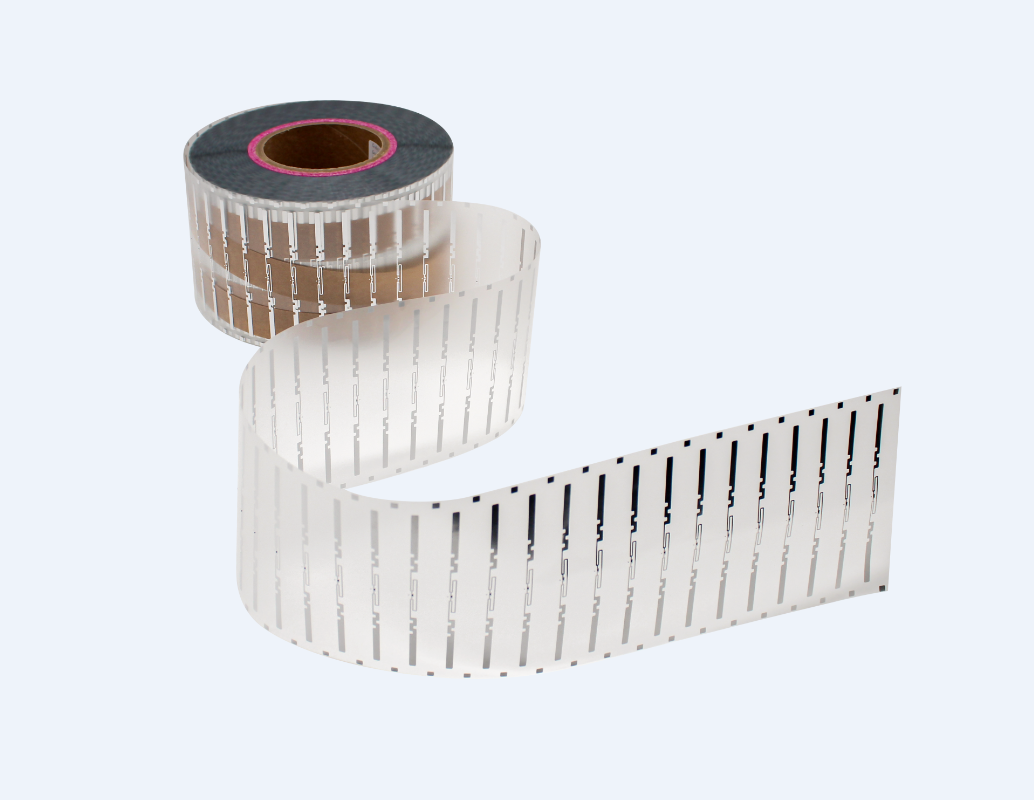
Most antenna failures trace back to tolerances that look trivial on paper. A 0.1 mm misalignment in a feed line can shift the resonant frequency by tens of megahertz at 2.4 GHz, dropping efficiency enough to fail carrier certification. In multi-element arrays, this compounds: one element off by half a degree of phase creates a null in the radiation pattern that no amount of software tuning can fully restore.
The substrate itself is another quiet variable. Two batches of the same FR-4 laminate can differ in dielectric constant by several percent, which changes the electrical length of every microstrip trace. Add thermal warping during reflow soldering and you get boards that are geometrically correct at room temperature but electrically skewed after the oven cools. Even the way a coax connector seats against the board edge introduces parasitic capacitance that shifts impedance away from 50 ohms.
High-frequency testing makes this worse, not better. Factory test fixtures often rely on cheap SMA probes and hand-tightened connections that vary from operator to operator. A device that measures 3.2 dB of return loss in the factory can easily show 6 dB on a proper vector network analyzer. So the real hurdle isn't designing a precise antenna; it's keeping that precision intact through lamination, soldering, assembly, and the test bench.
Keeping NFC Components Flowing When Supply Chains Falter
When a single factory shutdown in one corner of the world can idle assembly lines everywhere, the old just-in-time model for NFC chips and antennas starts looking less like efficiency and more like fragility. Sourcing teams are quietly shifting toward multi-region contracts, not as a panic move but as a permanent hedge. Instead of chasing the lowest per-unit cost, they weigh the price of a stalled production run. A second supplier in a different time zone, even at a slight premium, often turns out to be the cheaper option when freight lanes clog or a port closes without warning.
Inventory buffers for NFC controllers and secure elements have moved from “unnecessary waste” to “cheap insurance.” But the real change is in how demand signals are read. Rather than relying on monthly forecasts that age badly, engineers now pull near real-time usage data from the line and feed it back to suppliers. That way, a spike in NFC tag orders for a new wearable doesn't trigger a frantic scramble four weeks later; the component pipeline has already been widened. It's less about predicting the future and more about shortening the reaction time.
Some product teams are also designing around the shortage. A board layout that can accept pin-compatible NFC front-end chips from two or three vendors means a purchasing agent isn't held hostage by one allocation. Modular firmware lets the same antenna tuning work across slightly different silicon. This kind of resilience doesn't show up in a spec sheet, but it's what keeps NFC-enabled devices shipping while competitors wait on backorder.
Testing Blind Spots That Let Defective Units Slip Through
Many quality teams rely on test plans that cover only the most obvious failure modes, leaving subtle interaction faults completely unexamined. For example, a power supply might pass all standalone voltage and ripple checks, yet fail catastrophically when paired with a specific motherboard due to transient load spikes that no single-unit test ever simulated. These blind spots aren't random—they emerge from assumptions about how the product will be used, assumptions that are rarely challenged until field returns start piling up.
Another overlooked area is environmental stress testing done in isolation. A unit may survive thermal cycling, vibration, and humidity separately, but the combination of mild temperature swings with low-level vibration can accelerate solder joint fatigue far beyond what any individual test predicts. Without compounding stressors in the qualification phase, weak joints pass inspection and become latent defects that surface only after weeks of real-world operation.
The most dangerous blind spots often hide at the boundaries between test cases. Firmware engineers might verify every command in the protocol spec, while hardware engineers validate signal integrity under nominal loads—but neither checks what happens when a malformed packet arrives during a brownout condition. By designing tests that deliberately cross these boundaries and inject unexpected sequences, teams can expose failures that conventional checklists will never catch.
Balancing Cost and Performance Without Compromising Reliability
Finding the sweet spot between what you spend and how well your systems run rarely comes from a single big decision. It lives in the smaller, less glamorous choices: rethinking resource allocation, trimming idle capacity, and making sure every dollar ties back to a measurable outcome. When cost-cutting starts with a clear map of which workloads actually need peak performance, you can lower the bill without quietly eroding the user experience.
Reliability is not a line item you can defer until the next budget cycle. A cheaper infrastructure that falls over during traffic spikes costs more in lost trust than it saves on the invoice. The practical path is to build redundancy where it matters most, automate routine failovers, and keep a close watch on error budgets. That way, performance gains come from smarter engineering rather than from gambling on fragile shortcuts.
Scaling From Prototype to Production Without the Usual Snags
The leap from a working prototype to a reliable production system rarely fails because the core idea was wrong. More often, the snags hide in the assumptions you made while moving fast: hard-coded configuration values, missing retry logic, database schemas that worked at a hundred rows but choke at a million. Before you think about scaling infrastructure, sit down with the code and mark every place where the prototype took a shortcut. Those shortcuts become the first casualties of real traffic.
A second common friction point is the hand-off between the people who built the prototype and the people who will operate it. If the production team has never seen the code run outside a demo environment, expect surprises. Bring operations in early, even if that feels like it slows you down. Have them review the deployment process, the logging, and the failure modes. The goal is not to turn the prototype into a fortress overnight, but to make its behavior observable and its weak spots visible before they become incidents.
Finally, resist the urge to rebuild everything from scratch just because the prototype feels messy. The mess often contains hard-won knowledge about what actually worked with users. Instead, carve out a thin, stable path from prototype to production: replace the temporary data stores, add a proper configuration layer, and introduce automated tests around the most fragile parts. Keep the changes small and reversible, so that when something inevitably goes wrong, you can trace it back to a specific decision rather than a sweeping rewrite.
FAQ
Antenna detuning is a frequent headache, often caused by nearby metal or component placement shifts. Practical fixes include pre-testing antenna layouts with actual enclosures and using tuning capacitors with wider tolerance ranges to accommodate assembly variations.
Substrates and adhesives need to withstand moisture, temperature swings, and flexing. Polyimide or PET with high-bond acrylic adhesives tend to hold up better than cheap PVC alternatives. For outdoor or industrial use, encapsulation with UV-resistant coatings prevents read-range degradation over time.
Small variations in copper etching, lamination pressure, or component placement can shift resonance frequency. A robust solution is to implement statistical process control on key parameters and add an automated tuning step during final assembly, rather than relying solely on design simulations.
Consider moving from etched copper to printed conductive inks for low-frequency or short-range applications, though copper remains better for high-frequency needs. Also, consolidating antenna and IC onto a single flexible substrate cuts assembly steps and material waste.
Metal reflects and absorbs RF energy, so placing the antenna directly on metal kills performance. A common workaround is using a ferrite sheet between the antenna and metal surface, then re-tuning the antenna with the ferrite in place. Simulation with the actual metal geometry avoids late-stage redesigns.
Inline resonance frequency measurement and read/write verification on a sample basis can catch most tuning or IC attachment issues. For high-volume lines, automated test jigs with near-field probes provide pass/fail data in under a second per unit, flagging drift before full batch commitment.
Yes, dependency on single-source NFC ICs or specialty ferrite materials can stall production if allocations tighten. Practical mitigation includes qualifying second-source ICs with pin-compatible footprints and pre-negotiating ferrite sheet supply contracts with multiple vendors, plus keeping safety stock of critical tuned components.
Conclusion
NFC manufacturing rarely fails on the big decisions; it stumbles on the quiet, overlooked ones. A ferrite sheet that drifts a few microns in thickness changes the resonance point enough to shrink read range, and a trace width that looks fine on the drawing board becomes a yield killer when the etching bath runs a little hot. Antenna precision is not just about hitting a nominal inductance—it is about holding that inductance across a reel of thousands, where one bad batch can make an entire production run unusable. When suppliers miss delivery dates, the usual fix of swapping in a cheaper laminate often backfires because the dielectric constant shifts and the antenna no longer matches the matching network.
Testing blind spots are where many of these problems hide until customers find them. A unit can pass a basic presence check but fail at a few centimeters or in a noisy RF environment. Adding a few more test points—impedance, resonant frequency, and read range under load—catches the units that would otherwise slip through. Cost pressure does not have to mean cutting corners; it means choosing the right ferrite grade for the actual operating distance, not the best one on the datasheet. And scaling from prototype to production is less about heroics and more about locking the process: calibrating the pick-and-place force for fragile flex antennas, documenting the lamination temperature curve, and building a small buffer of pre-tested coils. When those details get the same attention as the design itself, the manufacturing line stops surprising you.
Contact Us
Contact Person: Esme Mo
Email: [email protected]
Tel/WhatsApp: 0086 191 2931 7837
Website: https://www.osrfidglobal.com/