

N52 Magnet Supplier Guide to High-Performance Neodymium Magnets
2026-08-22
Finding a true N52 magnet supplier isn't as simple as picking the first result. Most "high-performance neodymium magnets" on the market fall short of their specs—often without buyers realizing it until it's too late. That's where DAWA comes in. This guide breaks down what to look for in N52 magnets, from remanence to coating integrity, so you can source with confidence. Ready to see behind the spec sheet? Let's dive in.
Why N52 Grade Magnets Keep Showing Up in Tight Tolerance Designs
N52 magnets earn their spot in tight tolerance designs not because they're the strongest on paper, but because that strength comes with a surprising degree of dimensional discipline. When a design already fights for every micron, engineers can't afford a magnet that shifts its behavior from batch to batch. N52's high energy product means you can often pull a smaller magnet out of the assembly without sacrificing pull force, and that smaller footprint leaves more room for the other precision components that actually need the space.
Another quiet advantage is how consistently N52 material responds to precision grinding and coating. The neodymium-iron-boron matrix holds its edges well under tight machining, so a magnet ordered at 3.00 mm with a ±0.02 mm tolerance arrives that way, not just once but across a production run. That repeatability keeps the magnetic air gap stable, which is exactly what a tight tolerance design demands from every part in the stack-up.
There's also a thermal reality that often gets overlooked. N52's temperature coefficients are well documented, so engineers can calculate magnetic loss from room temperature to operating temperature with enough confidence to bake that margin into the design up front. When a tolerance stack includes the magnet itself, knowing how it will behave ten degrees warmer or twenty degrees colder means the difference between a design that works on the first prototype and one that lingers in revision hell.
Reading Between the Lines of Pull Force and Gauss Ratings
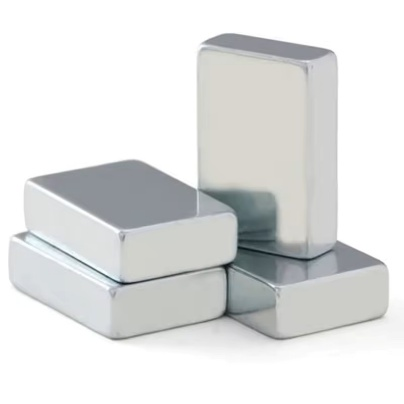
Most spec sheets treat pull force and gauss ratings as if they were two columns on the same spreadsheet, but they measure completely different behaviors. Pull force is the result of a physical test—a magnet separated from a clean, flat steel plate under controlled conditions. Gauss, on the other hand, is a magnetic flux density reading, often taken at the surface of the magnet or at a specified air gap. The unspoken issue is that neither number carries much meaning until you know the exact setup behind it.
A magnet with a high gauss reading at its pole face can still deliver disappointing pull force if the plating is thick, the surface is slightly convex, or the steel test plate is thinner than what would allow full magnetic saturation. Conversely, a lower surface gauss value doesn't automatically mean weak holding power, especially with larger magnets where a broader pole area distributes flux more evenly. Air gap changes everything too—at just a millimeter away from the surface, the gauss level can drop sharply, yet pull force on direct contact may remain strong.
The real skill is reading between the lines of how these two ratings interact. If a supplier reports pull force but not the steel plate thickness, or lists a gauss rating without the measurement distance, the numbers are nearly impossible to compare across brands. A practical approach is to treat both specs as relative indicators rather than absolute promises, and whenever possible, request test data under the same conditions you'll actually use—same material, same gap, same temperature. That's where the hidden truth usually lives.
What Actually Changes When a Supplier Claims High-Performance
A “high-performance” label often triggers a mental jump to bigger numbers on a datasheet, but the real shifts are rarely that tidy. In most cases, the supplier has reworked the internal architecture: swapping a standard bearing material for a hybrid ceramic set, tightening tolerance bands from ±0.05 mm down to ±0.01 mm, or shifting from a stamped cage to a machined one. These changes don't just tweak a single parameter—they cascade. A lower-friction coating might demand a different lubricant viscosity, which in turn alters the thermal envelope, which then forces a reassessment of the housing clearance. What you’re buying isn't just a part with better specs; it’s a different set of failure modes and maintenance rhythms, and that’s the part nobody prints on the label.
The second area that actually changes is validation scope. A standard component gets tested to a generic industry baseline—say, 10,000 cycles under a clean, room-temperature load. A high-performance variant usually has to earn that adjective through more aggressive protocols: salt-spray exposure, cyclic thermal shock from -40°C to 150°C, or endurance runs at 120% of rated speed. But here’s the catch: suppliers rarely disclose which specific tests were passed, only that the part is “high-performance.” This creates an information asymmetry. An OEM might assume the part survived the harshest possible profile, while the supplier actually ran a narrower set of conditions tailored to one application. So the real change is not just in the hardware, but in the evidentiary burden—and the gap between what is claimed and what is documented.
Finally, the most underappreciated shift is in supply chain behavior. High-performance parts often come with longer lead times, smaller batch sizes, and stricter lot traceability. A standard stainless fastener can be sourced from a dozen mills; a high-strength, corrosion-resistant variant with a specific grain structure might come from only two foundries, both running at capacity for aerospace clients. That changes your inventory strategy, your inspection protocols, and even your negotiation leverage. In effect, when a supplier says “high-performance,” they’re also saying “lower substitutability.” The component may be objectively better in a lab, but the operational cost of that improvement—longer downtime risk, higher per-unit price, fewer backup sources—is what truly changes on your factory floor.
Coercivity, Temperature, and the Mistakes That Kill Magnet Strength
Magnets don't just fail from old age—they fail from heat, poor handling, and misunderstandings about what coercivity actually means. Coercivity is the field needed to demagnetize a fully magnetized sample, but many designers assume a high room-temperature value guarantees safety at elevated temperatures. That assumption breaks down fast. As temperature climbs, coercivity drops, sometimes steeply, especially in neodymium magnets unless heavy rare earths like dysprosium are added. The result: a magnet that works fine on a bench test can lose a third of its strength after a few hours inside a hot motor housing.
One common mistake is treating the maximum operating temperature as a hard wall, when in reality it's a slope. A magnet rated for 80°C won't suddenly die at 81°C, but every degree above the knee point accelerates irreversible loss. Another killer is mechanical shock during assembly—dropping a magnet onto a steel table can create micro-cracks and local demagnetization, especially in sintered materials. Then there's the hidden enemy: opposing fields. Mounting a strong magnet near a coil or another magnet with reversed polarity can push the working point below the coercivity threshold, silently draining strength over weeks, not seconds.
The takeaway isn't just "buy higher grade." It's about matching the coercivity to the actual thermal and magnetic environment, not the data sheet headline. Test at operating temperature, derate for hot spots, and never assume a magnet that survived one cycle will survive a thousand. Mistakes here don't just weaken a product—they can turn a precision sensor into a paperweight.
Beyond the Spec Sheet Questions Worth Asking a Neodymium Magnet Vendor
Most buyers stop at grade, coating, and tolerance, but the more revealing questions start with variation. Ask a vendor how tight their magnetic properties stay from lot to lot, not just what the spec sheet claims. Request a histogram of actual Br and Hcj values from the last twelve months of production, then pay attention to whether they can produce it in a day or fumble for an excuse. Also ask how they test at your operating temperature, not room temperature, because a magnet that looks fine at 20°C can lose useful flux at 80°C if the knee of the demagnetization curve shifts under load.
Another area worth probing is failure behavior. Instead of asking whether their magnets are "high quality," ask what their most common customer complaint has been in the past year and how they corrected it. Do they share root cause analysis when a batch shows chipped edges, uneven coating thickness, or low pull force? A vendor who admits that hydrogen decrepitation caused a rough batch and then walks you through the process fix gives you more confidence than one who repeats that they have never had a problem. Ask to see a sample return report, even if anonymized, and check whether the corrective action names a specific step rather than promising "tighter inspection."
Finally, push on supply and reformulation flexibility. Neodymium prices and heavy rare earth availability shift often, so ask whether the vendor can adjust a grade to use less dysprosium or terbium while still meeting your Hcj requirement at the actual operating temperature. If they only offer a fixed grade with no discussion of trade-offs, you may be locked into a cost structure that hurts later. Also ask what semi-finished sizes they keep in stock for urgent orders and how they handle a sudden change in coating specification when your product moves from indoor to outdoor use. The answers to those questions tell you whether you are buying a part or a partner.
From Raw Alloy to Finished Magnet Where Quality Slips In
The journey from raw alloy to a finished magnet rarely shows its flaws until the very end, and that is precisely why quality has a habit of slipping in unnoticed. At the melting stage, even a slight drift in the rare-earth-to-iron ratio or a few parts per million of oxygen can quietly undermine coercivity long before anyone checks a datasheet. Operators often trust the batch sheet more than the actual chemistry, and that trust is where the first crack appears.
Once the alloy is crushed and aligned, the real test lies in how evenly the sintering furnace treats every corner of the compact. A ten-degree gradient across the load may sound trivial, but it can leave one magnet with a tight, uniform grain structure while its neighbor ends up with oversized grains and a sluggish demagnetization curve. No amount of post-sintering inspection can fully rescue a part that was already compromised in the furnace.
Then comes machining, where the material is at its most vulnerable. Grinding introduces micro-stresses that can grow into hairline fractures weeks later, especially if the cooling fluid isn't maintained or the wheel is a few passes past its useful life. Coatings add another layer of risk; a pinhole in the nickel layer may pass every visual check, yet it gives moisture a direct path to corrode the magnet's core once it's mounted in a motor housing far from the factory floor. Quality doesn't announce itself at any single step—it accumulates quietly until the magnet either performs or fails in the field.
FAQ
Not always. Some suppliers mark lower grades as N52 because most buyers cannot easily measure magnetic strength. Ask for a gauss reading at a specific distance or a demagnetization curve. If the seller only repeats 'highest grade' without offering any test data, move on.
The neodymium material itself corrodes quickly when moisture reaches it. Coating choice makes or breaks longevity. Look for epoxy or multi-layer protection with clear edge coverage, and avoid relying on a thin nickel layer in wet or salty conditions.
Very important. Standard N52 starts losing strength around 80°C and may permanently degrade if pushed much higher. If your application sits near that range, a lower grade with higher coercivity, like N42SH, is often the smarter long-term choice.
Ask about grade verification, coating thickness, tolerance ranges, magnetization direction, and whether they can provide sample testing for your specific mating surface. A good supplier will also explain how they package magnets to prevent chipping during shipping.
Price differences often come from coating quality, dimensional tolerance, material consistency, and whether the seller actually tests batches. Cheaper products may use thinner plating or lower coercivity material that still meets the N52 energy product but fails under real working conditions.
When the magnet operates above about 60 to 80°C, when you need better corrosion resistance without heavy plating, or when sharp dimensional stability matters more than maximum pull. Grades like N48 or N45SH can perform more reliably in those situations despite slightly lower peak strength.
Ask for a batch test report showing Br, Hcb, and BHmax values, not just a marketing sheet. Some suppliers will also share pull force curves with your actual steel plate setup. That type of documentation separates serious vendors from box movers.
Usually yes for production designs, because you can optimize shape, coating, and magnetization direction instead of adapting your product around stock sizes. For early prototypes, it is often faster to test with standard magnets first and refine later.
Conclusion
N52 neodymium magnets keep appearing in tight tolerance designs for a reason: the grade pushes the upper practical limit of room-temperature magnetic energy, letting engineers shrink cross-sections without losing holding force. But a high pull force figure on a data sheet is not a guarantee of real-world performance. Ratings often come from ideal lab conditions—perfectly flat steel plates, full contact, ambient temperature—so comparing vendors purely by gauss or pounds of pull can mislead. The more useful questions sit behind those numbers. What coating was used, how thick is it, and does the magnet suffer from edge chipping or plating voids that weaken clamping in a fixture? High-performance claims mean little unless the supplier can explain how coercivity shifts as the magnet warms up. N52 has a relatively steep fall in strength above roughly 80°C, and repeated exposure to the wrong working point can partially demagnetize a magnet that looked fine on paper.
Quality also slips in the gap between raw alloy and finished magnet. A supplier may start with decent NdFeB feedstock, but grain size, oxygen pickup during jet milling, alignment during pressing, and sintering profile all decide whether the final part actually reaches N52. Ask for more than a mill certificate: request batch-level BH curve data, plating adhesion tests, and dimensional inspection reports for the specific geometry you are buying. Vendors worth keeping will talk openly about how they control moisture before coating, why they reject cracked blanks, and how they handle custom magnetization patterns. The difference between a low-cost magnet and a reliable high-performance one rarely shows up on a glossy brochure—it shows up after thermal cycling, in a humid environment, or under a sudden mechanical shock. That is when tight tolerance designs either hold or quietly fail.
Contact Us
Contact Person: Kelvin Lo
Email: [email protected]
Tel/WhatsApp: 0769-88561131
Website: https://dawamagnetic.com/