

Metal Tags Manufacturer Guide to Durable Custom Label Solutions
2026-11-02
When equipment labels fade, peel, or corrode after a few months, the real cost isn't just replacement—it's avoidable downtime and safety risks. That's why choosing the right metal tag manufacturer matters more than most buyers realize. In this guide, we break down what separates truly durable custom label solutions from short-lived alternatives, drawing on real production insights from Kingming. You'll discover material choices, finishing techniques, and design details that extend tag life in harsh environments—without inflating your budget.
The Hidden Engineering Behind Long-Lasting Metal Tags
The longevity of a metal tag rarely comes from a single bold decision. It hides in the quiet choices‑‑the specific alloy grade, the way edges are deburred, the thickness of an anodized layer. A stainless tag left outdoors may resist rust for a decade, while the same shape in mild steel fails within two seasons. Engineers often select aluminum for its light weight, then add a hard oxide coating that shrugs off salt spray and UV exposure. The real trick is matching the material to the exact punishment it will face, whether that means high heat, chemical washdowns, or constant abrasion.
How information is put onto the metal matters as much as the metal itself. Laser marking that penetrates just below the surface survives far better than ink that sits on top. Deep etching or embossed characters can still be read after paint has worn away, because the shape itself carries the data. Some tags use a dark ceramic infill baked into recessed lettering, so the contrast remains sharp even after years of steam cleaning or hydraulic fluid contact.
The mounting method is often the unsung hero. A tag that stays firmly attached through vibration and thermal cycling avoids the micro-movements that cause wear and cracking. Spot welding, rivets, or high-bond adhesives each solve a different problem, and small details like rounded corners or stress-relief notches prevent fatigue fractures from starting at weak points. It is these invisible engineering decisions that separate a tag that fades in months from one that remains legible long after the machine it labels has been retired.
Not All Stainless Steel Is Created Equal
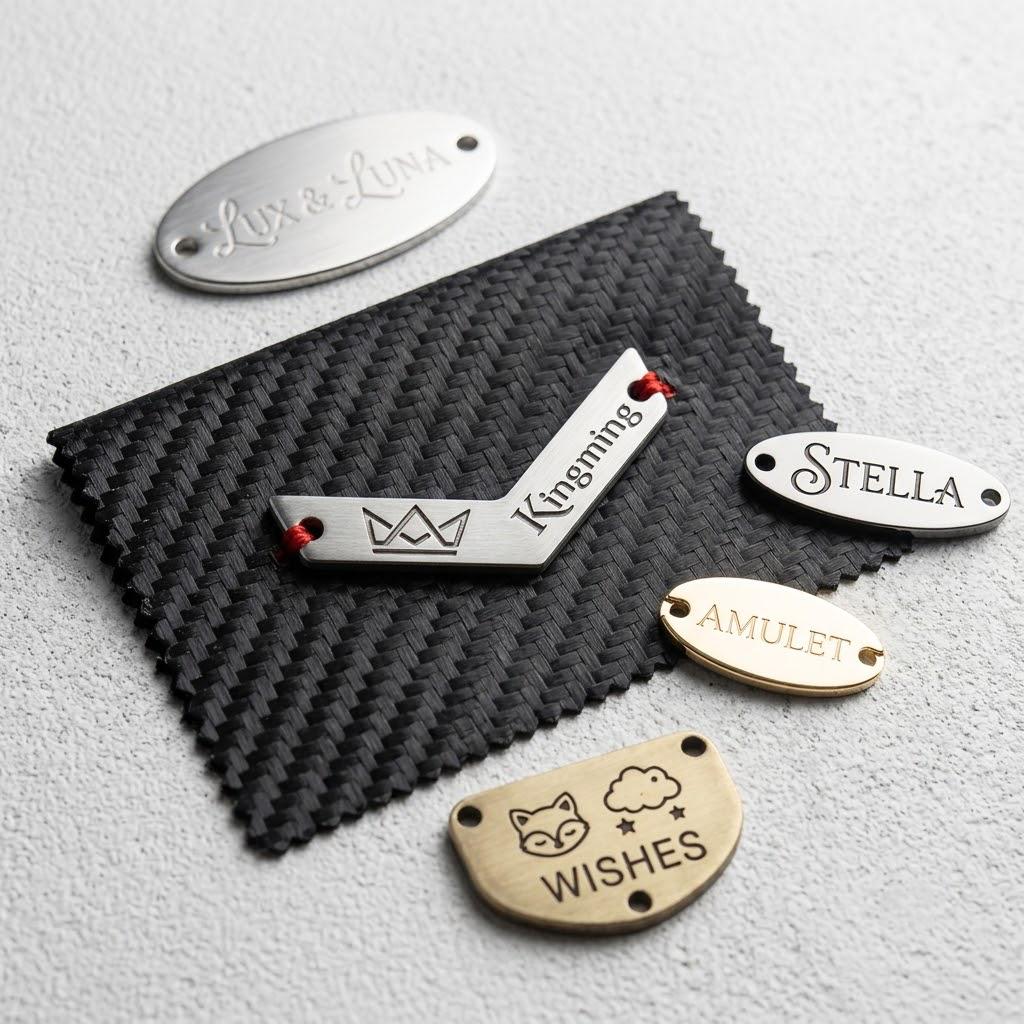
Walk into any kitchen supply aisle and you'll see the same three digits stamped on countless pots and pans: 18/10, 18/8, 18/0. Those numbers aren't just marketing fluff—they refer to the chromium and nickel content in the alloy, and that ratio quietly shapes how the metal behaves under heat, acid, and daily abuse. A pan with higher nickel feels heavier, polishes brighter, and shrugs off corrosion longer, while a lower-nickel version may save a few dollars but can become dull and pitted after repeated contact with salt or tomatoes.
Beyond the numbers, the real differences hide in manufacturing choices. Cold-rolled steel tends to have a smoother surface that resists food sticking, but cheaper stamped pieces often have microscopic ridges where bacteria and rust can take hold. Even the finishing matters: a rough brushed pattern hides scratches beautifully but traps oils, while a mirror finish looks stunning until the first scouring pad ruins it. None of these qualities appear on a label, yet they determine whether a pan becomes a daily workhorse or a tarnished disappointment.
Then there's the question of grade. The 304 alloy is the gold standard for food contact, with enough nickel to stay stable in acidic dishes. A 201 or 430 grade sometimes sneaks into budget imports and looks fine on day one, but its lower corrosion resistance shows up after months of dishwasher cycles and lemon-heavy sauces. If the price seems too good to be true, check the magnet—some lower-grade steel is magnetic, while true high-nickel stainless is not. That simple test tells you more than any spec sheet.
Surface Finishes That Do More Than Look Good
Most people pick a finish because it catches the light or matches a mood board. But the best ones earn their place through what they withstand. A brushed stainless surface, for instance, hides fingerprints and micro-scratches far better than a mirror polish, which means it stays looking intentional in high-touch areas like elevator lobbies or kitchen islands without constant wiping. Powder-coated aluminum doesn't just offer a matte color; it forms a protective shell that shrugs off salt spray, UV exposure, and everyday abrasion, so the same panel that looks sharp on day one still holds up after years of weather and use.
Texture matters just as much as tone. A lightly etched or fine-bead-blasted finish can improve grip on handrails and tool handles, turning a smooth surface into one that's safer under damp or greasy conditions. At the same time, certain micro-textures reduce the visible accumulation of dust and oils, cutting down maintenance cycles in busy spaces. And antimicrobial coatings, often paired with specific topographies, actively inhibit bacterial growth rather than just masking it, which shifts the finish from a design afterthought to a genuine part of the product's performance.
Even light itself becomes a tool. Low-glare matte finishes on dashboards and outdoor signage help prevent harsh reflections that cause eye strain or reduce legibility at certain angles. On the opposite end, a controlled satin sheen can bounce just enough light to make a narrow hallway feel wider without turning into a mirror. These choices don't show up on a swatch card as functional, but once you've lived with them, you notice the difference: fewer smudges, better grip, longer life, and a surface that keeps doing its job long after the initial wow factor fades.
Attachment Methods That Don't Fail in the Field
A bolt that stays tight in the field usually relies on geometry, not just friction. Split lock washers flatten under load and lose their spring, but wedge-locking washers use mating cams that increase preload if the bolt tries to rotate. Paired with a hardened flat washer on each side, that setup survives the constant shaking of compactors, conveyors, and pump skids better than standard lock washers or thread-locking compound alone.
For panels and brackets made from thin sheet metal, threaded fasteners are often the wrong starting point. Blind rivets don't loosen because there's no thread to back off. When set correctly, the rivet body expands behind the workpiece and creates a predictable clamp area. In wet or corrosive environments, closed-end rivets keep water out of the joint, preventing the hidden rust that weakens bolted connections around the hole.
Hybrid joints give the best margin when both vibration and peel loads are present. A structural acrylic or toughened epoxy spreads the load across the entire overlap, so stress doesn't concentrate at a single hole edge. Keep a few mechanical fasteners in place during curing and leave them in service. The combination tolerates misalignment, thermal expansion mismatches, and rough transport far better than either method alone.
Why Serial Numbers and Barcodes Need a Different Approach on Metal
Paper labels and thermal-printed barcodes assume a surface that will hold ink or adhesive without much fight. Metal breaks that assumption quickly. Polished stainless and anodized aluminum reflect scanner light, while cast or machined surfaces scatter it unevenly, so a barcode that scans perfectly on cardboard often turns into a smudge of glare on a turbine blade. Add cutting fluid, heat cycling, or a power washer and the code can disappear long before the part reaches end of life.
Direct marking changes the equation by making the code part of the metal itself. Laser annealing, dot peening, and electrochemical etching each create contrast without relying on a label that can peel or ink that can dissolve. The trade-off is that not every method suits every alloy: laser marking on copper can be finicky, and dot peen may introduce stress risers in thin aerospace components. Matching the marking technique to the material and its operating environment is what keeps a serial number readable after years of service.
There is also a practical issue with scanning geometry. Flatbed scanners expect a flat, evenly lit target, but many metal parts are round, stepped, or recessed. Even a perfectly etched Data Matrix code can fail if it sits in the bottom of a pocket where the scanner cannot get a clean angle. That is why engineers often add a matte background or choose a location away from reflectivity and wear points, rather than treating the metal surface as just another label substrate.
How to Test a Metal Tag Before Committing to a Full Run
Before ordering five hundred of those brushed aluminum tags, grab a single sample or a short-run prototype and put it through the exact conditions it will face in the field. Start by attaching the tag to the same material it will live on—whether that's a fabric collar, a steel housing, or a plastic panel—and leave it there for a few days. Check for movement, scratching, or any sign that the attachment method is chewing through the hole or loosening under vibration.
Next, abuse the surface the way an end user would. Run a thumbnail across the printed or etched text, flex the tag slightly if it's thin, and wipe it down with the cleaners or solvents common to your industry. A quick soak in salt water or a cycle in the dishwasher can reveal whether the graphics will fade, peel, or cloud over. Don't assume a clear coat will save you—some finishes look great on day one but turn milky after a few rounds of chemical exposure.
Finally, test readability from the distance and angle that matter most. If a technician needs to read a serial number with a flashlight in a dark enclosure, replicate that. If a customer will see your logo on a bag from three feet away, hang the sample and glance at it while walking past. Spend a couple of days living with the sample, and any issues with glare, contrast, or font size will become obvious before you write the big check.
FAQ
Metal tags withstand harsh conditions like extreme heat, abrasion, and chemical exposure far better than plastic or paper. The material itself resists fading, warping, and tearing, so they often outlast the equipment they're attached to.
Absolutely. Most manufacturers offer laser cutting or stamping, so you're not limited to rectangles. Rounded corners, holes for rivets, and unique outlines are all on the table, and small batch runs are usually feasible.
You'll see them in oil and gas, heavy machinery, aerospace, marine environments, and outdoor power equipment. Anywhere a lost or unreadable label could cause serious downtime or safety issues, metal tags tend to be the go-to.
Etching and anodizing are common for aluminum, while stainless steel often uses deep engraving. These processes embed the design into the surface rather than printing on top, so the information stays legible even after years of handling.
Aluminum is lightweight and cost-effective for indoor or moderate outdoor use. Stainless steel offers superior corrosion resistance for marine or chemical settings. Brass and copper provide a classic look and natural antimicrobial properties. Choose based on the environment and lifespan you need.
Yes, if you pick the right finish. Anodized aluminum holds color well under sunlight, and stainless steel with a passivated surface won't degrade. For printed graphics, a UV-resistant topcoat helps, but etched designs require no extra protection.
Most metal tags are designed for mechanical fastening—rivets, screws, or cable ties—because adhesives can fail under temperature swings. If you must use adhesive, ask for a high-bond acrylic tape rated for the substrate and temperature range.
Look for someone who asks about your operating environment before quoting. They should offer material samples, explain their marking process, and be willing to handle small custom orders without treating it like a burden. A quick production time and clear proofs are good signs.
Conclusion
Most people think a metal tag is just a stamped piece of steel, but the difference between one that lasts a decade and one that fails in six months comes down to quiet engineering choices. Material grade is the first fork in the road: 304 stainless handles indoor and mild outdoor use, while 316 is the only sensible pick around saltwater, acids, or heavy cleaning chemicals. Thickness, edge deburring, and stress relief also matter more than they seem, because a sharp edge or micro-crack becomes a corrosion starter. Surface finishes are not decoration. A low-glare brushed finish keeps barcodes legible under warehouse lights, a matte bead blast hides everyday scratches, and passivation adds a chemical shield that raw metal lacks. These choices decide whether the tag stays readable or turns into a smudged, pitted rectangle.
Attachment failure is the most common reason a durable tag ends up on the ground. Rivets work for rigid panels, but on equipment that vibrates or heats and cools, they can loosen or crack the tag. Adhesives need a clean, low-energy surface and the right temperature rating; cable ties are simple but can snap in UV or chemical exposure. Serial numbers and barcodes on metal also demand a different approach. Ink rubs off, so laser annealing, dot peening, or chemical etching are necessary to create contrast that survives abrasion. Before ordering a full run, order a small test batch and abuse it: run it through a salt spray cabinet, rub it with grit, flex it, scan it from different angles, and leave it outside for a few weeks. If it still reads clean and stays attached, then commit.
Contact Us
Contact Person: Jamie Zeng
Email: [email protected]
Tel/WhatsApp: +86 13728219269
Website: https://www.kmhardware.com