

Melamine Polyphosphate Exporter Factory Delivering Premium Flame Retardants Worldwide
2026-07-28
In the fast-evolving landscape of fire safety, melamine polyphosphate is rewriting the rules of flame retardancy—but the real difference lies in who supplies it. That's where X.X.F.R steps in: a trusted exporter factory delivering top-tier flame retardants to markets worldwide. What sets their melamine polyphosphate apart? Let's find out.
Understanding Melamine Polyphosphate’s Role in Fire Safety
Melamine polyphosphate (MPP) stands out as a halogen-free flame retardant, gaining traction in industries that need both performance and environmental responsibility. Unlike traditional additives that release corrosive or toxic gases during a fire, MPP works mainly by promoting char formation and diluting flammable gases. When exposed to heat, it triggers a series of reactions that cause the material surface to swell and create a protective, insulating layer. This char barrier shields the underlying polymer from heat and oxygen, effectively slowing the combustion process. The phosphorous content plays a key role, catalyzing the dehydration of the polymer backbone, while the melamine portion releases non-flammable nitrogen gases that further suppress flame spread.
What sets MPP apart in practical applications is its balance of thermal stability and processing behavior. Many flame retardants degrade too early, limiting their use in high-temperature thermoplastics, but MPP maintains integrity during extrusion or injection molding. It works particularly well with glass-fiber reinforced polyamides and polyesters, where it can replace brominated systems without sacrificing mechanical properties. Designers now have more flexibility to meet stringent fire safety standards without re-engineering an entire product line. The compound’s low water solubility also reduces the risk of leaching, ensuring long-term effectiveness in humid or outdoor environments.
Fire safety requirements keep tightening across electronics, construction, and transportation, and MPP has become a go-to solution for many manufacturers. Its mechanism—intumescent chemistry—creates a dense, carbonaceous foam that insulates the material and starves the flame. Testing shows that even in thin-walled parts, MPP can help achieve UL 94 V-0 ratings, a benchmark for electrical enclosures and connectors. Because it doesn’t rely on halogenated additives, products designed with MPP align with global trends toward safer, cleaner materials. As industries adapt to evolving regulations and sustainability demands, melamine polyphosphate continues to prove its worth, bridging the gap between fire safety and responsible design.
Why Our Manufacturing Process Sets Us Apart
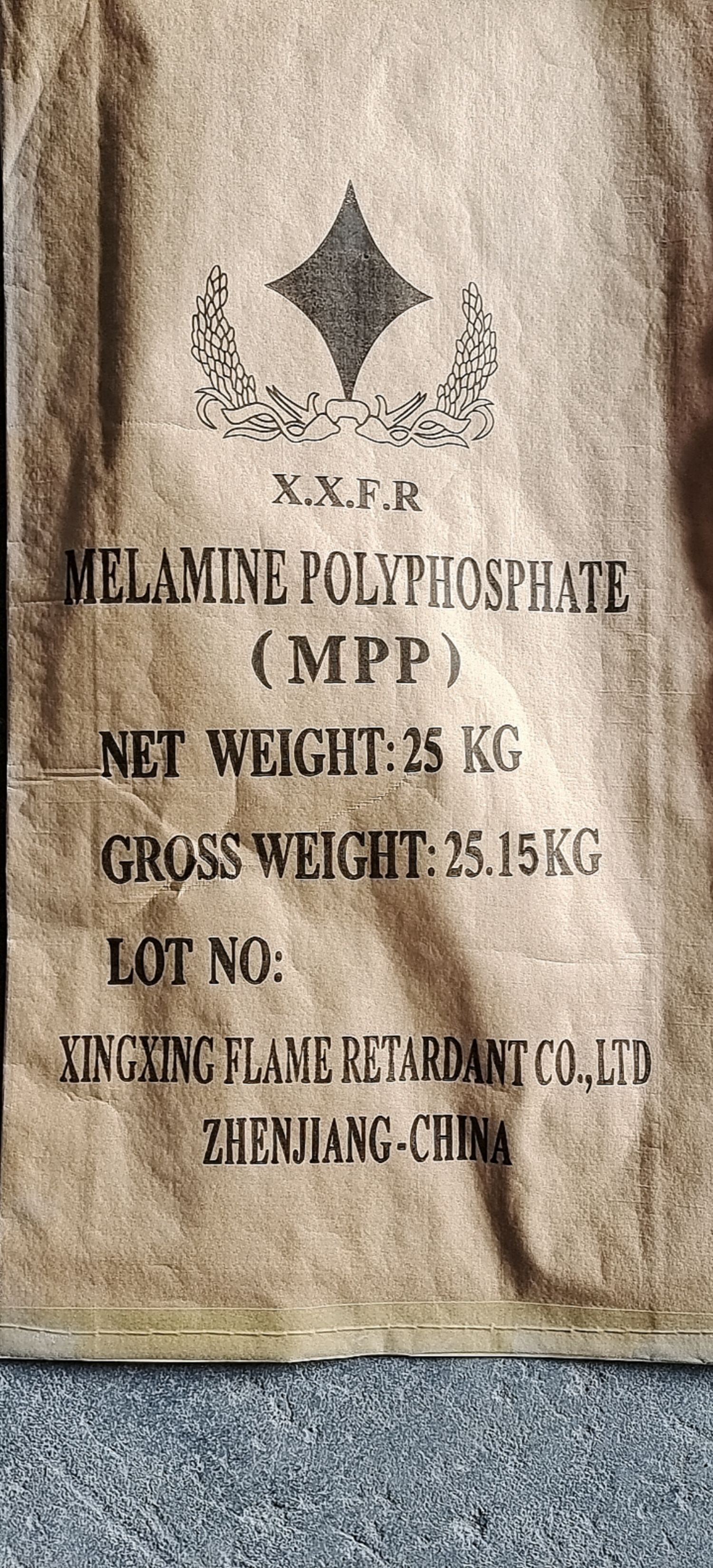
Most factories treat production like a checklist. We treat it like a craft. Every step in our manufacturing process is built around one principle: control. Where others rely on third-party suppliers for critical components, we bring those capabilities in-house, from precision machining to final assembly. That vertical integration doesn’t just reduce delays—it gives us the power to tweak, test, and perfect at a moment’s notice without waiting on outside vendors.
Then there’s the matter of inspection. Instead of a single quality gate at the end, we’ve woven verification into every stage. Operators check their own work in real time, and roving inspectors double-check at random intervals. It sounds redundant, but that redundancy catches the kind of microscopic flaws most plants wouldn’t see until a customer complaint rolls in. The result isn’t just a lower defect rate; it’s a line that keeps getting sharper with every run.
The real differentiator, though, is how our equipment talks back. We’ve built custom monitoring onto each machine, feeding live data to both the shop floor and our engineering team. If a spindle vibrates 2% more than normal, we know before it affects the part. That constant feedback loop means our process never stagnates—it evolves week by week, informed by what the machines are actually doing, not just what the manual says they should do.
Tailored Solutions for Diverse Industrial Needs
Understanding that no two industries face the same challenges, we craft solutions that align precisely with your operational reality. From material handling intricacies to precision manufacturing, our approach digs deep into your workflow, uncovering the nuances that off-the-shelf options miss. The result is a fit so seamless it feels almost intuitive—no wasted motion, no compromise on performance, just a system that finally speaks your language.
We don’t just adapt technology; we rethink it around your sector’s pressures. Whether you’re navigating strict hygiene standards in food processing or enduring the relentless pace of heavy machinery, every component, every protocol, is shaped by those conditions. It’s about anticipating failure points before they surface and building resilience from the ground up, so your operation keeps humming even when demands spike.
What sets this apart is the synergy between deep domain knowledge and a willingness to color outside the lines. We’ve taken insights from aerospace precision and applied them to automotive assembly, just as we’ve borrowed the fluidity of logistics algorithms to streamline chemical plant maintenance. That cross-pollination yields solutions you won’t find in a catalog, giving you an edge that’s not just faster or cheaper, but genuinely smarter.
Quality Control from Raw Material to Final Shipment
Every batch of raw material undergoes strict inspection before it even reaches the production floor. We check for purity, dimensional accuracy, and material certification against international standards. This upfront diligence prevents downstream issues and ensures consistency across every order.
During manufacturing, in-process checks happen at critical stages — from initial forming to final assembly. Our teams use calibrated instruments to verify tolerances, surface finishes, and structural integrity. Any deviation triggers an immediate corrective action, not after the fact, but right when it matters most.
Before packing, each product faces a final inspection simulating real-world use. We randomly pull samples for accelerated life testing, then our logistics team confirms packaging integrity to withstand transit. The process ends with a documented sign-off, so nothing leaves without meeting the same standards we set at the start.
Seamless Logistics for Global Clients
Navigating cross-border freight requires more than a shipping label—it demands a network that anticipates customs challenges, local regulations, and route disruptions before they happen. We’ve built our infrastructure to function as an extension of your own team, with regional experts who know the intricacies of each trade lane. From Asia-Pacific port congestion to European last-mile complexities, our on-ground presence turns potential delays into smooth handoffs, so your inventory keeps moving without your inbox filling up with exception reports.
Visibility isn’t just a tracking number. Our platform stitches together live data from carriers, warehouse sensors, and customs gateways, giving you a single, no-surprises view of your supply chain. When a shipment hits a snag—say, a typhoon reroutes a vessel—the system automatically recalculates arrival times and suggests alternative distribution paths, often before you even notice the alert. It’s logistics that works quietly in the background, keeping your promises to your own customers intact.
Every client’s freight profile is unique, so we’ve ditched the one-size-fits-all playbook. Whether you’re shipping seasonal fashion to pop-up stores across three continents or moving heavy machinery to remote job sites, our solutions adapt to your rhythm. We blend air, ocean, and ground transport into a single cohesive plan, trimming unnecessary costs while boosting delivery accuracy. The result? A logistics partnership that feels less like a vendor and more like the quiet engine behind your global growth.
Commitment to Sustainable and Safe Flame Retardants
Our approach to flame retardants prioritizes both human health and environmental integrity without compromising fire safety. We actively seek out alternative chemistries that meet stringent fire protection standards while minimizing persistence, bioaccumulation, and toxicity. This means moving away from traditional halogenated formulations and embracing inherently safer molecular designs—often based on phosphorus, nitrogen, or mineral systems—that break down more readily and pose less risk across their lifecycle. We engage with academic researchers, regulatory bodies, and industry partners to continuously evaluate emerging science, ensuring our product stewardship remains ahead of evolving concerns and regulations.
Transparency underpins every decision. We publicly disclose the full composition of our flame-retardant packages, including impurities and degradation products, so that downstream users can make informed choices. This open-book philosophy extends to our supply chain: we audit raw material origins and manufacturing processes to verify that no regrettable substitutions creep in under cost pressure. By mapping the entire journey—from chemical synthesis through end-of-life disposal—we identify hotspots where exposure risks might be elevated and take corrective action before a product ever reaches the market.
Real-world performance remains non-negotiable. Our sustainable flame retardants are rigorously tested against multiple fire scenarios—smoldering ignition, open flame, radiant heat—to guarantee they function when seconds count. Long-term aging tests confirm that their efficacy doesn’t wane over decades of normal use, avoiding the need for excessive initial loading. We also invest in end-of-life solutions, such as closed-loop recycling compatible with our additives, to prevent hazardous leakage into the circular economy. This holistic view distinguishes our commitment: safety that lasts a product’s lifetime, responsibility that endures beyond it.
FAQ
Our melamine polyphosphate is produced with advanced nitrogen-phosphorus synergy technology, offering excellent char formation and low smoke density. Unlike standard halogenated retardants, it is halogen-free, environmentally friendly, and maintains high thermal stability, making it ideal for demanding applications in electronics and engineering plastics.
We serve a broad range of sectors, including automotive, electrical and electronics, construction, and textiles. Our melamine polyphosphate is particularly valued in polyamide and polyolefin compounds where high processing temperatures and non-blooming properties are critical.
Quality is embedded in every step – from raw material sourcing to final packaging. We operate under strict ISO-certified management, with in-line testing and batch sampling for purity, particle size, and flame retardancy. Every shipment comes with a detailed certificate of analysis to guarantee repeatable performance.
Absolutely. Our R&D team works closely with clients to tailor particle size distributions, synergist packages, or even develop custom blends that meet regional standards like REACH, RoHS, or UL 94 V-0. We treat each project as a partnership, not just a transaction.
We are strategically based near major ports with well-established freight partnerships, allowing us to offer flexible shipping options – from small air shipments for urgent samples to full container loads by sea. Our export documentation team ensures smooth customs clearance for destinations across Europe, the Americas, and Asia.
We provide comprehensive technical support, including formulation guidance, processing recommendations, and lab-scale compatibility testing. New clients often receive small trial batches to confirm performance in their own materials before committing to bulk orders.
Our products are halogen-free and do not release corrosive gases during combustion. They contribute to lower toxicity and improved recyclability of end products. Additionally, the production process emphasizes waste minimization and solvent-free synthesis, aligning with modern sustainability goals.
We balance efficiency and scale – by optimizing production workflows and maintaining long-term relationships with upstream suppliers, we keep costs stable. Our direct exporter-factory model eliminates intermediaries, allowing us to pass savings on to clients while maintaining rigorous quality checks.
Conclusion
Melamine polyphosphate stands as a cornerstone in modern fire safety, offering halogen-free flame retardancy that helps materials meet stringent international standards without compromising mechanical properties or environmental safety. Our factory has refined the synthesis route to achieve consistent high purity and thermal stability, leveraging advanced polymerization techniques that minimize free melamine residues and optimize the phosphorus-nitrogen synergy. This technical precision translates into reliable performance across a wide spectrum of polymers, from engineering thermoplastics to coatings and elastomers, where the need for effective char formation and drip suppression is paramount. By integrating process automation and real-time monitoring, we ensure each batch not only meets but often exceeds industry benchmarks, making us a trusted source for manufacturers seeking dependable flame retardant solutions.
Beyond the intrinsic quality of our products, we emphasize agility in serving diverse global markets. Our application specialists collaborate closely with clients to tailor particle size distributions and surface treatments that address specific dispersion or compatibility challenges, whether for injection-molded electrical components or flexible wire insulation. Every shipment originates from carefully audited raw materials and undergoes a gauntlet of analytical tests—including thermogravimetric analysis and flame performance evaluations—before being packed in moisture-resistant, export-ready packaging. Logistics are orchestrated to navigate customs and delivery timelines smoothly, ensuring supply continuity for just-in-time manufacturing operations. Underpinning these efforts is a deep commitment to green chemistry: our production loop minimizes waste and emissions, and all formulations comply with evolving regulations such as REACH and RoHS, aligning commercial success with responsible stewardship.
Contact Us
Contact Person: Guohua Wang
Email: [email protected]
Tel/WhatsApp: 8613003442895
Website: https://www.xxflameretard.com