

High-Speed Wire Rod Mill Manufacturer: What Makes a Reliable Partner?
2026-11-02
Ask any plant manager what keeps them up at night, and a high-speed wire rod mill rarely tops the list—until something goes wrong. Then the questions come fast: Who designed this? Will they answer at 3 a.m.? Do they actually understand my line speed, my tolerances, my downstream processes? Choosing a high-speed wire rod mill manufacturer isn't about a single spec sheet; it's about selecting a partner who treats your uptime as their own. GRM has built its reputation not on glossy brochures, but on the less glamorous details that separate a reliable supplier from a costly gamble. Here's what to look for before you sign anything.
The Difference Between a Quote and a Commitment
People often use the words "quote" and "commitment" interchangeably, but they carry very different weights. A quote is essentially an educated guess—a price or time estimate based on what you know right now. It leaves room for adjustment if circumstances shift. A commitment, on the other hand, is a firm promise. Once you make it, you’re saying the outcome will happen as stated, no matter what reasonable surprises come up.
In practice, this distinction shapes how others plan around you. If you give a quote, a client or friend understands that the final cost might change, so they’ll budget more flexibly. If you give a commitment, they can lock their own decisions to yours, because they trust you won’t back out. That trust is valuable but fragile—breaking a commitment costs far more reputation than revising a quote.
A simple way to think about it: a quote is a map sketch, while a commitment is a signed contract. Next time you’re asked for a number or a timeline, ask yourself whether you can truly guarantee it. If yes, offer a commitment. If not, be honest and give a quote, then explain what could change it. Clarity here prevents disappointment later.
Roll Pass Design Backed by Operating Data
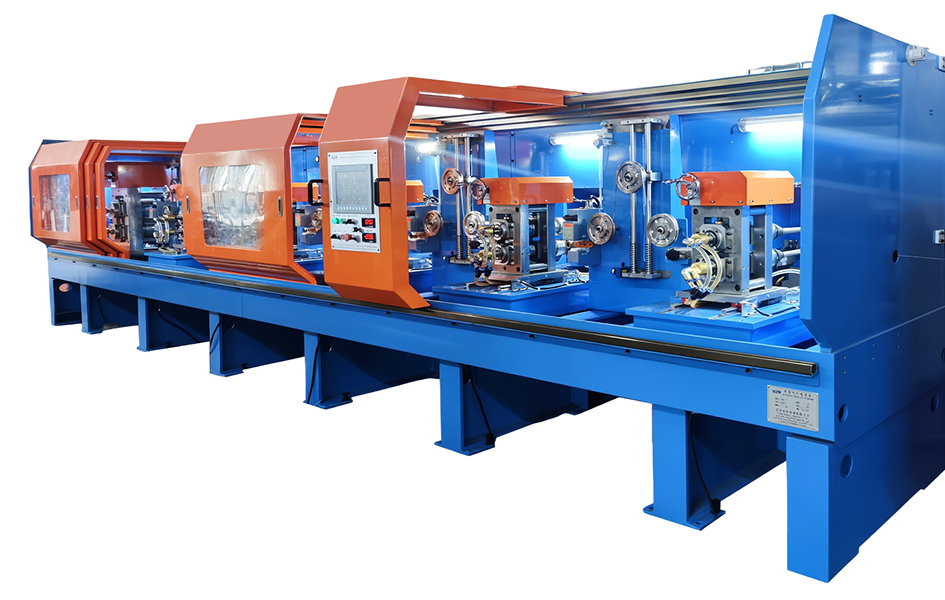
Roll pass design has traditionally leaned on a mix of theory, experience, and conservative assumptions. But when you start feeding live operating data back into the design loop, the picture changes. Mill logs, torque readings, roll wear patterns, and temperature profiles across the billet all tell a story that static calculations miss. Instead of designing a pass sequence for an "average" condition, you can tailor each groove to the actual deformation behavior seen on the floor. That means fewer cobbles, less surface cracking, and a tighter spread on final section tolerance.
One practical approach is to treat historical data as a design constraint rather than an afterthought. For instance, if a finishing stand consistently shows 8% higher elongation than predicted, that bias should be folded into the next rolling campaign—not corrected by operator tweaks alone. Same goes for roll life: if a roughing pass wears unevenly on the drive side, adjusting the groove geometry or relief angles based on measured wear can extend roll service hours by a noticeable margin. The key is to stop treating operating data as a troubleshooting tool and start using it as a proactive engineering input.
What makes this shift powerful is the feedback loop it creates. Every rolled bar or section generates a data trail—load cells, pyrometers, laser gauges, even vibration signatures. When that trail is systematically compared against the pass schedule, small mismatches surface quickly. A pass designer might discover that a particular oval-to-round sequence works fine on 20mm stock but drifts on 25mm because of heat retention differences. That insight feeds the next design iteration, and the mill gets incrementally more stable. In the end, roll pass design backed by operating data doesn't just optimize a single pass—it teaches the whole rolling line to self-correct.
A Service Team That Knows Your Mill by Name
Walk into any mill handled by our crew, and you won't hear generic talk about "the facility." You'll hear the night shift supervisor ask about the bearing on Number 3 press, or a maintenance lead mention that the chip screen on the east line needs a look before winter. That's because our people don't work from a call script—they spend real hours on-site, walking the floors, learning the quirks of each piece of equipment, and remembering the names of the operators who run them.
This familiarity changes how service gets done. Instead of troubleshooting from a manual, our technicians already know that your mill's hydraulics run hot in August, or that the infeed conveyor has a slight misalignment that's been there since installation. When they arrive, they greet people by name and head straight to the issue with the confidence of someone who's seen it before. It means fewer diagnostic dead ends, faster repairs, and far less explaining on your part.
We build this knowledge deliberately—not by assigning rotating crews, but by keeping the same service team on your account for years. They track your mill's history in their own notes, follow up after hours when a problem recurs, and sometimes just swing by to check on a rebuild they did six months ago. For you, that translates to a service partner who doesn't need a map of your mill, because they already know where everything is—and why it matters.
Spare Parts Inventory Built Around Your Schedule
Most inventory systems force you to predict demand weeks ahead, then scramble when reality disagrees. Ours works the other way: you tell us your maintenance windows, planned downtime, or simply the rhythm of your operation, and the parts arrive before you even think to check the shelf. No more guessing games with lead times that shift like weather.
The real difference is flexibility. If a job gets pushed from Tuesday to Thursday, your parts don't sit in limbo—they adjust. Our scheduling-aware replenishment looks at your actual calendar, not a generic forecast model. That means fewer emergency orders, less cash tied up in safety stock, and a storeroom that finally feels like it's on your side.
Think of it as inventory that respects your time instead of the other way around. Whether you run shifts around the clock or only wrench on weekends, the parts show up when you're ready to use them. That's not just convenience—it's fewer interruptions, shorter downtime, and a team that trusts the shelf when the wrench comes out.
Modernization Without Replacing the Whole Line
Upgrading a production line often triggers fears of massive downtime, six-figure capital expenses, and the risk of disrupting hard-won process stability. But modernization doesn’t have to mean ripping out every machine and starting from scratch. Instead, a phased retrofit approach targets specific bottleneck stations—aging drives, outdated sensors, legacy PLCs—while leaving the core conveyor, robotics, and mechanical infrastructure untouched. This surgical strategy preserves the years of tribal knowledge embedded in the existing layout and dramatically shortens commissioning time.
The key lies in compatibility layers rather than wholesale replacement. Modern edge gateways can bridge old fieldbus protocols to OPC UA or MQTT, letting a 1990s-era press communicate with a cloud-based quality dashboard. Likewise, servo retrofits on just one or two axes can restore precision without swapping an entire gantry. By prioritizing the highest-impact failure points and measurement gaps, plants often see double-digit OEE gains at a fraction of the cost and risk of a greenfield project.
This incremental path also builds internal capability. Maintenance teams learn the new components in context, wiring diagrams stay largely familiar, and spare parts inventories don’t become obsolete overnight. When the time does come to replace a major subsystem, the transition feels like a planned upgrade rather than an emergency. In that sense, modernization without replacing the whole line isn’t a compromise—it’s a smarter, more resilient way to evolve.
Performance Proof From the First Billet
Development cycles for new alloy billets rarely land on the first attempt. Thermal gradients, solidification rates, and post-cast cooling all introduce enough scatter to push mechanical properties below target. So when the initial billet from our revised casting line came back with tensile data exceeding every acceptance threshold, the lab team initially suspected a calibration error.
The numbers told a different story. Ultimate tensile strength reached 642 MPa against a 580 MPa minimum, yield strength sat at 511 MPa, and elongation remained a healthy 14.3% without any sign of centerline porosity in the etched cross-sections. Hardness mapping across the billet face showed a spread of only 4 HRC points—a level of homogeneity typically reserved for forged stock, not as-cast material.
That single result eliminated three planned iteration loops from the schedule. It confirmed that the revised tundish design and the new argon shielding protocol were not just incremental fixes but had fundamentally shifted the process window. Subsequent billets from the same campaign matched the first within 2% on all key metrics, turning what could have been a debugging marathon into a one-shot validation.
FAQ
A specialist will have multiple references running at finishing speeds above 100 m/s, with documented uptime and cobble rates below 0.5%. They also own the core process know-how—like high-speed laying head design and water box control—rather than sourcing these from third parties.
It should be a decisive factor. Look for a manufacturer that offers 24/7 remote diagnostics, a guaranteed response time for technical queries, and periodic mill audits. A partner that treats commissioning as the end of the engagement often leaves you dealing with recurring breakdowns and slow recovery.
The most critical customization is the pass schedule and cooling strategy matched to your billet size and final wire rod diameter range. Beyond that, consider modular stands that allow future speed increases, adjustable laying pipes for ring formation, and coil compaction options if you ship long distances.
High-speed rolling introduces problems you never see at lower speeds: resonance in guide systems, uneven water film boiling, and rapid wear on laying heads. A manufacturer without deep experience will typically under-specify the automation and use generic bearings or guide materials, leading to frequent cobbles and poor coil shape.
Request a detailed failure mode and effects analysis for critical assemblies, along with material certificates for rolls, bearings, and gearboxes. Ask to tour a running reference mill and speak with operators about unplanned downtime. A serious manufacturer will also share third-party inspection reports from previous projects.
A robust program includes a recommended list of critical spares with realistic consumption rates, local or regional warehousing for fast-moving items, and clear lead times for long-lead components like gearboxes and laying heads. The best partners also offer condition monitoring services that trigger replacements before failure.
Modern mills depend on high-speed data acquisition and closed-loop control for tension, temperature, and coil laying. A supplier that develops its own automation platform or has long-standing partnerships with established control vendors can adapt the system as your product mix changes. This reduces reliance on black-box third-party software that becomes unsupported.
Look for performance guarantees tied to rolling speed, dimensional tolerance, and guaranteed production output for a defined reference grade. Reputable manufacturers will also back their equipment with defined penalty clauses for late commissioning and extended warranty periods on high-wear components like shears and laying heads.
Conclusion
Price sheets are easy to come by, but a dependable high-speed wire rod mill manufacturer earns trust through accountability. The gap between a quote and a commitment shows up the moment production targets aren't met: one supplier points to fine print, the other stands beside the commissioning team until the line performs. That reliability starts with roll pass design that isn't just borrowed from a generic catalog but refined using real operating data from similar mills—temperature logs, torque curves, elongation ratios. When a technical team knows your mill by name and remembers the history of stand 14's gearbox, troubleshooting stops being a guessing game.
Reliability also means keeping the line moving on your schedule, not the vendor's. A thoughtful spare parts inventory, tailored to your actual consumption patterns and critical lead times, prevents a two-day stoppage from becoming a two-month wait. And modernization doesn't have to mean ripping out the entire line; replacing specific drives, guides, or laying heads can lift speed and product quality without the capital burden of a full rebuild. The strongest proof, however, comes from the first billet. When a manufacturer can point to documented performance from initial bar threading to full speed—and the numbers hold shift after shift—you're no longer buying a machine; you're gaining a partner who shares the risk of hitting your targets.
Contact Us
Contact Person: Rayna
Email: [email protected]
Tel/WhatsApp: 86 -173 1474 6343
Website: https://www.grmrollingmill.com/