

High Quality Quick Coupler Features That Make Attachment Changes Easier
2026-11-16
Every minute spent fighting a sticky coupler is a minute not spent on the job, and most operators know that frustration too well. The right quick coupler should feel like a seamless extension of the machine, not a puzzle to solve. That’s where HONGSEN raises the bar with high quality features that take the hassle out of attachment changes. From smarter locking mechanisms to robust build details, these design choices make swapping buckets, hammers, or grapples noticeably faster and safer. Here’s a closer look at what separates a truly easy-to-use quick coupler from the rest.
A Locking Wedge That Pulls the Attachment Tight Instead of Just Holding It
Most quick-attach systems rely on a simple pin or wedge that keeps the bucket from sliding off the plate. The problem is that “keeping it in place” isn’t the same as “pulling it tight.” As wear develops in the latching components, pins and wedges leave small gaps that let the attachment rock, chatter, and hammer against the coupler. That movement doesn’t just make the machine noisy—it accelerates wear on the attachment ears, bushings, and even the loader arms themselves.
A locking wedge that actually pulls the attachment tight changes how the connection behaves under load. Instead of relying on gravity or friction alone, the wedge geometry draws the attachment rearward against the coupler face as it seats. Think of it like closing a tapered door latch: the further the wedge drives in, the more it tensions the attachment against the mounting plate. Dirt, paint, rust, and minor dimensional differences get taken up in that taper, not left as slop.
The difference shows up fastest on jobs where the operator changes attachments several times a day. A wedge that only holds requires constant re-tightening and still lets the tool flop slightly when reversing direction. A pulling wedge stays snug through forward and reverse cycles, which means less side load on retaining pins and fewer instances of the attachment popping loose on a slope. Over time, that translates into longer pin and bushing life, quieter operation, and fewer mid-shift stops to re-seat the bucket.
The Release Handle Falls Naturally by Your Thumb
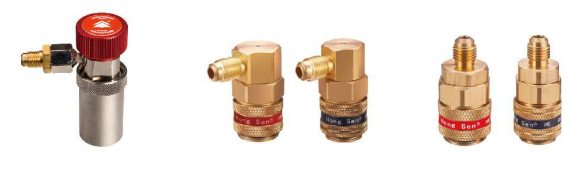
The first thing you notice is that your thumb does not have to search. The release handle sits just under the pad of the thumb when the tool is held in a normal grip. A slight inward bevel guides the thumb forward, and one firm press is all it takes. No readjusting, no stretching.
The surface is finished with a fine, low-sheen texture that holds onto skin or glove material without chewing into it. The edges are rolled just enough to avoid a sharp line across the joint. Because the handle lies parallel to the thumb's resting angle, the press uses the strongest part of the thumb rather than the tip, which matters more than it sounds after a long stretch of repeated work.
What makes it feel natural after a while is the absence of conscious effort. You reach for the tool, your hand closes, and the handle is already there under the thumb, waiting for pressure. It is a small detail that quietly disappears into the rhythm of use.
You Can See the Lock Engaged Without Leaving the Seat
There is a simple difference between guessing that an attachment is secured and knowing it from the driver position. A visible lock indicator, placed in line with the operator's natural sight path, removes the need to climb out, crouch down, or wave someone over to double-check. You see the pawl seat into place, and you move.
The arrangement works because the engagement point is not hidden behind a fender or buried under bracketry. When the mechanism closes, a painted reference or a stepped plate lines up with the frame, so the change is obvious even through dusty glass or in flat afternoon light.
That kind of clarity matters more on uneven ground, where a half-seated lock can look fine from a distance but fail under load. Staying in the seat until the condition is confirmed means less time on the ground, fewer interrupted cycles, and a much lower chance of running equipment with a false sense of security.
Coupler Faces That Stay Dry When You Unhook
Flat-face coupler bodies pull the valve seats flush with the mating surface as soon as the locking sleeve backs off. That close-off happens before the threads or locking balls fully release, so the oil film never gets a chance to follow the male tip out. What you are left holding is a face that feels dry to the touch, not one that has been weeping into a rag or dripping across the frame rail.
The practical difference shows up when you have to reconnect under a machine or swap an attachment in a clean barn. There is no puddle forming under the coupler, no grit sticking to a wet face, and no need to wrap the tip in a shop towel while it hangs. Even after repeated cycles, the residual fluid stays trapped behind the valve instead of collecting at the opening.
A small amount of expansion can still push a faint bead out on hot days, but it usually sits inside the recessed nose where the mating seal wipes it away during connection. Keeping the dust caps in place when the line is stored helps more than most people expect, especially if you work around fine dust or bedding.
Wear Strips You Can Replace in the Field
Field-replaceable wear strips turn a routine wear item into a quick swap instead of a teardown. There’s no need to send the whole assembly back or wait on a shop technician when the strip itself is the only part taking abuse.
Most designs use a simple bolt-on, clamp, or slide-in retention system. Loosen a few fasteners, pull the old strip, seat the new one, and torque to spec. The job is often finished during a scheduled pause, which keeps equipment moving without major disassembly.
A useful habit is to keep a couple of strips on the shelf and check alignment once they’re seated. Small differences in mounting surfaces can cause uneven contact, so a quick visual pass after installation saves a lot of premature wear later.
The Same Coupler Covers More Attachment Families Without Adapters
Most coupler systems force you to choose between running a dedicated coupler for each attachment line or stacking adapters that add weight, slop, and leak points. This design takes a different route: the locking profile and contact surfaces are shaped to accept several attachment families directly, so the same unit can pick up buckets, grapples, and breakers without swapping any conversion hardware.
That wider native compatibility changes how a job site handles tool changes. Instead of matching plates and pins to a specific carrier, crews can drop one attachment and engage another in a fraction of the time. It also trims the inventory that normally sits around for adapter kits, which means fewer parts to inspect, lose, or misalign when the pressure is on.
FAQ
Look for machined locking surfaces, tight pin engagement, and a design that holds the attachment firmly without relying on the operator to constantly re-tighten things. A basic coupler often works loose faster and has more slop from day one.
They let the operator stay in the cab and swap from a bucket to a breaker in under a minute. The coupler handles the pin movement, so there is no need to climb out, hammer pins, or fight alignment on uneven ground.
A visible or audible lock indicator, a secondary mechanical lock or wedge that stays engaged even if hydraulic pressure drops, and a design that prevents the attachment from releasing while lifted are the big ones. These details reduce the chance of an attachment dropping during a change.
It can be if the machine runs a limited set of attachments and the operator does not mind a short walkaround. A well built manual coupler with good grease points and a simple pin system is affordable and reliable, but it will not match the cab side speed of hydraulic systems.
Grease the pivot points and locking wedges on the schedule the manufacturer lists, clean debris out of the coupler before hooking up, and inspect wear on the pins and bushings. Small play allowed to grow turns into sloppy attachment changes and bigger repair bills later.
It should come with clear fitment specs and, in many cases, adapter options for different pin diameters or ear widths. A better coupler tends to maintain its original dimensions longer, so attachments drop into place without forcing or shimming.
Watch for visible gaps between the wedge and housing, attachment movement during lifting, the lock indicator not reading fully engaged, or hydraulic leaks around the cylinder. Any of these means the coupler needs service before the next change.
Yes. A well engineered coupler guides the attachment into position and pulls it tight instead of leaving the operator to rock the machine back and forth. The change feels more deliberate and less like a wrestling match, especially in mud or on a slope.
Conclusion
The real difference in a quick coupler shows up before you ever leave the cab. A well-designed locking wedge does more than sit in place; it pulls the attachment tight against the coupler so there is no slop when you work. That snug fit matters when you are back-dragging or lifting uneven loads. The release handle placement also tells you a lot about whether the design was thought through. When it falls naturally by your thumb, you can uncouple without twisting or reaching across controls. Add a visible lock indicator that you can read from the seat, and the whole hookup becomes one clean motion instead of a guess-and-climb-down routine.
On the ground, the details keep paying off. Coupler faces that stay dry when you unhook prevent a film of dust and moisture from turning into packed grit later. Sealed surfaces mean the next attachment drops in cleanly. Wear strips that you can replace in the field take that further, because you can restore a tight fit on a jobsite without hauling the coupler into a shop. And a coupler that covers more attachment families without adapters removes the usual clutter of extra brackets and pins. That means fewer parts to lose, fewer steps between tasks, and less downtime. It is the kind of design that makes attachment changes feel like a quick pause rather than a project.
Contact Us
Contact Person: KOPASS HO
Email: [email protected]
Tel/WhatsApp: 8613606566112
Website: https://www.hongsenref.com/