

High-Quality Optical Slip Rings: Unlocking Superior Performance in Rotating Systems
2026-07-18
In today's precision-driven world, where seamless rotation and flawless data transmission are non-negotiable, high-quality optical slip rings are silently powering breakthroughs across industries—from medical imaging to wind turbines. But not all slip rings are created equal, and the difference often lies in the details of design and manufacturing. At MOFLON, we’ve redefined what reliability means, pushing the boundaries of signal integrity even in the most demanding environments. So, what truly sets an exceptional optical slip ring apart, and why should engineers pay closer attention to this critical component? Let’s explore the hidden factors that can make or break your rotating system’s performance.
The Core Mechanics Behind Flawless Signal Transmission
At the heart of every crisp, uninterrupted signal lies a careful orchestration of impedance matching, shielding, and conductor geometry. When a signal races along a transmission line, any mismatch between the source, line, and load creates reflections that bounce back and forth like echoes in a canyon, muddying edges and corrupting data. Precision-engineered connectors and tailored dielectric materials ensure that energy flows with minimal loss, maintaining the characteristic impedance exactly as designed—whether it’s a 50-ohm coax or a 100-ohm differential pair. This foundation prevents the jitter and noise that would otherwise creep in between clock cycles.
Beyond basic impedance control, modern signal paths rely on differential signaling and active equalization to beat down distortion. Differential pairs send two mirrored copies of the signal, twisting them together so that external interference hits both wires equally and cancels out at the receiver. Meanwhile, tiny adaptive circuits in transceivers continuously scan the incoming waveform and apply just the right amount of boost or delay to counteract frequency-dependent losses. It’s a real-time negotiation between the physics of copper and the intelligence built into silicon—one that keeps eye diagrams wide open even across meters of humble PCB trace.
Perhaps the most underappreciated factor is the physical layout itself: return paths, via stitching, and layer stack-up. High-frequency currents don’t just follow the path of least resistance; they hug the path of least inductance, often the plane directly beneath a trace. A broken return path under a high-speed line turns that innocent copper run into an antenna, spraying electromagnetic interference into nearby circuits. By dedicating entire layers to solid ground planes and carefully routing signals to avoid slots or gaps, designers create a quiet electromagnetic environment where signals can travel with startling fidelity, even when packed alongside dozens of aggressive neighboring nets.
Real-World Applications Where Precision Rotates
In the hushed environment of a semiconductor fab, wafer handling robots glide on air-bearing stages, their motions so smooth that a single micron of deviation could ruin a chip worth thousands. These systems rely on precision rotation not just for transport, but for alignment during lithography and inspection—where a slight angular error would cascade into massive yield loss.
Modern surgical robotics take this idea into the human body. A bone-cutting tool spinning at high RPM must maintain exact orientation and depth, adjusting in real-time to patient movement and tissue resistance. Here, precision rotation is literally a matter of life and limb, with sub-degree accuracy ensuring cuts are made to within a fraction of a millimeter.
Out at sea, dynamic positioning systems for drillships and wind turbine installation vessels use azimuth thrusters that rotate with extreme accuracy to counteract waves, wind, and current. A half-degree error in thruster angle could mean drifting off station, snapping risers, or missing the target pile. It’s a brute-force application where rotating massive machinery with precision isn’t just elegant—it’s the only way to keep billion-dollar operations safe.
Overcoming Noise and Wear in Continuous Rotation
Continuous rotation systems often battle two persistent foes: the gradual erosion of materials and the irritating hum of friction. These issues stem from the relentless motion that slowly degrades surfaces and generates vibration. Traditional fixes lean heavily on periodic lubrication, but this merely postpones the inevitable breakdown as grease breaks down or gets pushed aside. A more effective approach integrates self-lubricating composites or solid lubricant coatings that embed themselves into the contact zones, forming a durable, low-friction barrier. This not only reduces wear particles but also dampens the microscopic chatter responsible for noise, creating a smoother, quieter operation from the start.
Precision engineering takes the fight against wear and noise a step further by rethinking the interface geometry. Instead of relying solely on materials, designers now employ surface texturing techniques—like micro-dimples or laser-etched patterns—that trap debris and distribute lubricant more evenly. These engineered surfaces break up harmonic vibrations and prevent the buildup of damaging heat, which often accelerates wear. In spindle motors or rotary indexing tables, this translates to a noticeable drop in high-frequency squeal and a longer service life, even under variable loads. It’s a meticulous balance of topography and tribology that keeps the assembly running quieter for years.
Beyond hardware, controlling the environment and mounting conditions can dramatically cut down rotational noise and wear. Simple steps like improving alignment through flexible couplings or adding vibration-damping mounts isolate the rotating assembly from surrounding structures, preventing resonance from amplifying sound. In dusty or humid settings, sealed housings with inert gas purges protect critical surfaces from corrosion and abrasive contaminants. Combined with onboard monitoring—such as vibration sensors that detect early bearing wear—these measures allow for proactive maintenance before minor annoyances become major failures. The result is a system that not only endures continuous duty cycles but does so with a whisper rather than a roar.
Materials and Design That Redefine Durability
For generations, durability meant bulk—thick steel, heavy rubber, brute force. But the new era of manufacturing doesn’t just add mass; it engineers resilience at the molecular level. Think ceramics that flex instead of shatter, or polymers with a memory that heals themselves when scratched. This isn’t sci-fi—it’s the quiet revolution happening in labs and on factory floors, where the goal isn’t just to endure stress but to predict and absorb it in ways that feel almost organic.
The secret often lies in structure, not just substance. Designers now borrow motifs from biology: honeycomb matrices that distribute force evenly, interlocking fibers that mimic tendon networks, or surfaces that repel wear like a lotus leaf sheds water. A phone case built this way might thin at the edges for grip but thicken imperceptibly near impact zones, sparing you the bulk without trading away protection. It’s durability tailored to real-world use, not just lab tests, making objects that age gracefully rather than wearing down awkwardly.
This shift redefines what we should expect from the things we own. Durability is no longer about surviving a single catastrophic event; it’s about resisting the slow, daily accumulation of scuffs, cracks, and fatigue. It’s a watch crystal that stays unscratched after years of desk work, or a bag whose fabric becomes more supple without fraying. When materials and design collaborate this closely, products become companions that keep their integrity, and we end up replacing them less, almost without meaning to.
Integrating Optics for High-Speed Data Without Compromise
The shift toward optical interconnects isn’t about replacing copper outright—it’s about eliminating the bottlenecks that hold back performance. By merging photonic components directly into chip packages or board-level layouts, data can flow at rates that electrical traces simply cannot sustain over distance. This integration sidesteps the thermal and latency penalties that have traditionally accompanied high-bandwidth designs, allowing engineers to push speeds well past 100 Gbps per lane without wrestling with signal integrity nightmares or exotic cooling schemes. The result is a cleaner path from silicon to system, where optics handle the heavy lifting and electronics manage what they do best.
A key challenge has always been alignment—microns matter when photons are involved. Modern co-packaging techniques embed lasers, modulators, and detectors with sub-micron precision, often leveraging passive alignment features etched directly into silicon photonics wafers. This means no active tweaking on the assembly line, which slashes manufacturing complexity and cost. Meanwhile, materials like thin-film lithium niobate are redefining modulation efficiency, enabling modulation speeds that don’t force trade-offs between power consumption and reach. Such advances let a single fiber carry terabits while the system board stays decidedly uncluttered.
The practical upshot is infrastructure that doesn’t force a choice between density and reliability. In data centers, optical integration shrinks the switch port count needed for interconnects, reduces cabling bulk, and cleans up the thermal profile of entire racks. Beyond the rack, it paves the way for chip-to-chip optical fabrics that could one day blur the line between discrete server nodes and a seamless compute pool. Ultimately, designing optics in from the start—rather than bolting them on as an afterthought—turns high-speed data from a constant compromise into a straightforward engineering exercise.
Maintenance Myths and the Path to Long-Term Reliability
It’s easy to believe that if a machine is running fine, it doesn’t need attention. This assumption often leads to a reactive spiral where small issues snowball into catastrophic failures. The truth is that consistent, condition-based care—rather than run-to-failure habits—forms the backbone of long-term reliability. By debunking the myth that maintenance is only necessary after something breaks, teams can shift focus toward monitoring, early intervention, and a deeper understanding of asset health.
Another persistent misconception is that reliability comes solely from high-quality parts or advanced technology. In reality, even the best components underperform without proper installation, alignment, and lubrication practices. Reliability emerges from disciplined routines, thorough training, and a culture that treats each inspection and adjustment as non-negotiable. It’s not about spending more; it’s about being deliberate with what you already have.
The path away from these myths starts with tiny, everyday decisions: checking a bolt’s torque, wiping down a sensor, reviewing a trend graph. Over time, these small acts compound into equipment that lasts beyond its projected lifespan and processes that rarely catch you off guard. Long-term reliability isn’t a grand achievement—it’s a quiet, persistent rejection of shortcuts and oversimplified stories we tell ourselves about how things work.
FAQ
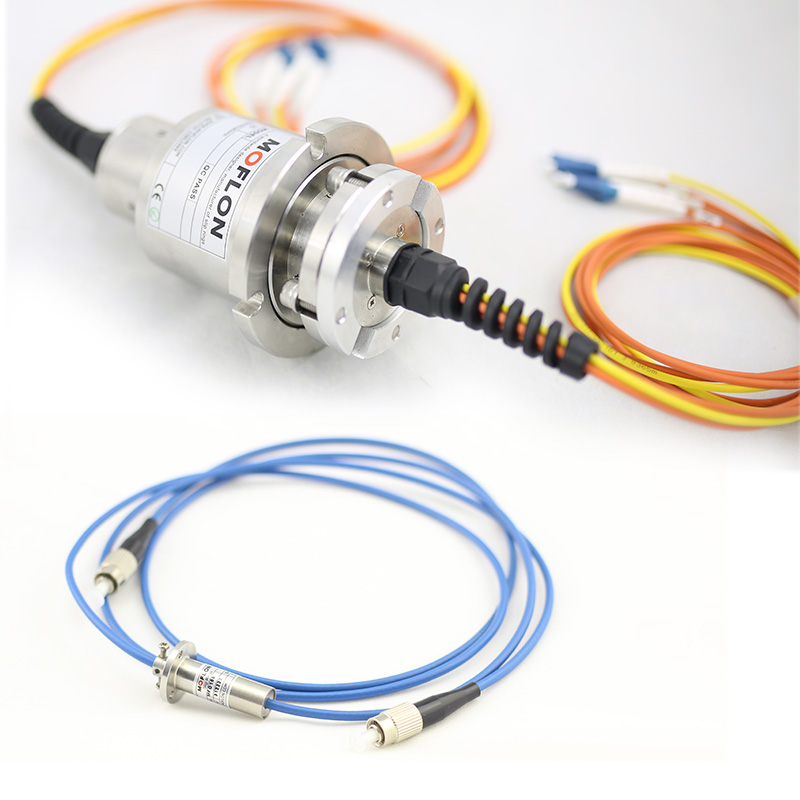
An optical slip ring is a device that allows the transmission of optical signals between a stationary and a rotating part of a system, using light instead of electricity. Unlike electrical slip rings that pass current through physical contacts, optical slip rings use fiber optic or free-space optics to transmit data via light beams, eliminating contact wear and electrical noise.
It relies on principles of optics, such as collimated light beams or fiber optic rotary joints. In many designs, light is emitted from a stationary source, passed through lenses or mirrors across a rotating interface, and then collected by a receiver on the rotating side—all without any physical connection, ensuring uninterrupted and low-loss data transfer.
High-quality optical slip rings offer immunity to electromagnetic interference, higher data bandwidth, minimal signal loss, and greater reliability due to the absence of wearing contacts. They can handle large data streams—from gigabit Ethernet to HD video—over long periods while maintaining signal integrity, which is critical in precision rotary applications.
They're widely used in medical imaging systems like CT scanners, military turrets and radar systems, wind turbines, robotic arms, and broadcasting equipment—anywhere you need continuous rotation while streaming high-speed data or sensitive optical signals without disruption.
Key factors include low insertion loss, high return loss, minimal crosstalk, robust mechanical construction, protection against dust and moisture, and the ability to operate at the required wavelengths and data rates. Certifications or proven track records in demanding environments are also good indicators of quality.
Not directly—optical slip rings are designed purely for optical signals. In hybrid systems, they are often integrated with electrical slip rings or wireless power transfer modules to supply power alongside fiber optic data channels, giving the best of both worlds.
Because there are no contacting parts, maintenance is generally minimal. However, optical surfaces must stay clean and aligned; contamination from dust or physical shock can degrade performance. High-quality units are sealed to prevent such issues, making them virtually maintenance-free for years.
Advancements in fiber optics, micro-optics, and free-space communication are pushing optical slip rings to higher channel counts, smaller form factors, and even greater bandwidths. The rise of IoT and real-time data processing in rotating machinery is also driving demand for smarter, more integrated slip ring solutions.
Conclusion
High-performance optical slip rings redefine signal integrity in rotating assemblies by leveraging fiber optics instead of conventional metal contacts. Their core advantage lies in contactless transmission, where light pulses carry data across a rotational interface with zero friction and zero electrical noise. This eliminates the wear, arcing, and signal degradation that plague traditional slip rings. Advanced designs incorporate precision collimators, expanded beam optics, and wavelength-division multiplexing to maintain flawless transmission even at high rpm or in harsh environments. From medical CT scanners demanding sub-millimeter image accuracy to wind turbines requiring reliable pitch control data, these systems deliver consistent bandwidth and protocol transparency, handling Gigabit Ethernet, HD video, and sensitive analog signals without compromise.
Real-world deployments demonstrate how optical slip rings overcome continuous rotation challenges. In military turrets, they prevent data dropouts while slewing at extreme speeds; in offshore cranes, they resist salt spray and vibration better than any brush-based alternative. Material choices—stainless steel housings, sapphire optical windows, and chemically hardened fiber—contribute to extraordinary durability. Misconceptions about delicate optics persist, but modern units withstand shock, temperature swings, and millions of revolutions with minimal maintenance. The secret is not just in the components but in the engineered alignment that maintains micron-level tolerances over decades. By integrating optics directly into the mechanical structure, these systems provide a future-proof pathway for high-speed data, ensuring that rotating platforms never become bottlenecks in the data chain.
Contact Us
Contact Person: Xiangpin Li
Email: [email protected]
Tel/WhatsApp: 86 186 1706 8578
Website: https://www.moflon.com