

High-Quality Expansion Valves Explained: What to Look for Before Buying
2026-11-20
An expansion valve can look flawless on a spec sheet and still be the reason a system runs warm, hunts, or wears out early. The difference usually isn't the brand name stamped on the body—it's in the seat geometry, material stability, and behavior under partial load. Before you commit to a purchase, it helps to know which details actually predict long-term performance. Below, we break down what to look for in a high-quality expansion valve and how HONGSEN approaches those same points in real systems.
What Field Failures Reveal About Expansion Valve Quality
Field failures rarely point to a single design flaw; they tend to expose a chain of small compromises. When an expansion valve sticks open after two summers in a rooftop unit, the real story is often a spool machined too tight for the debris load in the system, or a stainless diaphragm that fatigue-cracked because the charge was not matched to the actual evaporator temperature swings. These failures do not announce themselves in the lab. They show up as erratic superheat, oil logging, and compressors that die from slugging long before anyone suspects the valve.
What separates durable valves from marginal ones becomes visible only after hundreds of units have been through a few hard seasons. Field returns often cluster around the same welds, the same capillary routing, or the same batch of power elements. A slight porosity in a braze joint may pass any single pressure test, yet under thermal cycling and vibration it opens into a slow leak that shifts valve response. Similarly, a power element charge that tolerates a small moisture ingress will gradually lose its pressure-temperature curve, making the valve hunt or feed too much liquid at part load.
The field is therefore not just a source of warranty claims; it is a delayed quality audit. Patterns from failed units reveal whether the manufacturer controlled fit and finish under real production variation, whether the internal materials resisted oil dilution and acid formation, and whether the assembly held alignment after rough transport. Engineers who read those patterns closely end up treating expansion valve quality less as a specification checklist and more as a prediction of how the valve will behave once it is no longer clean, new, or installed exactly to the manual.
Getting the Capacity and Refrigerant Match Right
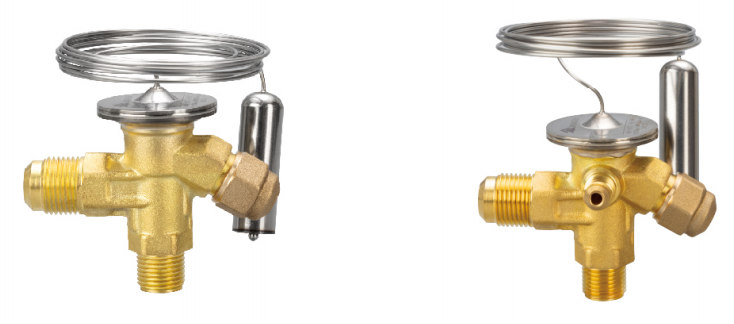
Air conditioning systems are often sized by rule of thumb rather than by actual thermal load, and that habit quietly undermines performance. A unit with too much capacity cools the space so quickly that it never runs long enough to remove moisture, leaving the room clammy and uncomfortable. An undersized unit, by contrast, runs constantly on the hottest days, struggles to hold the setpoint, and wears out compressors far sooner than expected. Matching capacity to the real load means accounting for window orientation, ceiling height, insulation levels, internal heat gains, and local climate, not just square footage.
Refrigerant selection is the second half of the same equation. The refrigerant charge must suit the coil volume, line length, and metering device of the specific system. Too much charge raises head pressure and forces the compressor to work against itself, while too little starves the evaporator and causes coil frosting or poor oil return. The correct match also matters when retrofitting older equipment: a drop-in replacement may have a different glide or temperature curve, so simply swapping the gas without adjusting the expansion valve or airflow can erase the efficiency you expected to gain.
A properly matched pair—capacity aligned with load and refrigerant tuned to the hardware—will hold temperature steadily, pull humidity down during part-load conditions, and keep energy use predictable. It also reduces nuisance callbacks: fewer frozen coils, fewer short-cycling complaints, and fewer hot spots from uneven airflow. The best results come from measuring superheat and subcooling in the field rather than relying on factory charge tables alone, because even a small mismatch in line length or elevation can shift the system away from its designed balance point.
Superheat Settings That Keep a System from Eating Itself
A system rarely destroys itself from one bad setting. It dies slowly when evaporator superheat stays low enough to let liquid droplets wash oil out of the crankcase, or high enough to cook the discharge valves. The useful range is narrower than most charts suggest, especially on coolers with long line runs or poorly insulated suction lines. Start with the evaporator side: measure pressure at the outlet and temperature at the bulb, then target roughly 6 to 12 degrees of superheat for a standard TXV circuit. If the hunting is worse than a few degrees swing, fix bulb placement before touching the valve stem. The bulb belongs on a clean horizontal section, tightly clamped, and not on a downstream bend after a distributor.
Compressor superheat matters more. Even when the evaporator looks healthy, low load conditions can send wet vapor down a long suction riser, so a reading taken only at the evaporator hides what the compressor sees. On systems with more than twenty feet of suction line, aim for 20 to 40 degrees at the compressor inlet, but do not chase an exact number on a dirty coil or before airflow is correct. Adjust in quarter turns, wait for the system to stabilize, and log pressures before assuming the valve is the problem. An infrared thermometer on a pipe gives false comfort; use a clamp thermocouple under insulation.
The highest safe setting is not a target. If a system needs very high superheat to keep liquid out, the real issue is usually charge, restrictions, or a sensor bulb that reads the wrong pipe. Overflowing the evaporator to cool a warm box faster will eat oil and may take out the reeds within a season. The setting that protects the compressor is the one that keeps suction vapor dry but not starved, and that only holds when the bulb, airflow, and condenser conditions are stable enough to trust the measurement.
Reading the Machine Work and Finish Before You Commit
A machined surface rarely lies. Run your fingers along the edge breaks, look at how the tool paths meet in corners, and check whether the finish stays consistent across flat and curved sections. Small irregularities can reveal vibration, worn tooling, or a shop that rushes the final pass.
Before you agree to anything, ask for a sample that matches the actual production setup. If the finish looks different under shop lighting than it does in the photos, take that seriously. The surface is the summary of every decision made before it reached your hands.
Installation Errors That Cancel Out a Premium Valve
A high-end valve can be undone before it ever sees operating pressure. The most common culprit is misalignment: when flanges are pulled together with bolt force instead of being mated square, the body takes a bending load it was never designed to carry. That stress shows up later as a cracked flange, a seat that will not seal, or a stem that starts binding after a few thermal cycles. Premium machining tolerances mean nothing if the pipework forces the valve into a slight twist.
Overtightening is just as destructive. Installers often treat a bigger wrench as extra insurance, but exceeding the manufacturer's torque range crushes gaskets unevenly, warps the flange face, and can pinch the internal seats. The valve may hold during a cold hydro test, then leak at temperature because the sealing surfaces no longer line up. With metal-seated or triple-offset designs, that kind of distortion is usually permanent.
Dirty piping completes the damage. Slag, rust, mill scale, and leftover thread tape find their way into the seat area before startup. Once the first cycle scrapes that debris across a lapped sealing surface, the valve loses the very tightness you paid extra to get. A simple flush, filter, or visual check before mounting keeps a premium valve from being reduced to an expensive pipe fitting.
Knowing When to Swap Instead of Tweaking
There’s a quiet trap in the early stages of building anything: the instinct to keep adjusting what already exists. A headline gets rewritten, a button moves a few pixels, a sentence softens. Each change feels productive, but the overall shape stays the same. Swap instead of tweaking means recognizing when the problem isn’t in the details but in the assumption underneath them. It’s the difference between repainting a room and questioning whether you’re in the right house.
Most people tweak because swapping feels riskier. Changing a word is reversible; changing a direction is not. But that safety is often an illusion. If a landing page has the wrong core offer, refining the spacing won’t fix the silence after visitors arrive. The harder move is to step back and ask: what would I replace entirely if I weren’t attached to what I’ve already made? That question tends to reveal the real bottleneck.
A practical way to spot the need for a swap is to track how long you’ve been polishing without a shift in outcome. Two rounds of minor edits might be normal. Ten rounds usually mean the foundation has stopped carrying weight. At that point, the highest-leverage choice is often to replace the section, the offer, or the approach wholesale—not to find a smarter version of the same thing.
FAQ
Material choices inside the valve body make a real difference. Better units tend to use hardened stainless steel pins and seats, tighter machining tolerances, and seals that stay stable through temperature swings. Budget valves often work fine at first, but superheat control gets sloppier as the seat wears, and you start seeing hunting or floodback under partial load.
For a steady, single-temperature box, a TXV is usually the simpler and more serviceable choice. If the cooler sees frequent door openings, varying product loads, or long pipe runs, an EEV will hold superheat tighter and recover faster, but you have to accept the added controller, sensors, and wiring.
Start with the evaporator capacity at the actual evaporating temperature, then apply the correction factors from the valve manufacturer for liquid temperature and pressure drop. Compressor horsepower is only a rough guide and often leads to an oversized valve that hunts or an undersized one that starves the coil.
An internally equalized valve works fine when the evaporator pressure drop is low and there is no distributor. Once a distributor or a long, narrow coil circuit is involved, you want external equalization so the valve sees the true evaporator outlet pressure. Skipping it can force the superheat setting higher than needed and cut capacity.
It matters most when system conditions might change or when the valve needs servicing. A replaceable cage lets you swap capacity without replacing the whole body and saves downtime if a seat wears. For a fixed, predictable system it is less critical, but it is still a useful service feature.
Poor bulb placement is at the top of the list. The bulb should be mounted on a clean, horizontal section of the suction line, tightly clamped and insulated, not downstream of a trap or on the bottom of the pipe. Other common issues include overheating the body during brazing, forgetting the external equalizer line, and pulling a weak vacuum before charging.
Look at the selection table and compare the valve capacity at your actual conditions to the evaporator load. If you are more than about 15 to 20 percent above the load, it is worth dropping to the next size. Oversized valves tend to overfeed, slam open and shut, and send liquid back to the compressor, especially at low load.
They are handy on a service truck, but I would not use one as a permanent fix on a system you expect to run efficiently. The valve ends up being a compromise in capacity, charge style, and equalization method. A selected valve matched to the refrigerant, evaporator, and load will outperform a universal kit nearly every time.
Conclusion
Warranty returns and tear-downs usually tell the same story: erosion around the seat, a sticking push rod, or an orifice that drifts once the body heats up. That is why the first thing to evaluate is not the data sheet but the failure pattern a given valve family develops over time. Capacity and refrigerant match come next. A valve that performs well with one refrigerant can hunt or whistle with another, and a nominal tonnage rating means little if the actual load sits near the bottom of its range. Superheat then becomes the honest test. The right setting lets the evaporator run wet enough to use its full surface without sending liquid slugs back to the compressor; a poorly set valve will either starve the coil or slowly destroy the compressor from the inside.
Before buying, the finish tells you more than the box does. Sharp thread starts, clean flare seats, and consistent machining around the diaphragm suggest the manufacturer controlled the parts that cause slow leaks and erratic control. Even so, installation can cancel every bit of that quality. Too much heat on the body, a sensing bulb mounted on the wrong section of the suction line, or an inlet fitting forced into alignment can turn a premium valve into a callback generator. There is also a moment to stop adjusting. When a valve will not hold a stable superheat after cleaning, or its response has become lazy and unpredictable, replacement is usually the sensible call. A good purchase is less about paying for the top of the line and more about matching the valve to the refrigerant, reading the workmanship, and installing it well enough to stay predictable.
Contact Us
Contact Person: KOPASS HO
Email: [email protected]
Tel/WhatsApp: 8613606566112
Website: https://www.hongsenref.com/