

Forklift Projector Recommendations That Improve Warehouse Safety
2026-11-29
Warehouse safety often hinges on what forklift operators notice in the last few feet before a blind corner or a busy aisle. Mirrors and floor tape help, but they don't cut through the noise the way a sharp, visible beam does. If you're weighing forklift projector recommendations that improve warehouse safety, TNT is one name worth checking before you settle on a system. Here's a practical rundown to help you choose.
Where the Beam Lands Matters More Than the Lumen Count
A high lumen rating looks impressive on a spec sheet, but it rarely tells you whether a light will actually help you see well. The real question is where the beam lands: does it spread evenly across the surface in front of you, or does it drill a bright tunnel that leaves the edges of your view in darkness? A narrow, intense hotspot can force your eyes to constantly adjust between overexposed and underlit areas, which gets tiring fast. A softer, wider beam with a gentle falloff often feels far more useful in real tasks, even when the total output is lower.
The shape and position of the beam matter more than the raw output because your eyes adapt to average brightness, not peak brightness. If the center of the beam hits a reflective surface or lands too close to your hands, glare can bounce back and wash out the detail you need. Shift the same light a few degrees, widen the cone slightly, or smooth the transition from hotspot to spill, and a modest 300-lumen lamp can outperform a 1,000-lumen one that aims all its energy at the wrong spot. It is not about fewer lumens being better; it is about putting the usable part of the beam exactly where your work happens.
Before adding another high-output light to your kit, pay attention to how it behaves beyond the brightest point. Look at the edge quality, how quickly the light fades, and whether the beam creates a clean working area without forcing you to reposition the tool constantly. Those details shape comfort and accuracy more than any lumen count on the package.
Mounting Height, Angle, and the Problem of Faded Floors
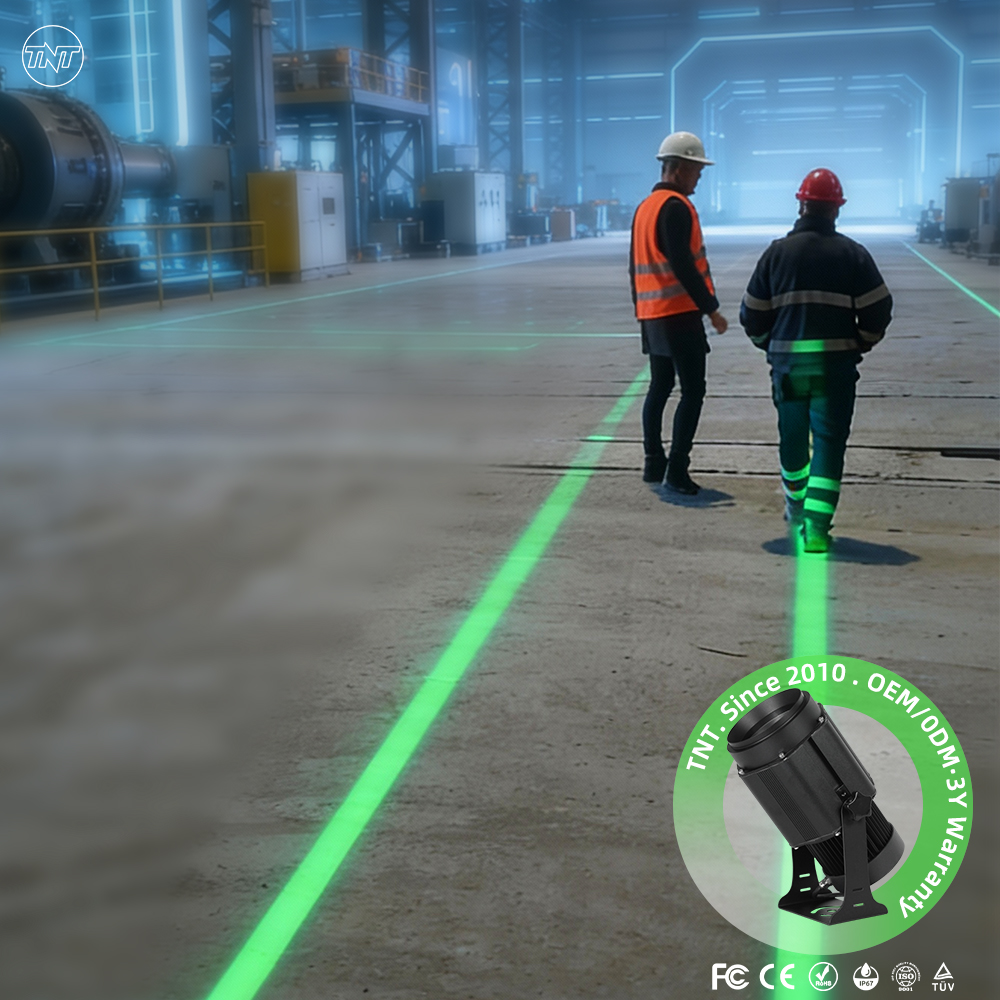
Floor fading usually gets blamed on cheap finishes or harsh cleaning products, but the installation geometry of overhead lighting often plays a larger role. When fixtures sit too low or are angled steeply toward the same strip of flooring, ultraviolet and visible light concentrate on a narrow band. That repeated exposure breaks down pigments and coatings faster than diffuse light ever would, leaving pale patches that match the beam pattern almost exactly.
Raising the mounting height changes the throw distance and spreads the light more evenly across the surface. A moderate mounting angle can also keep the brightest part of the beam away from high-traffic or logo-heavy areas where fading is most obvious. In gyms and multipurpose rooms, even a small adjustment of ten to fifteen degrees has been enough to shift hot spots off the court markings and reduce the contrast between center court and perimeter flooring.
The trouble is that mounting height and angle are usually fixed early in a project, long before anyone notices a fade pattern. Retrofitting with diffusers, lower-UV lamps, or repositioned brackets can help, but the cheapest fix is still to think about beam overlap during layout. If the light reaches the floor from multiple directions at balanced intensity, no single patch takes the full force, and the floor ages far more evenly.
Red Versus Blue and the Warehouse Color Rules That Stick
In most warehouses, color is not decoration. It is a quiet argument between urgency and caution. Red rarely waits for approval: it marks fire equipment, damaged stock, quarantine zones, or anything that should not move without a second look. Blue tends to work the other way. It signals order, often assigned to raw materials, finished goods, or cleaning stations where the main risk is losing track of an aisle.
The rules that stick are usually the ones people can read at a glance. A red tag on a pallet does not need a training manual; it already says stop. Blue floor lines fade into routine because they guide rather than warn. Where the two colors meet, the warehouse starts to make sense: red tells you what to avoid, blue tells you what to trust, and the space between them is where most of the work actually happens.
Over time, the strongest color systems survive because they stay simple. Too many shades and every sign becomes background noise. A handful of consistent cues, though, settles into muscle memory. New hires learn the red and blue map without thinking about it, and that is the point. A rule only sticks when it stops feeling like a rule.
Using Projected Walkways to Slow Down Blind Corner Traffic
At blind corners, the real issue is the element of surprise. A projected walkway places shifting light, stripes, or chevrons across the asphalt just ahead of the turn, giving drivers a visual cue before the sightline fully opens. Because the pattern appears only where the corner hides oncoming movement, it works as a quiet warning that does not rely on painted markings or signs.
The strength of the approach is its adjustability. A slow pulse or a moving band can be tuned to the corner’s geometry and ambient light, encouraging vehicles to shed speed without demanding a full stop. That modest reduction in pace is often enough to change the outcome at a crossing, while the installation itself stays easy to shift or refocus as conditions evolve.
Visually, it reads as an extension of the pedestrian space rather than another hard traffic device. The projected light marks the crossing as a place people are meant to occupy, and because it can disappear when not needed, it avoids the clutter that comes with permanent barriers or aggressive signage.
Cold Storage, Dust, and Vibration in Projectors That Last Past Year One
The first year is easy. The months after are what separate a projector that stays out of the repair pile from one that gets shipped back. Cold storage is one of the quiet killers. A projector kept in an unheated closet, a garage, or the back of a vehicle goes through repeated freeze-thaw cycles. Lubricants thicken, solder joints flex, and the glass elements expand and contract enough to invite tiny cracks that do not show up until the image starts drifting out of focus.
Dust does more than settle on the case. It finds its way into the optical block, the color wheel, and the lens assembly. Once it lands there, it scatters light, lowers contrast, and gradually dims the picture. The bigger problem is heat. Dust clogs intake vents and blankets the lamp or laser driver, pushing internal temperatures higher. That extra heat shortens the life of the light source and makes the fan work harder, which only pulls in more dust.
Vibration is harder to notice because the damage builds slowly. A projector mounted near a slamming door, an HVAC unit, or a subwoofer deals with constant low-level movement. Screws back out, connectors loosen, and the tiny mirrors on a DLP chip can shift alignment just enough to produce a stuck pixel or a faint color fringe. Projectors that last past year one are not magic. They are simply stored somewhere dry and stable, cleaned before the vents become a felt mat, and mounted where the room does not shake them apart.
Before You Buy, Test One Unit at the Busiest Intersection
A traffic count tells you how many vehicles pass a corner, but it won't show how many drivers actually glance up from their phones or stare at a red light long enough to register a message. Before signing a larger contract, put one unit at the busiest crossing you're considering and watch what happens in person.
The value comes from the details that maps and reports miss. Drivers may have a clean sightline during the morning commute, only to lose it behind a turning bus in the afternoon. Sun glare can wash out a face at 5 p.m., and a short green light might mean nobody ever stops long enough to read more than a word. One test unit at that specific pole or board exposes these quirks for a fraction of the cost of a full rollout.
Give it a few weeks, not just a weekend. Weather, roadwork, school schedules, and local events all change the way people move through an intersection. If the unit still pulls attention after those variables, expand with a clearer idea of what you're actually paying for. If it doesn't, you've saved yourself from repeating a weak spot across the whole area.
FAQ
Look for sealed housings, solid mounting hardware, vibration resistance, and a beam that stays sharp from a realistic mounting height. Cheap units tend to fade under bright overhead lights or work loose after a few shifts.
If the truck mostly moves forward with a load, a front-mounted beam creates a clear warning zone ahead. Rear mounting makes more sense for drivers who spend a lot of time backing up. Many warehouses end up running both.
It can. Blue usually stands out against typical concrete floors and quickly becomes associated with forklift movement. Red works too, but if the floor already has red warning tape or painted lines, blue often gives better contrast.
A high-lumen industrial unit can stay visible in most indoor lighting. Direct sunlight through dock doors can wash out weaker beams, so in those spots a brighter projector and careful placement make a real difference.
Most units run from the forklift's DC power and mount with a simple bracket near the front or rear. If you are not comfortable splicing into the electrical system, have a technician do the first setup. Vibration-proof brackets are worth the extra expense.
Mainly keeping the lens clean and checking the mount for looseness. In dusty environments, a quick wipe down once a week helps. If a unit starts flickering, the cause is usually wiring or a loose connection rather than the lamp itself.
Choose a projector rated for low temperatures and moisture if it will be used in freezers, chillers, or outside. Sealed units with a higher IP rating handle condensation and temperature swings far better than standard models.
Conclusion
When evaluating forklift projectors, the first question should not be how many lumens a unit puts out, but where the beam lands and whether that marking holds up in real traffic. A lower-lumen projector aimed precisely at the floor can outperform a brighter unit drowning in ambient light or angled too steeply. Mounting height and tilt need testing under actual rack lighting, and faded floors are often the reason a perfectly good projector gets ignored. If the concrete is worn, a high-contrast color and a tighter beam help more than more brightness. Red and blue are not interchangeable. Red generally signals a hazard or no-go zone, while blue reads as a pedestrian path or directional cue, but the key is consistency. Once a color means one thing in one aisle and something else in another, the safety benefit disappears.
Projected walkways are especially useful at blind corners, where a static mirror or painted line may be missed. A moving or freshly lit path grabs attention early enough for drivers to ease off the accelerator. Durability often decides whether the system lasts past year one. Cold storage condensate, dust, and constant vibration from forklift traffic kill cheap housings quickly, so sealed optics and shock-rated mounts are worth the extra cost. Finally, resist the temptation to roll out a full fleet based on a catalog. Install one test unit at the busiest intersection, run it for at least a week, and observe how drivers and pedestrians adjust. That single pilot often exposes mounting errors, color confusion, or floor glare that no spec sheet or demo video will reveal.
Contact Us
Contact Person: TNT SALE
Email: [email protected]
Tel/WhatsApp: 8613544277910
Website: https://www.tntprojector.com/