
Filling Machine Supplier Questions That Save You Money
2026-11-02
Every filling machine purchase starts with excitement—until unexpected costs start piling up. The difference between a money-saving deal and a budget drain often comes down to the questions you ask your supplier before you commit. Are you asking about changeover time, real energy consumption, or what spare parts actually cost? If not, you might be leaving money on the table. At Wanying Machinery, we've seen how the right questions can turn a standard quote into a long-term savings plan. This post walks through the supplier questions that matter most, so you can buy with confidence and avoid the hidden costs nobody warns you about. Keep reading to learn what to ask—and what the answers really mean for your bottom line.
What's the True Cost of Every Filled Container?
Most people see an ocean freight quote and think that's the price of moving a full container. The real number creeps upward with charges that rarely appear on the first page: chassis rental, terminal handling, documentation, security fees, and the occasional port congestion surcharge. Depending on the origin and destination, two shipments with identical freight rates can end up hundreds of dollars apart before the box even touches a truck.
Once the container reaches the terminal, the clock starts running. Free time covers only a narrow window, and every extra day at the port triggers demurrage. Move the container off the dock but keep it too long for unloading, and detention fees begin. These penalties are not always obvious on the invoice, yet they compound quickly—especially if a warehouse appointment, customs hold, or chassis shortage interrupts the normal flow.
The final overlooked piece is returning the empty. Carriers expect the box back at a specific depot, and if that location is inconvenient or off-route, the trucker may need to add mileage and time. Some carriers also charge a repositioning fee when the empty cannot be dropped at the original point. Add the labor of tracking every move, and the true cost of a filled container becomes a planning challenge as much as a pricing one.
Will This Machine Handle My Product Without Modifications?
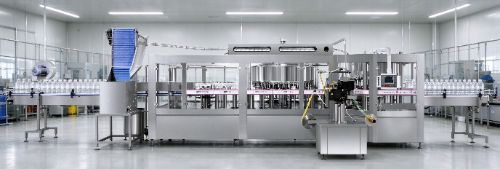
It's a fair question, and the short answer is: usually, yes—if the product falls within the machine's standard viscosity range, particle size, and fill temperature. Most units are built around common liquid categories like water-thin solvents, light oils, creams, and gels. If your product sits outside those, for example a chunky salsa or an abrasive slurry, you'll likely need a different valve, hopper, or agitator to keep things moving.
Container shape also matters. A machine set up for a standard cylindrical bottle may not grip an oval or tapered container without swapping guide rails or pucks. The same applies to cap size and style—if your closure has an unusual thread or requires a specific torque, you might need a dedicated capping head. Rather than assuming, pull a sample and have a run-off test. It's the fastest way to see what actually happens on the line.
Some products need small tweaks that aren't full "modifications"—like changing a seal material or adding a drip tray. Those are often quick and inexpensive. But if you're asking about running a completely different product category, that may involve more serious changes to the filling system. Ask the manufacturer for a spec sheet that lists min/max viscosity, particle tolerance, and container dimensions. That gives you a clearer yes or no before committing.
How Long Before This Line Pays for Itself?
The honest answer is that most small product lines take anywhere from four to ten months to recover their initial investment, but that window shifts depending on how much you spend upfront and how quickly the market accepts the line. A low-cost accessory line with strong impulse-buy appeal might break even in a single season, while a higher-priced custom furniture line often needs a full year or more to cover tooling, samples, and early slow sales.
A more useful way to look at it is to track the gap between your fixed setup costs and the monthly contribution margin each unit brings in. If a line costs $8,000 to launch and each unit sold contributes $35 after materials, shipping, and transaction fees, you need roughly 229 sales just to reach zero. But that math ignores returns, storage fees, and the inevitable discounts that eat into early margin, so adding a 15–20% buffer to your break-even estimate keeps expectations realistic.
Can You Show Me a Machine Still Running After Five Years?
Walk into any older factory floor and you'll spot them: a dusty conveyor motor humming along since the Reagan administration, a packaging arm that outlasted three plant managers, a compressor that simply refuses to quit. Five years is nothing to these workhorses. The real question isn't whether a machine can still run after half a decade, it's why we're surprised when it does.
The secret rarely lives in the spec sheet. It's in the maintenance log nobody reads, the operator who tightens one bolt every Friday without being asked, the spare part scavenged from a retired sister unit. Machines don't stay alive by accident. They survive because someone decided they were worth the trouble.
Next time you pass a rumbling old press or a lathe with paint worn down to bare metal, listen for a second. That steady rhythm isn't just mechanical noise. It's the sound of small, stubborn decisions being made every single day to keep the thing running five years, then ten, then longer than anyone remembers.
What Happens When the Filler Breaks Down on a Friday Night?
So it's Friday night, you're fresh out of the shower, and the bathroom light is hitting your face in that unforgiving way. That's when you notice it—the little lift you got from filler three months ago suddenly looks flatter on one side. Your mind spirals: did it dissolve overnight? Here's the thing: hyaluronic acid filler doesn't break down that fast, but a mix of alcohol, a hard workout, or even a salty dinner can shift fluid around and make the treated area look uneven. It's usually temporary swelling changes, not an actual loss of product. Still, the timing couldn't be worse.
If you're genuinely watching your filler fade right before a night out, you're probably seeing the tail end of a normal inflammatory response. After the initial swelling from injection settles over weeks, the true volume becomes more apparent—sometimes less than you hoped. On a Friday, there's no clinic to call, so you have to assess: is it just cosmetic, or is something medically wrong? Sudden intense pain, blanching skin, or a mottled purple pattern means you need an ER, not a wait-and-see. Otherwise, it's likely just your filler entering its gradual breakdown phase, sped up in your perception because you're scrutinizing it under party lighting.
For tonight, skip the extra glass of wine if you're worried—alcohol can dilate vessels and make any asymmetry more obvious. Don't massage the area unless your injector previously told you to; aggressive rubbing can worsen swelling or even push product around. A cool compress for five minutes can calm things down, and a dab of color corrector plus a thicker concealer will hide most volume loss in photos. Take a few clear pictures in daylight tomorrow before you panic-book a top-up. Filler breakdown is a slow, weeks-to-months process, not a Friday night emergency—unless it is, and then you already know where to go.
What's Not Included in the Quote That I'll Need to Buy Later?
A standard quote usually covers the big-ticket labor and materials, but it rarely includes the countless small items you'll need to finish the job. Think caulk, grout sealer, paint touch-up supplies, outlet covers, and even the screws for mounting hardware. If you're replacing a vanity, the quote might not include new shut-off valves or a P-trap, and those are exactly the things you'll be running to the hardware store for on a Saturday.
Permits and inspection fees are another common gap. Some contractors roll them into the price, but many expect you to handle them separately. Waste disposal is also frequently left out — dumpster rental, haul-away fees, or extra trips to the landfill can add hundreds to your total. Before you accept a quote, ask for a line-by-line list of what's not covered. It's better to know now than to discover a missing line item when the work is half done.
FAQ
Ask for a breakdown of energy use per shift, spare parts that typically wear out in the first two years, and whether service calls are billed by the hour or included. A supplier that hesitates to share these numbers often has something to hide.
Request a demo run with your actual product and packaging. If the supplier can't run your materials, ask for a written list of standard features versus add-ons, then cross off anything that doesn't solve a bottleneck you already have.
Get the supplier to time a full changeover with your own operators, not their techs. Even a 10-minute difference per shift can add up to thousands in lost output over a year, so put the expected time in the contract.
Ask for three customers in your industry who've had the machine for at least three years. Then call them and ask how quickly a real breakdown was resolved and what the total service bill looked like after warranty. That tells you more than any brochure.
It's only risky if the supplier won't share the refurbishment checklist or offer at least a one-year warranty on labor and parts. A good refurbisher will let you inspect before shipping and provide a list of replaced components with serial numbers.
Look for exclusions on wear parts like seals, nozzles, and pumps, plus travel fees for technicians. Ask directly: 'If this machine fails on a Friday night, what exactly do I pay for the first hour of help?' The answer should be uncomfortable if it's vague.
Invite their engineers to look at your layout before you finalize the purchase. Sometimes moving a conveyor or changing bottle height costs nothing extra but can eliminate the need for a larger, pricier filling head configuration.
Ask about software updates and licensing fees. Some filling machines have control systems that require paid updates or proprietary service tools. Confirm whether any recurring fees are mandatory and get that in writing.
Conclusion
A filling machine quote rarely tells the whole story. The true cost per filled container includes not just the purchase price but waste, energy, labor, changeover time, and rejects. Before signing, ask the supplier to break down the cost for your specific product—viscosity, particulate size, and foaming behavior—because a machine that needs expensive modifications will erase any upfront savings. A demo with your own container and product is non-negotiable. Then push for a realistic payback calculation. If the line cuts labor by two operators and boosts throughput by 30%, you might recover the investment in 14 months. If the supplier cannot show those numbers, keep looking.
Durability matters more than features. Ask to see a machine still running after five years—not a showroom model, but one in a plant similar to yours. Talk to the operators, not just the sales manager. Friday-night breakdowns are where hidden costs explode. Clarify response time, spare parts stock, and remote diagnostics before you buy. Finally, ask what is not included in the quote: installation, training, conveyors, spare parts kits, air compressor, and software licenses often appear later as surprise invoices. Get an itemized list of everything required to run the line. These questions force suppliers to be honest about lifetime costs, and that transparency is what actually saves you money.
Contact Us
Contact Person: Tyson
Email: [email protected]
Tel/WhatsApp: +8613396971296
Website: https://www.wanyingmachinery.com