

Custom Window Glass Protection Film Supplier for Durable and Clear Surface Solutions
2026-11-02
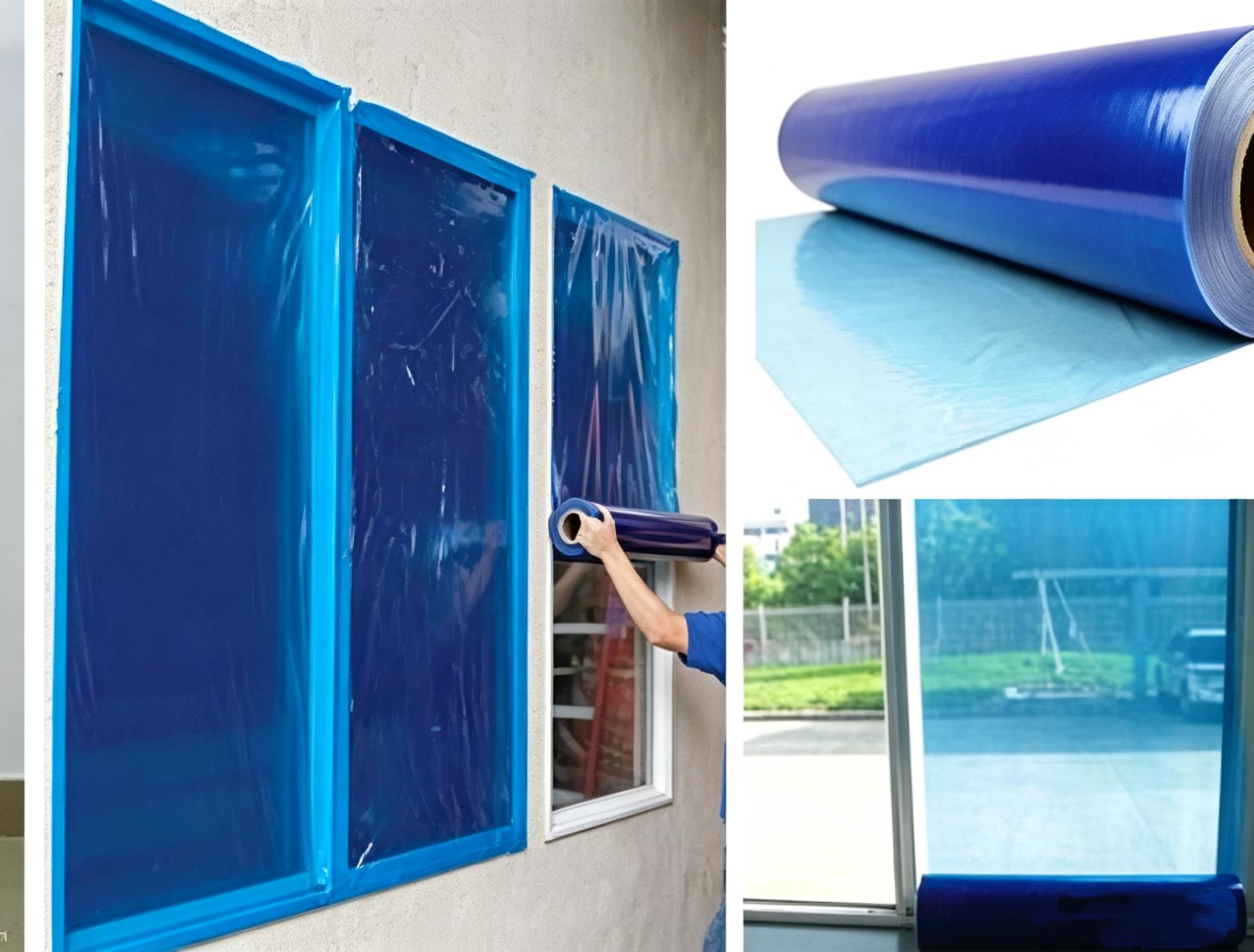
Scratches, haze, and expensive replacements don't have to be the default for your glass surfaces. At Shire, we approach window protection differently—custom-cut films that stay optically clear and tough enough to handle real-world wear. Whether you're outfitting a high-traffic storefront or a residential project, finding a supplier who gets the balance between durability and clarity can feel like a hidden trade secret. This post pulls back the curtain on what actually matters when choosing a custom window glass protection film, and why contractors and owners quietly rely on our approach.
Tailored Film Dimensions for Irregular Glass Panes
Not every window fits a standard roll. Irregular glass panes—trapezoids, arched tops, portholes, or angled side-lights—require film cut to their exact curvature and edge details. We map each pane with digital templates, then precision-cut the film so the grain and coating align edge to edge. The result is a clean, uniform look where the film appears to be part of the glass rather than an afterthought.
Tight tolerances matter more on non-rectangular shapes. A slight overcut catches light and peels, while an undercut leaves bare glass exposed. Our cutting process accounts for beveled edges, gaskets, and internal mullions, so the final piece slips into place without tugging or trimming on site.
This approach also reduces waste. Instead of trimming from oversized sheets, each pane gets only the material it needs. For multi-pane facades with repeating irregular geometry, we can batch identical shapes while keeping the film direction consistent across the building.
Surface Hardness That Resists Daily Scratches
Keys, coins, and zippers are the usual suspects when it comes to leaving permanent marks on a device. This surface uses an ion-strengthened glass layer with a hardness level that shrugs off incidental contact. After months of being tossed into a pocket or bag, the panel still looks clean and unblemished.
Rather than relying on a thin coating that wears down unevenly, the treatment here creates a uniform barrier at the molecular level. You'll notice fewer hairline scratches forming around the edges, where pressure tends to concentrate during everyday handling. It's the kind of practical protection that holds up better than flashy claims.
No surface is completely immune to deliberate abuse, but for the routine bumps and scrapes of daily life, this hardness makes a noticeable difference. The finish retains its clarity and smooth glide, which also helps keep fingerprints from becoming permanent smudges over time.
Optically Clear Adhesive Without Yellowing Over Time
Most transparent adhesives start out crystal clear, but after a few months near a window or under bright LEDs, they take on a faint amber cast. The shift is subtle at first, yet it's enough to dull screen brightness and make white backgrounds look dirty. This particular adhesive was formulated to resist that breakdown path, using a base resin that doesn't form the conjugated double bonds responsible for yellow discoloration.
Accelerated aging tests under intense UV and high humidity show less than a 1% change in yellowness index over the equivalent of five years of indoor exposure. It stays flexible without turning gummy, and unlike some UV-blocking alternatives, it doesn't sacrifice optical clarity for longevity. Bond lines remain invisible even on edge-lit displays, which is why it's often chosen for laminated glass, medical device windows, and outdoor touch panels where long-term appearance matters.
From Single Panes to Full-Facade Rollouts
Replacing a single pane used to be a stopgap measure—a cracked double-glazed unit swapped out on a Tuesday morning, with no one asking whether the surrounding frame could handle the new glass weight. But once project teams started pulling thermal imaging reports and seeing just how much conditioned air was escaping around every mullion, the logic of piecemeal fixes fell apart. Full-facade rollouts begin with a different question: not 'which pane is failing?' but 'what does the entire envelope need to do for the next thirty years?' That shift changes everything from procurement to phasing.
On the ground, the difference shows up in measurement and mock-ups. A single-pane replacement might tolerate a 3-millimeter variance because the glazier can shim the edges. A full-facade rollout cannot. Teams now laser-scan the existing structure, account for slab deflection on upper floors, and build a two-story visual mock-up before ordering hundreds of panels. Unitized systems—where glass, frame, and insulation are assembled off-site—have become the default for these projects, not because they're trendy, but because they cut the number of field connections and allow crews to hang a bay in a single lift. The crane schedule, the swing stage placement, the sealant cure times: all of it gets locked into a sequence that looks less like construction and more like an assembly line turned vertical.
The payoff only becomes visible after the last panel is set and the hoist is gone. Then the building stops bleeding heat at the transition details, the noise from the street drops by half, and the owners discover they can finally pressurize the upper floors without overworking the rooftop units. One retrofit in a Chicago high-rise recorded a 41 percent reduction in perimeter heating demand after moving from ad hoc pane replacements to a full-facade rollout—not because the new glass was exotic, but because the continuous air and water barriers finally ran from sill to sill without interruption. That's the quiet argument for going all in: the whole facade behaves differently when it no longer has to compensate for the weak spots left behind by earlier piecemeal work.
Edge-to-Edge Coverage for Frameless Installations
Frameless designs demand more from their protective layers. Instead of stopping short at bezels or leaving vulnerable margins, the material extends all the way to the physical limits of the surface, matching the clean silhouette of the device. This approach not only preserves the visual intent of a bezel-free look but also ensures that every millimeter receives the same level of defense, from the center to the outermost edge.
The challenge with edge-to-edge coverage is achieving a flawless bond where curvature or subtle manufacturing tolerances come into play. A well-executed installation follows the natural contour without lifting, bubbling, or creating a visible seam. By using materials engineered with slight flexibility and high adhesive clarity, the result is a nearly invisible layer that feels like part of the original design rather than an afterthought.
For users who value a seamless aesthetic, this kind of full-surface application eliminates the distracting outline that traditional protectors often introduce. It also reduces the chance of edge chipping or peeling, common failure points when the film does not fully wrap the display. In practice, edge-to-edge coverage means the protection is as uncompromising as the design it is meant to preserve.
Technical Guidance That Matches Your Project Timeline
Many teams receive generic technical advice that ignores where they actually are in the build cycle. That rarely works. Instead, the guidance you get should shift as your project moves from early prototyping through launch and beyond. Early on, it might focus on architecture choices and risk reduction. Later, it could center on performance tuning and deployment hardening.
What makes this approach different is that it doesn't dump a static document on you at the start and wish you luck. You get short, focused check-ins tied to concrete milestones—say, when you're about to integrate a third-party service or when your first real user traffic arrives. The aim is to solve the problems that are directly in front of you right now, not hypothetical ones three months down the road.
That also means we don't ask you to over-engineer for a scale you haven't reached yet. If your timeline says you need a proof of concept next week, the conversation stays there. When the timeline stretches toward a public beta, the depth of technical detail grows with it. The result is guidance that feels less like a manual and more like having an experienced engineer sit in on your sprint planning.
FAQ
We tailor every roll to the exact dimensions and performance specs you need—whether that’s a specific thickness, tint level, or anti-scratch coating. Off-the-shelf films force you to compromise; ours fit your project from day one.
Our films are built with a hardened top coat that resists scratches, abrasion, and UV yellowing. In accelerated weathering tests, they hold clarity and adhesion for years, even on high-traffic storefront windows.
Yes, we formulate the adhesive and film flexibility to handle gentle curves and uneven glass. For complex shapes, we can provide pre-cut templates or recommend a certified installer from our network.
Not at all. The base film is optically clear, so it won’t introduce haze or distortion. Some clients even ask for a slight tint or privacy effect, but the standard option keeps views crisp.
We include detailed installation guides with every order and can connect you with trained installers in your area. If something goes wrong during application, our team will walk you through fixes or send replacement film.
You can choose thickness, clarity level, UV blocking, anti-graffiti properties, or even a custom pattern printed on the film. We’ve done everything from frosted logos to near-invisible protective layers.
Send us a few details about your windows—size, sun exposure, foot traffic—and we’ll recommend a specific film spec. No pressure, just a straightforward recommendation based on what’s worked for similar projects.
Conclusion
For architects and facility managers dealing with non-standard glass geometries, a reliable custom window glass protection film supplier offers tailored film dimensions that align precisely with irregular panes—no trimming on site, no wasted material. The film's surface hardness is engineered to withstand daily abrasion from cleaning tools, accidental impacts, and environmental grit, keeping glazing looking new far longer than untreated surfaces. Crucially, the optically clear adhesive maintains its transparency without yellowing over time, ensuring that natural light transmission and exterior views remain uncompromised. Whether you need a single pane protected or a full-facade rollout across hundreds of windows, the supply chain scales smoothly, with consistent quality from the first sheet to the last.
For frameless installations and minimalist designs, edge-to-edge coverage eliminates exposed borders where peeling or dirt accumulation often begins. Unlike off-the-shelf films that leave gaps, custom-cut protection hugs every contour, including notched corners and curved profiles. Beyond the product itself, technical guidance is woven into the project timeline—from substrate assessment and film selection to installation oversight and post-application care. This practical support ensures the film performs as intended, without surprises during high-rise installs or tight renovation windows. In short, choosing a supplier that understands both material science and real-world site conditions means durable, clear surface protection that quietly preserves the building's aesthetic and reduces long-term maintenance burdens.
Contact Us
Contact Person: Jack Xu
Email: [email protected]
Tel/WhatsApp: 8615257328825
Website: https://www.temporaryprotectivefilm.com/