

Custom Cast Parts Explained for Modern Manufacturing
2026-09-27
Every modern manufacturer eventually hits the same wall: off-the-shelf components can't handle the load, the geometry, or the environment your design demands. That's where custom cast parts step in—but getting them right isn't always straightforward. From material selection to mold design, the process quietly determines whether a part lasts years or fails in weeks. Zhaoyuqi has spent years refining this craft, and in this guide we'll break down what truly matters when specifying castings for today's production lines.
Why Cast Parts Still Beat Machining for Complex Geometries
Machining is a subtractive process, which means every internal cavity, undercut, or curved passage must be reachable by a rotating tool. When a part has a truly complex geometry—like a turbine blade with serpentine cooling channels or an engine block with water jackets—tool access becomes a nightmare. Casting, by contrast, forms the shape in one go using a mold or core. You can create hollow sections, blind pockets, and free-form surfaces that would require five-axis setups, custom fixturing, or simply can't be machined at all.
Another overlooked advantage is near-net shape production. A casting can be poured to within a millimeter or two of the final dimensions, leaving only light finishing cuts. This slashes material waste, machining time, and tool wear. For complex parts that would otherwise need hours of multi-axis milling, casting can often cut total manufacturing cost by 30–50 percent, even when factoring in tooling and pattern costs, especially for medium to high volumes.
Casting also lets designers optimize the part's topology without worrying about how a machinist will hold it or reach it. Organic, load-bearing ribs, variable wall thicknesses, and smoothly blended intersections are natural outcomes of molten metal filling a cavity. Machining these shapes would require extensive programming, long cycle times, and often a weaker final part due to stress concentrations from sharp internal corners. Casting's ability to produce these geometries directly often results in lighter, stronger components.
Material Choices That Actually Matter in Custom Casting
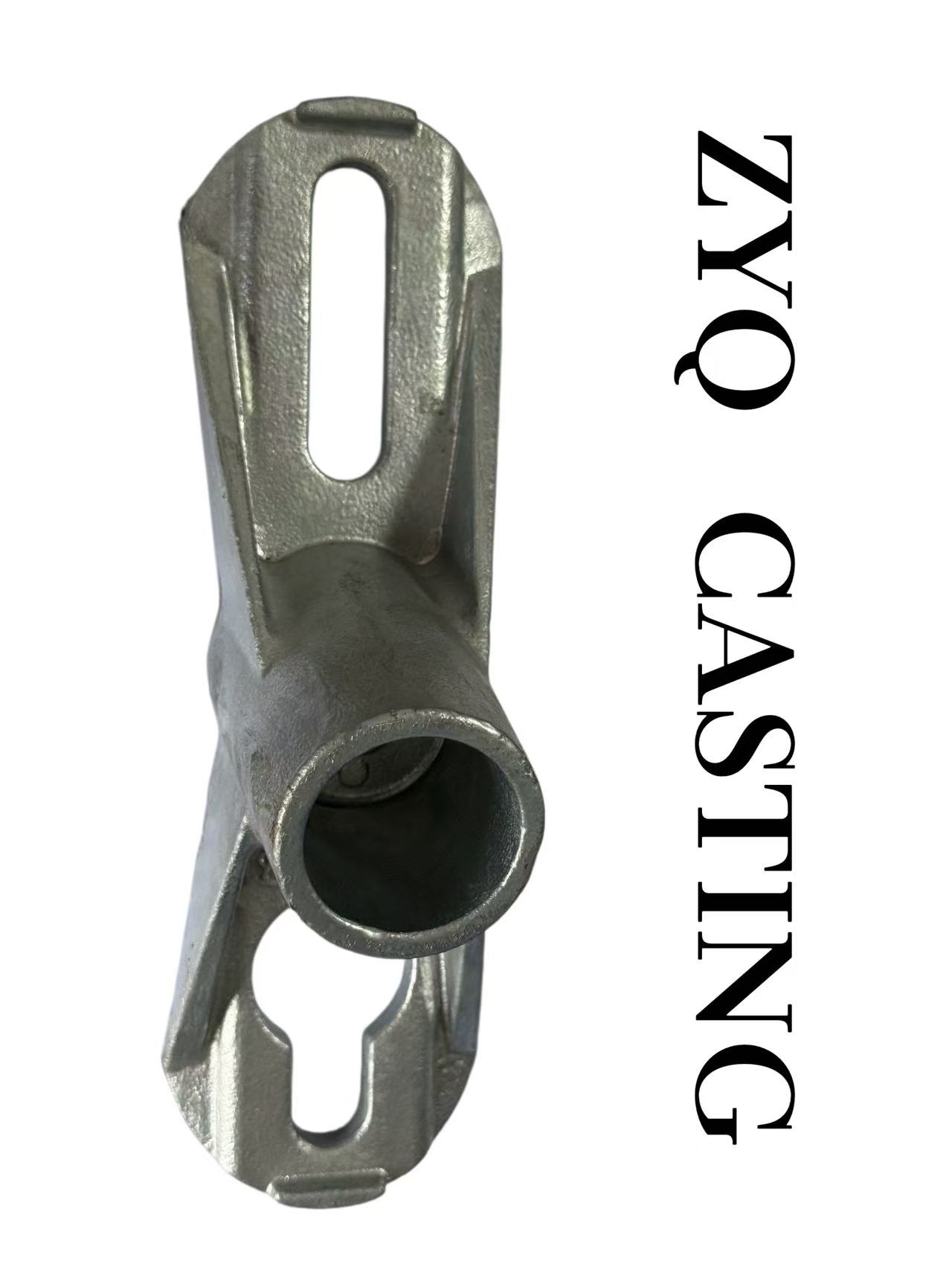
Custom casting rarely rewards exotic material picks; it rewards the boring ones chosen for the right reason. A356 aluminum gets spec'd constantly because it welds and machines predictably, but if your part sees constant vibration, ZA-27 zinc might actually hold tighter tolerances at a lower pour temperature. Ignore the alloy charts for a moment and ask what the part has to survive: corrosion, thermal cycling, or just being dropped on concrete.
Wall thickness changes the conversation more than most designers expect. Thin sections in gray iron can chill too fast and turn brittle, while chunky bosses in aluminum create sinks and porosity that no secondary finish will hide. The material that matters isn't always the one with the best tensile numbers—it's the one that flows cleanly through your actual geometry without demanding a gate redesign.
Also watch the pairing of material and process. Ductile iron in sand casting gives you high strength with some give, but it doesn't like super-fine surface details. If you need crisp logos or near-net shapes, a less glamorous alloy in permanent mold or die casting often beats a premium alloy in green sand. Spend the material budget where the load path actually lives, not on uniform upgrades.
Design Rules You Can Break with Modern Casting
Uniform wall thickness was once treated as sacred because uneven sections would cool at different rates and crack or sink. Modern casting simulation and better alloys now let you vary thickness deliberately where a part needs extra stiffness or thermal mass. Feed paths and riser placement can be mapped in software, so you are no longer stuck guessing how metal will solidify.
Draft angles used to be mandatory because a rigid mold would tear the surface if the part did not release cleanly. With collapsible 3D-printed cores and CNC-machined mold cavities, you can drop draft to zero or even go negative on selected faces. That means vertical walls, shallow undercuts, and sharper geometry can survive the casting process without adding a secondary machining step.
Undercuts and hollow internal channels once meant complex multi-piece cores or outright impossible geometry. Printed sand and ceramic cores now let you cast serpentine cooling passages, snap-fit features, and nested hollow sections in one pour. Minimum fillet radii are no longer fixed either, since local hot spots can be identified and cooled more aggressively instead of simply rounding every corner.
How Short Runs Changed the Economics of Custom Cast Parts
Traditional custom casting economics hinged on volume. A single metal pattern or die could cost tens of thousands of dollars, and you needed orders in the thousands to bring the per-part cost down. Small-batch buyers either swallowed absurd unit prices or switched to machining or weldments, often sacrificing material properties.
Short runs flipped that logic. Printed sand molds and ceramic cores removed the hard tooling bottleneck, so each mold is produced on demand. A complex hydraulic manifold that once waited six to eight weeks for tooling now goes from CAD to pour in a few days. Orders of five or ten pieces are practical, and the per-part cost no longer falls off a cliff at low quantities.
That also reshaped inventory and design risk. Instead of ordering two years of stock just to amortize tooling, companies replenish in small batches and keep working capital free. Design tweaks land in the next run without scrapping an expensive pattern. For high-mix, low-volume equipment builders, short-run castings have moved from a special favor to a standard option.
Where Custom Castings Are Quietly Replacing Assemblies
A machined bracket that used to arrive as three separate plates, four bolts, and two dowel pins now shows up on the loading dock as one gray iron casting. On paper the change looks minor—a part number disappears, a torque spec goes away, a tolerance stack-up stops being debated. In practice it removes an entire subassembly step from the line and shifts dimensional risk from assembly fixtures back into a single pattern.
The same quiet substitution keeps happening in housings, manifolds, and structural joints where designers once defaulted to weldments. Instead of chasing distortion after welding or hand-fitting components during assembly, manufacturers let the mold do the work of merging features. The result is often less inventory, fewer leak paths, and a shape that can follow load lines rather than the straight edges of stock material.
What to Ask Your Foundry Before the First Pour
Before any metal hits the mold, the conversation with your foundry needs to dig into the specifics that engineering drawings rarely capture. Start by asking how they handle pattern shrinkage allowances for your particular alloy—different metals pull at different rates, and a one-size-fits-all answer is a red flag. Then move to their sampling plan: will they pour a test bar from the same heat, and how do they track traceability from raw ingot to finished casting? If they hesitate or give vague answers about lot control, walk away.
You also need to pin down their approach to surface finish and dimensional inspection. Ask what kind of tolerance they can realistically hold on as-cast surfaces without extra machining, and whether they use CMM or manual layout for first-article verification. Foundries that overpromise tight tolerances on raw castings often deliver parts full of grinding marks and mismatched halves. A better sign is when they proactively discuss draft angles, parting line placement, and how they plan to gate the casting to avoid turbulence and inclusions.
Finally, don't skip the awkward questions about scrap rates and corrective action. Request their internal rejection data for similar jobs over the past year, and ask how they communicate when something goes wrong mid-run. A foundry that admits to occasional porosity issues and explains their root-cause process is far more trustworthy than one that claims perfection. The way they talk about problems now is exactly how they'll handle yours later.
FAQ
Casting often consolidates multiple components into one near-net shape, which cuts assembly steps and material waste. It also opens up internal geometries that would be impossible or prohibitively expensive to machine.
Investment casting and sand casting are frequent choices for low volumes because tooling costs stay manageable. For extremely complex internal passages, investment casting shines; for larger structural parts, sand casting remains economical.
Printed patterns and molds let engineers skip traditional pattern tooling for initial runs, so design changes can be tested within days instead of months. That speeds up iteration without committing to hard tooling.
Wall thickness transitions matter more than many designers expect—abrupt changes invite shrinkage porosity. You also need to plan for draft angles, fillets, and gating locations early, or you may face costly rework after the first samples.
Yes. Copper alloys, magnesium, zinc, and various steel grades are common. Some foundries also work with nickel-based superalloys for high-temperature applications, and even certain polymers can be cast for specialized needs.
Non-destructive testing such as X-ray, ultrasonic inspection, and dye penetrant checks are typical. Depending on the part's criticality, they may also cut up sample castings to check internal grain structure and porosity levels.
It depends heavily on complexity, but a realistic window is often 8 to 14 weeks from final design to first articles. Pattern or mold production, sampling, and any required testing eat up most of that time.
Conclusion
The shift toward custom cast parts in modern manufacturing isn't about nostalgia for old foundry work—it's about geometry. Machining forces you to subtract material from stock, which gets expensive and awkward when you need internal cavities, thin walls, or organic curves. Casting lets the metal flow into nearly any shape you can model, so complex parts that would require multiple setups or impossible toolpaths become single, near-net components. Material choice amplifies this advantage: you're not limited to bar stock alloys. Ductile iron, aluminum-silicon blends, compacted graphite iron, even bespoke copper alloys can be tuned for thermal cycling, vibration damping, or corrosion resistance that off-the-shelf billets simply don't offer. And the old design rulebook—uniform wall thickness, generous draft angles, no sharp transitions—has been quietly rewritten by simulation-driven mold design and 3D-printed patterns. You can now break several classic rules and still get sound castings, which opens up forms that used to be rejected at the quoting stage.
Short-run casting economics have flipped as well. Tooling made from printed sand or machined foam eliminates the six-figure pattern costs that once made custom casting a volume-only game. A dozen or a few hundred parts can now be poured at a price that competes with CNC machining but delivers better material utilization and fewer assembly steps. This is why custom castings are quietly replacing welded fabrications and multi-piece bolted assemblies in brackets, manifolds, pump housings, and robotic end effectors—one casting can do the work of five machined parts and four fasteners. Before you commit to a first pour, ask your foundry how they handle patternless tooling, what tolerance they can actually hold on as-cast surfaces, and how they manage shrinkage for your alloy. The answers will tell you whether you're getting a partner who understands modern casting or just a shop pouring metal the old way.
Contact Us
Contact Person: Nico Yin
Email: [email protected]
Tel/WhatsApp: 8618561567088
Website: https://www.ductileironparts.com/