

China Standing Seam Machine Manufacturer: What Buyers Need to Know
2026-10-13
China produces plenty of standing seam machines—but not all of them deserve your project. If you're tired of vague specs and inflated promises, this guide gives you a clear-eyed look at what separates reliable manufacturers from the rest. Along the way, you'll see why Beenew keeps showing up in serious buyer conversations.
Reading Past the Brochure: How Chinese Factories Actually Build Standing Seam Machines
Most brochure shots show gleaming panels and a finished roof, but the machine underneath tells a different story. Walk through a typical Chinese standing seam machine workshop and the first thing you notice isn't automation—it's the frame. Many builders start with a heavier steel base than the spec sheet admits, often because vibration at 15 meters per minute will shake a lighter table apart. They add cross-bracing where the decoiler mounts, not for looks but because strip feeding at an angle can twist the chassis over time.
The rollers are where shortcuts hide. Instead of uniform heat treatment, a lot of factories harden only the forming passes that touch the panel ribs, leaving the entry guides softer. That works fine for 0.5mm galvalume but punishes anyone who runs thicker aluminum or pre-painted steel. Some workshops keep two sets of rollers—one for overseas clients who pay for full hardening, another for domestic jobs—and the only way to tell is to ask for hardness test photos from the actual batch, not the sample room.
Electrical components are another gap between brochure and shop floor. A machine may list a brand PLC but the wiring loom is often assembled by hand with whatever terminals are in stock that week. The better Chinese builders are moving to pre-made harnesses and labeling every wire, because they've learned that a $2 relay failure in Sydney costs more than the harness upgrade. If you're buying, the real question isn't the logo on the control box; it's whether the factory can show you a build sheet with torque settings and a test video of your exact machine running your exact coil width.
The Questions Most Buyers Forget to Ask Before Placing an Order
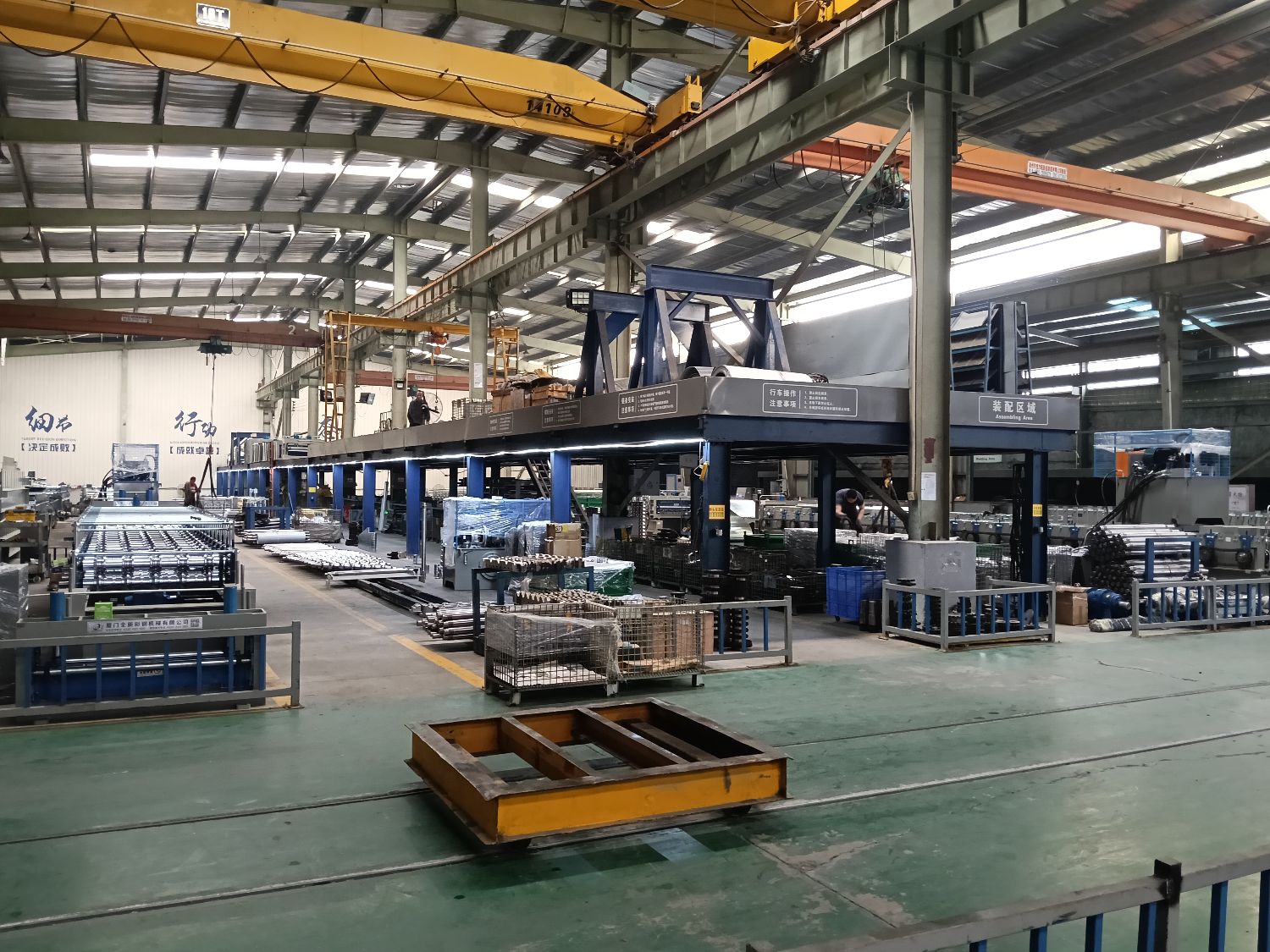
Most buyers focus on price, lead time, and minimum order quantity, but a handful of critical questions rarely make it to the conversation. What happens if the goods arrive damaged or defective? Will the supplier cover the return shipping, or will you be stuck arguing over a credit note for months? Another overlooked point is after-sales support — does the factory keep spare parts or offer repair guidance once the order is delivered, or does communication go quiet the moment the invoice is paid?
It's also worth asking about production capacity in detail, not just “can you make this?” but “how many other orders are you running right now, and what happens if there's a delay?” A supplier might promise a date without checking their own material stock or labor schedule. Buyers who skip this often find their “urgent” order pushed behind a bigger client's repeat business. The answer reveals whether you're a priority or just another order in the queue.
Finally, ask about the hidden costs that don't show up on the quote. Will there be extra charges for packaging, palletizing, or export documentation? Are there fees for sample revisions or mold adjustments? Sellers may not volunteer this information, and if you don't ask, those small line items can quietly eat into your margin. A short conversation upfront saves you from surprises that show up on the final invoice.
Quality Signals That Don’t Show Up in Spec Sheets
The tactile response of a switch or dial often reveals more about build quality than any listed actuation force. A well-engineered rotary knob on an audio interface has a subtle resistance that feels consistent through its entire range, while a cheaper unit might wobble or feel gritty at certain points. Similarly, the sound a button makes when pressed—whether it's a crisp, muted click or a hollow, rattling thunk—tells you whether the manufacturer cared about the mechanical stack underneath. These details are impossible to translate into a datasheet, yet they shape your daily experience far more than a frequency response curve.
Material temperature and surface finish also carry quality signals that specs ignore. Two laptops can both claim aluminum unibody construction, but one might feel icy and smooth while the other has a slightly greasy, plastic-like coating that warms unevenly. The way a smartphone's glass back meets its frame—whether there's a perceptible lip, a tiny gap, or a perfectly flush transition—speaks to tolerances measured in microns, not millimeters. You won't find "edge transition smoothness" in a table, but your fingertips notice it instantly.
Finally, long-term durability often hides in the stuff you can't see without a teardown. A power tool's spec sheet lists torque and RPM, but not whether the internal wiring is strain-relieved, whether the motor brushes are replaceable, or whether the gear housing is sealed against dust. The way a hinge feels after 10,000 cycles, the absence of creaks when you twist a chassis, the reassuring heft of a properly balanced tool—these are quality signals that emerge only from use, not from reading a list of numbers.
When Lower Prices Hide Higher Costs
A cheap appliance can feel like a win until the first repair bill arrives. The sticker price ignores how much electricity it burns or how often parts fail. Within a year, the savings evaporate and you are left with a machine that costs more to keep than a pricier model would have.
In business, a supplier who undercuts everyone often makes up the difference in delayed shipments and rejected batches. Those hidden costs show up as idle workers, rushed reorders, and customer complaints. The invoice looks small, but the total cost of doing business quietly climbs.
The trick is to stop asking what something costs today and start asking what it costs over its lifetime. A higher upfront price often buys fewer interruptions, lower energy use, and less time spent on fixes. That is the real bargain hiding behind a larger number.
From Port to Production Floor: What to Expect After Delivery
Once the shipment clears customs and the truck pulls away from the dock, the real work starts. Unloading often takes longer than planned, especially if your loading bay wasn't measured for the crate dimensions or the pallet jack can't handle the weight. Have a spotter and a clear path ready before the driver arrives, or you'll burn hours shuffling other equipment.
Inside the building, the handoff between freight and facilities can get messy. Most machines need more than a plug and a level floor. Air, power, exhaust, and network drops all tend to land on someone else's to-do list. A short walkthrough with your maintenance lead before delivery saves a lot of finger-pointing later.
Finally, resist the urge to schedule production the same week. Commissioning and operator familiarity rarely follow the vendor's best-case timeline. Running test parts with the people who will actually use the machine—not just the engineer who signed the purchase order—catches issues that only show up under real conditions.
Building a Supplier Relationship That Survives the First Breakdown
A supplier relationship often starts with optimism and vague promises about partnership, but it doesn't become real until something goes wrong. The first late shipment, quality defect, or cost overrun reveals whether you have a foundation of trust or just a transaction. Instead of waiting for that moment, lay the groundwork early by discussing failure scenarios before they happen—ask your supplier how they've handled past breakdowns, what their escalation path looks like, and who actually has authority to make fixes on the spot. This kind of frank conversation feels unusual because most buyers only talk about specs and pricing, but it's exactly what separates a fragile link from a resilient one.
When the first breakdown does occur, resist the instinct to immediately escalate or penalize. That reaction trains suppliers to hide problems, delay bad news, and cover their tracks until it's too late. Instead, treat the incident as a shared test: call the supplier within hours, not days, and ask two simple questions—what happened from their side, and what do they need from you to prevent a repeat. Most suppliers expect blame and defensiveness; when you replace that with curiosity and joint problem-solving, they remember it. You're not excusing the failure, but you're signaling that the relationship can absorb a hit without collapsing.
The final piece is to document the breakdown and the recovery in a way that builds institutional memory, not just a contract amendment. Write a short, plain-language account of what failed, what both sides learned, and what changed as a result—then share it with the people who actually manage the day-to-day work, not just senior leaders. Too often, supplier relationships are judged by quarterly scorecards that ignore the messy middle, but the relationships that survive are the ones where a breakdown became a reference point for better communication rather than a reason to start looking for a new vendor.
FAQ
Know your panel profile, material thickness, and expected daily output. Also confirm whether you need a curving or tapering option and check your local voltage and air pressure so the factory can quote the right configuration.
Ask for a live factory walk-through video, not just edited clips. Look at their welding and machining areas, inquire about ISO or CE certificates, and if the order is large, hire a third-party inspector. Past export records for similar projects in your region also help.
Chinese machines usually cost less and can be delivered faster with more customization. European models often have higher precision and stronger brand reputation, but spare parts and service can be expensive. Many Chinese builders now use international PLCs and hydraulic systems, so the gap is narrowing if you pick the right factory.
Factor in ocean or land freight, import duties, VAT, customs clearance, travel expenses for installation technicians, spare parts, and possibly a voltage transformer if your power supply differs from the machine's design. Some quotes exclude these, so ask for a detailed breakdown early.
Standard machines often leave the factory in 15 to 30 days. Custom or large production lines may need 45 to 60 days. Sea freight to Europe or North America typically takes four to six weeks, while Southeast Asia may only take one to two weeks. Add extra time for uncrating, setup, and operator training.
Reputable manufacturers offer a one-year warranty and remote support through video calls or diagnostic apps. If needed, they can send an engineer to your site for installation and training, but travel costs should be agreed in advance. Check whether they have English manuals and common spare parts in stock.
Yes, most factories can build custom roller dies based on your drawings. They handle aluminum-magnesium-manganese, zinc, galvanized steel, and more. Custom profiles increase lead time and mold costs, so it is wise to send material samples for testing before committing to a full order.
Do not rely only on chat messages. Request a live video tour, ask for recent bills of lading or export declarations, contact at least two previous customers, and consider starting with a small order or a simpler machine to test their quality and service before scaling up.
Conclusion
The real story of a Chinese standing seam machine manufacturer rarely lives on the first page of a catalog. Buyers who dig into how the factory actually welds, cuts, and aligns its frames often find wide gaps between one workshop and the next. Instead of asking only about speed and thickness, it pays to ask which subcontractors handle gears or PLCs, how they track each machine through assembly, and what happens to rejected parts. The answers you cannot see in a spec sheet—bearing clearance after a week of load testing, the straightness of a roller under full sheet tension, the wiring's resistance to oil mist—often determine whether the line holds tolerance in your plant, not just on a demo video. A short visit to the floor, watching a machine run cold without the sales rep hovering, reveals more than any certificate.
Lower prices can quietly shift costs into your yard and your maintenance team. A machine that ships with weak guards, unmarked lubricant points, or a control panel without English diagnostics will consume hours after it lands. From the port onward, expect to handle leveling, recalibration, and possibly re-torquing every bolt that loosened in transit—unless your supplier has a clear handover checklist and remote support that actually answers the phone. Building a relationship that survives the first breakdown means agreeing upfront on spare part lead times, who pays for a failed servo, and how a video call diagnosis will work when the line is down. The best Chinese manufacturers welcome these conversations because they know the second order depends on how the first machine behaves in month six, not on how it looked at the exhibition.
Contact Us
Contact Person: Sophie
Email: [email protected]
Tel/WhatsApp: 8615959271231
Website: https://www.beenew-rollformer.com/