

China Shot Blasting Machine Supplier Delivers Reliable Surface Preparation Systems
2026-11-02
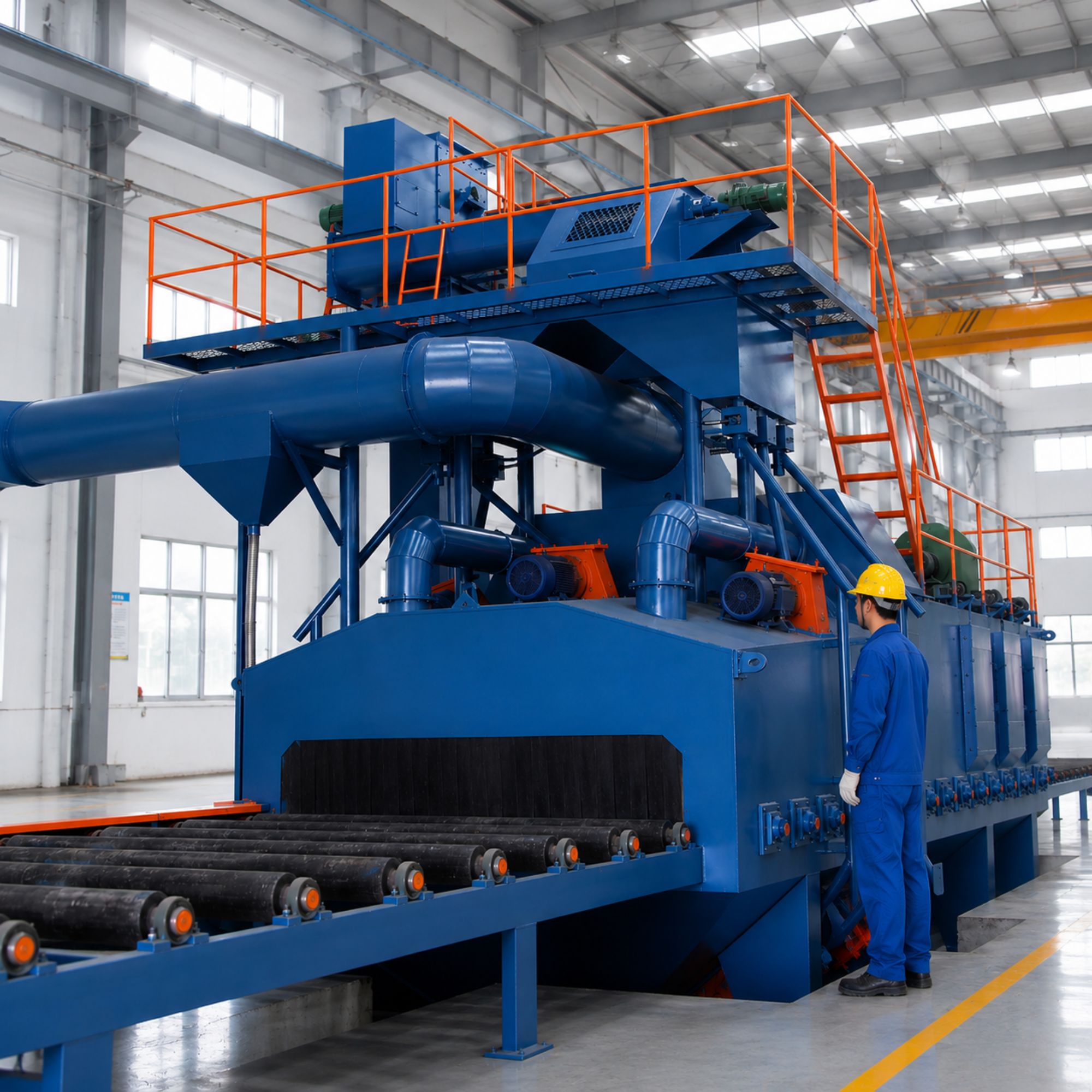
Rust, mill scale, old coatings—none of them stand a chance against the right shot blasting setup. But finding a China shot blasting machine supplier that actually delivers on reliability? That’s where many projects stall. PuHua has built its reputation on systems that hold up under pressure. In this post, we’ll break down what makes surface preparation systems truly dependable and how to spot the difference before it costs you.
The Overlooked Connection Between Abrasive Size and Final Coating Adhesion
Surface preparation standards almost always call out a target profile depth, but they rarely ask which abrasive size actually produced that number. Two surfaces can measure the same average roughness yet behave completely differently under a coating. The spacing between peaks, the sharpness of the valleys, and the amount of loose grain left behind all trace back to the abrasive's particle size, and these factors quietly determine whether a coating grabs hold or lets go.
Large abrasive particles cut deep, widely spaced valleys. A thin or fast-curing coating may bridge across those valleys without ever filling them, leaving microscopic air pockets that become starting points for corrosion. On the other hand, overly fine abrasive can burnish the steel instead of cutting it. The surface looks clean and uniform, but there are fewer mechanical anchors for the coating to lock into, so adhesion relies almost entirely on weak chemical bonding.
The practical fix is to match abrasive size to the coating system, not just to the specification sheet. High-build epoxies and zinc-rich primers can tolerate a coarser profile because they flow into deeper cavities before curing. Thin urethanes, moisture-cured coatings, and fast shop primers need a finer, tighter profile with more peaks per square inch. Running a quick adhesion pull test on a coupon blasted with the actual production abrasive is far more revealing than trusting a profilometer reading alone.
Inside a Reliable Supplier’s Approach to Blast Wheel Balancing
A trustworthy supplier doesn’t treat blast wheel balancing as a quick fix. It starts with inspecting the wheel’s wear pattern, hub fit, and blade condition before any weight is added. Small deviations in mounting surfaces or uneven blade mass are noted first, because balancing over a worn hub only masks the real problem. The goal is to correct the root cause, not chase a number on a vibration meter.
In the balancing process itself, the supplier uses a combination of static and dynamic checks. Static balancing catches heavy spots that cause bounce, while dynamic balancing addresses the wobble that appears at operating speed. Weights are placed in small increments, and the wheel is spun up gradually to confirm that vibration drops across the full RPM range, not just at a single test speed. This step is repeated until the residual imbalance falls within a narrow tolerance specific to the wheel’s diameter and operating speed.
After balancing, the supplier records the exact weight positions and remaining unbalance. That record travels with the wheel’s service history, so the next maintenance check can spot trends like blade erosion or hub wear before they cause a failure. The final handoff includes a short run-up verification and clear torque specs for reinstallation. Reliable suppliers know that a well-balanced blast wheel isn’t just smoother—it also protects bearings, reduces downtime, and extends the life of the machine.
What High-Quality Dust Filtration Does for Both Finish and Compliance
A dust filter that only traps large particles still lets the fine stuff through. Those tiny specks settle into wet clearcoat or powder and show up as pinpricks, fisheyes, or dull patches after curing. When the booth air is clean, the painter spends less time wet sanding and respraying. On a busy line, even a small reduction in rework adds up quickly.
Compliance often gets treated as a paperwork exercise, but the filter is what actually keeps overspray and solvent-laden air from drifting into places it shouldn’t be. A high-efficiency arrestor holds more paint solids at the intake, so exhaust stacks run cleaner and the work area stays below exposure thresholds. That matters for passing inspections and for keeping operators from breathing the same air all shift.
The hidden benefit is longer equipment life. When fine dust bypasses a cheap filter, it coats fan blades, heat exchangers, and duct walls. The buildup reduces airflow and forces the system to work harder. Good filtration keeps the whole booth balanced, which keeps drying times consistent and energy use predictable.
Customizing Cabinet Dimensions When Standard Machines Fall Short
Off-the-shelf cabinet machines assume a world of standard sizes, but real kitchens rarely cooperate. Maybe the ceiling drops three inches over the fridge cavity, or a load-bearing post juts into the corner where a 24-inch base was supposed to slide. That’s when customization shifts from luxury to necessity. Instead of forcing shims and filler strips to disguise a poor fit, you can rework the cabinet box itself—adjusting depth, height, or even an angled back panel—so the piece reads as intentional rather than patched together.
The trick is knowing which dimensions are safe to alter without compromising the hardware. Drawer slides and hinges have specific tolerance ranges; a too-narrow cabinet might still function, but the drawer will rack and bind over time. A better move is to keep the interior clearances that moving parts demand, then absorb the irregularity into the face frame or toe kick. For example, if a wall bows outward, you can scribe a filler strip to the wall and keep the cabinet box perfectly square—nobody sees the adjustment, but every door closes flush.
Custom sizing also lets you exploit dead space that standard cabinets waste. A six-inch-deep pantry pull-out beside the stove, a nine-inch-wide tray divider under a window, or a corner unit with one side shortened to clear a pipe—these aren't compromises, they're upgrades. When you stop treating the catalog dimensions as gospel, the cabinetry starts working with the room instead of against it.
How Load Testing Under Real Work Cycles Prevents Early Failures
Most load testing protocols stick to fixed amplitudes or simple sinusoidal patterns, which rarely reflect how equipment actually behaves in the field. Real work cycles—start-stop sequences, partial load shifts, thermal expansion and contraction—create a complex stress history that standard tests miss. By replicating these patterns, engineers can trigger fatigue mechanisms that would otherwise stay dormant until after deployment.
The value becomes clear when examining failure modes like solder joint cracking or connector fretting. These defects often require thousands of irregular micro-cycles to initiate, not just a few high-stress peaks. Testing under realistic work cycles accelerates the accumulation of damage in the same sequence as real operation, making early failures surface during validation rather than in customer hands.
Ultimately, this approach closes the gap between laboratory conditions and actual usage. It forces design weaknesses to appear before production ramp-up, saving costly recalls and field service interventions. Instead of guessing at safety margins, teams can verify that a product survives the specific rhythm of its intended work environment.
Cutting Downtime With Modular Wear Liners and Quick-Change Blades
Replacing a worn liner on a conventional machine often means pulling apart half the housing, disconnecting drives, and spending hours with alignment tools before production can resume. Modular wear liners flip that script. Instead of one massive casting, the interior is split into smaller, bolt-on sections that match the highest-wear zones. When a liner finally gives out, the crew unbolts only the affected block, slides a fresh one into place, and torques it down. The surrounding panels stay untouched, so clearances and alignment remain exactly where they were. That alone can turn a two-day teardown into a forty-minute job.
Quick-change blades take the same idea to the cutting edge. Traditional knife changes demand careful shimming, gap setting, and often a feeler gauge in a cramped space. With a cartridge-style blade holder, the entire assembly pops out after loosening a couple of fasteners. The replacement cartridge arrives pre-shimmed and pre-gapped from the toolroom, so the operator doesn't measure anything at the machine. In a high-abrasion plastics reclaim line, technicians routinely swap blades during a fifteen-minute break without shutting down the upstream feed. Wear liners get inspected at the same time, and any cracked segment is replaced before it can damage the rotor.
The real payoff shows up in the maintenance log. Instead of scheduling full weekend shutdowns for liner and blade work, plants handle wear items in short, targeted stops. Inventory also shrinks because you stock individual modules and cartridges rather than entire rotor assemblies or monolithic liners. And because each replacement part is identical and self-aligning, there's no need for a specialist to be on site. A junior tech can swap a liner block or blade cartridge with a torque wrench and ten minutes of training. Equipment availability climbs, and the cost per ton of processed material drops without any exotic metallurgy or control system upgrades.
FAQ
They cover descaling, deburring, rust removal, paint stripping, and surface profiling. Many users also run them to create an anchor pattern before coating or bonding.
Yes. The supplier regularly adjusts chamber dimensions, conveyor width, and blast wheel configuration to match specific workpieces and throughput targets. You won't be stuck with a one-size-fits-all setup.
Foundries, automotive component plants, aerospace maintenance shops, structural steel fabricators, and shipyards are typical users. Any operation that needs repeatable surface quality before finishing tends to fit well.
They rely on calibrated blast wheels, precise media flow control, and programmable cycle times. Once parameters are set, the machine repeats the same treatment across thousands of parts without drifting.
The supplier offers spare parts kits, wear plate replacements, and remote troubleshooting. Many customers also receive operator training and a recommended inspection schedule to prevent unexpected downtime.
Yes. Steel shot, steel grit, aluminum oxide, glass beads, and ceramic media are all common, depending on the finish you need. The supplier can recommend the right media for your base material and coating system.
Automated blasting reduces labor hours and rework because it delivers a uniform profile across the entire surface. The initial investment is higher, but most operations recover it through faster turnaround and fewer rejected parts.
Conclusion
A reliable China shot blasting machine supplier doesn't just sell equipment—it solves the hidden problems that quietly ruin finishes and shorten machine life. Take abrasive size, for example. Too coarse and the profile becomes jagged, weakening coating adhesion in ways inspectors won't catch until it's too late. Too fine and the anchor pattern disappears entirely. The best suppliers help customers dial in that sweet spot based on the actual coating system. Then there's wheel balancing. A slightly off-balance blast wheel vibrates, wears bearings fast, and throws abrasive unevenly across the surface. A supplier that balances each wheel assembly before shipping eliminates half the mysterious breakdowns you see in the field. Add high-quality dust filtration to the mix, and you're not just keeping the air clean—you're preventing fine abrasive dust from settling back onto freshly blasted steel, which would otherwise create a dusty weak layer under the primer. It also keeps the operator inside a compliant, breathable enclosure instead of a cloud of silica.
Standard cabinet sizes rarely match real workpieces. A supplier willing to customize width, height, or conveyor speed means you stop forcing awkward parts through a machine built for someone else's product. But customization only pays off if the machine survives your actual shift patterns. That's why load testing under real work cycles—running it hot for eight hours, not just a five-minute shop demo—catches weak welds, undersized motors, and dust collector bottlenecks before they cost you a production line. Finally, modular wear liners and quick-change blades turn a two-day maintenance job into a 20-minute swap. Instead of replacing an entire blast cabinet liner when one corner wears through, you swap a single panel. Blades that lock in with a single bolt mean your crew actually does the preventive maintenance instead of putting it off until the machine eats itself. That's the difference between a supplier and a partner.
Contact Us
Contact Person: Bruce
Email: [email protected]
Tel/WhatsApp: +86 15166629468
Website: https://www.povalchina.com/