

China Hard-Seal Ball Valve Manufacturer Delivers Superior Industrial Flow Control
2026-05-06
In industries where precision flow control defines safety and productivity, hard-seal ball valves are the trusted guardians of high-pressure, high-temperature systems. Leading the charge in this critical sector is ZMV, a China-based manufacturer whose engineered solutions consistently outperform in the toughest environments. From petrochemical plants to energy grids, ZMV’s superior industrial flow control components combine rigorous testing with metallurgical expertise rarely found in off-the-shelf alternatives. This deep dive explores the innovations that make their valves a benchmark for reliability—and why global operators are taking note.
Mastering Hard-Seal Ball Valve Production in China
Creating a hard-seal ball valve that truly holds up under high pressure and abrasive media isn’t just about following a blueprint—it’s a discipline. In China, where production scales can test even the most established processes, getting these valves right demands an intimate understanding of material behavior. The metal-to-metal seal, for instance, must endure cycles of thermal expansion and contraction without losing integrity. This means the choice of alloy, the precision of the grinding process, and even the ambient conditions during assembly all play oversized roles. Years of refinement have taught local workshops that small deviations in spherical roundness or surface finish can cascade into premature failure, so controls start long before the first chip is cut.
Over time, a quiet evolution has occurred on factory floors: a move away from trial-and-error toward deeply codified techniques. Machining sequences are choreographed to balance residual stresses, often employing proprietary lapping compounds developed in-house. Coating technologies, too, have been advanced through stubborn experimentation—tungsten carbide overlays and chromium carbide deposits are now applied with surgical consistency, avoiding the brittleness that plagues poorly bonded surfaces. These aren’t flashy breakthroughs but incremental gains earned through thousands of leak tests and tear-down inspections. Some plants have even designed their own sealing surface geometries, subtly tweaking contact angles to better distribute load across the valve seat.
What sets masterful production apart, however, is the refusal to accept that a spec sheet tells the whole story. Skilled teams run prototypes through punishing simulations: sand slurry, superheated steam, rapid-cycling from cryogenic to scalding temperatures. They listen to the valve—audible chatter during closure, minute pressure differentials—and use those clues to iterate. This relentless attention to real-world performance, combined with a supply chain that can quickly prototype custom alloy blends, puts Chinese-made hard-seal ball valves in a distinct position. It’s not about being the cheapest; it’s about building a reputation where a valve’s reliability is something customers take for granted.
How Superior Flow Control Is Achieved with Advanced Materials
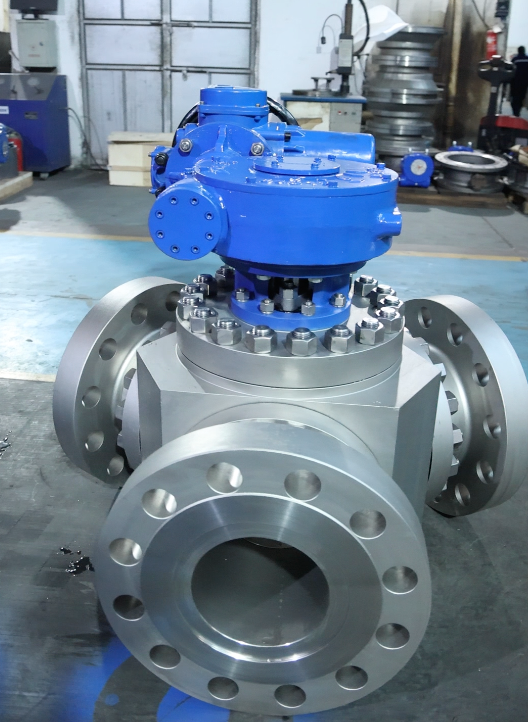
Modern industrial processes often demand precision that standard components can't deliver. The secret lies in the materials themselves—advanced ceramics, high-performance polymers, and surface-engineered alloys alter how fluids behave at the boundary layer. Unlike conventional metals that may corrode or wear unevenly, these materials maintain consistent surface textures over time, reducing turbulence and enabling laminar flow even under extreme pressures. This isn't about tweaking valve designs alone; it's about embedding performance into the very substance of the flow path.
Think of a microfluidic channel where a slight imperfection could throw off an entire experiment. Advanced materials like borosilicate glass or fluoropolymer coatings present almost frictionless interfaces, allowing minute volumes to be directed with unparalleled accuracy. In larger-scale systems, composite linings resist erosion and chemical attack, preserving the geometry that engineers painstakingly optimized. The result is a system that holds its flow characteristics for years, not months, without the drift that plagues traditional setups.
The integration of smart materials pushes this further—shape-memory alloys can adjust orifices in response to temperature shifts, while piezoelectric ceramics enable real-time modulation of flow without moving parts. By eliminating mechanical linkages and relying on material properties alone, these approaches slash maintenance needs and avoid the stick-slip issues common in older valves. It's a shift from brute-force control to an elegant, physics-based strategy where the material does the work.
From Design to Delivery: A Fully Integrated Manufacturing Process
At the heart of our operation lies a cohesive workflow that bridges the gap between initial concept and final shipment. Every stage—from material selection and prototyping to production, assembly, and quality assurance—is interconnected under one roof. This tight integration eliminates the common delays and miscommunications that plague fragmented supply chains, allowing design intent to flow seamlessly into reality without compromise.
What sets our process apart is the real-time feedback loop between design and manufacturing. Engineers work shoulder-to-shoulder with production teams, turning sketches into tangible samples within hours, not weeks. Insights from the factory floor shape refinements instantly, ensuring that each product doesn’t just meet specifications but exceeds real-world expectations. The result is a manufacturing journey that feels less like a linear path and more like a continuous conversation between imagination and execution.
From curating raw materials with precision to packaging finished goods with care, every step is calibrated for agility and excellence. This holistic approach not only accelerates time-to-market but also preserves the integrity of the original vision. By owning the entire lifecycle, we deliver consistency, craftsmanship, and a level of accountability that’s increasingly rare in today’s outsourced world.
The Role of Hard-Seal Valves in Critical Industrial Sectors
Hard-seal valves serve as the backbone of fluid control where failure is not an option. In oil and gas extraction, these components endure abrasive slurries and corrosive chemicals that would rapidly degrade softer alternatives. Their metal-to-metal seating creates a tight shut-off even under extreme pressure fluctuations, preventing leaks that could trigger environmental disasters or production shutdowns. Offshore platforms particularly rely on this durability, as valve replacement at depth carries astronomical costs and safety risks.
Chemical processing plants present a different set of challenges that hard-seal valves handle with remarkable adaptability. From aggressive acids to high-purity pharmaceutical intermediates, the metal sealing surfaces can be engineered from specialized alloys to resist specific corrosive agents. This customization eliminates contamination risks that plague polymer-based seals, while maintaining seal integrity through countless thermal cycles as reactors swing between cryogenic and near-boiling temperatures.
Power generation facilities demand a unique combination of precision and resilience that only hard-seal designs deliver. In supercritical steam systems, these valves maintain perfect seating despite constant thermal expansion and contraction, ensuring turbine protection and optimal thermal efficiency. Nuclear installations take this requirement further, where valve reliability directly correlates with core safety—a single stuck-open valve during an emergency shutdown could cascade into catastrophic failure. The zero-leakage performance of advanced hard-seal technologies has become inseparable from baseline safety protocols in these environments.
Ensuring Long-Term Reliability Under Extreme Conditions
Long-term reliability in harsh environments isn't achieved through over-engineering alone. It demands a methodical approach to material selection, where every component is scrutinized for its behavior under thermal cycling, vibration, and chemical exposure. Accelerated life testing uncovers wear-out mechanisms early, but the real insight comes from correlating lab data with decades of field performance from legacy installations. That feedback loop often reveals that seemingly minor design choices—a coating thickness here, a seal geometry there—are what determine whether a system quietly meets its 30-year design life or becomes a chronic maintenance burden.
Thermal management often separates durable designs from the rest. Passive cooling solutions, when executed correctly, eliminate fan failure risks entirely, but they require a deep understanding of thermal conductivity paths and junction temperatures under worst-case loading. Some of the most resilient systems we've studied incorporate deliberate thermal inertia, allowing brief overloads without degradation. This isn't something learned from textbooks; it's the result of analyzing failure returns where heat buildup caused intermittent faults that never appeared during standard qualification tests.
An often-overlooked factor is the supply chain's role in long-term reliability. A perfectly validated design can be compromised when a capacitor formulation changes or a PCB laminate supplier alters their process. Successful programs build in regular destructive physical analysis of production samples, not just first-article inspection. It's an ongoing vigilance that matches the extremes the equipment must endure—whether that's salt spray on offshore platforms or constant vibration in mining machinery. The goal isn't just surviving those conditions for a test report, but doing so decade after decade with negligible drift in performance.
Why Global Industries Choose Our Valve Solutions
When it comes to heavy-duty flow control, our valves are engineered to thrive under conditions that send others packing. Refinery operators in the Middle East, food processors in Europe, and water treatment plants across Southeast Asia have all discovered the same thing: these components simply don't quit. The secret lies in material selection that borders on obsessive—each alloy, seal, and coating is matched not just to the fluid, but to the full cocktail of temperature swings, abrasive particles, and pressure spikes that real-world systems throw at them. That kind of precision means fewer shutdowns, and fewer shutdowns mean numbers on a balance sheet that make financial controllers smile.
Beyond the hardware, there's a collaborative streak that catches many first-time buyers off guard. Our application engineers tend to disappear into a customer's facility for days, mapping out piping runs and asking uncomfortable questions about future capacity plans. The result isn't just a valve that fits a flange—it's a solution that accounts for expansion, maintenance access, and even the skill level of the crew that'll be turning the wrench at 3 AM. Distributors appreciate this approach because it dramatically reduces the back-and-forth that plagues complex projects, while end users get a system they can actually trust when the process goes sideways.
Global supply chains have become a headache for everyone, yet our lead times remain stubbornly predictable. A combination of distributed manufacturing hubs and a refusal to rely on single-source components keeps shipments flowing even when trade routes get choppy. When a cement plant in Chile needed corrosion-resistant knife gate valves yesterday, the regional warehouse had them crated and on a truck within hours—standardized designs with the flexibility to accept local actuation packages meant no last-minute engineering gymnastics. That blend of preparedness and adaptability is why procurement managers keep coming back, often with even bigger challenges in their pocket.
FAQ
Hard-seal ball valves use metal-to-metal contact between the ball and seat, providing excellent wear resistance and durability under extreme temperatures and pressures, whereas soft-seal valves rely on polymer seals that can degrade faster in harsh conditions.
Many Chinese manufacturers have invested heavily in advanced CNC machinery, rigorous testing facilities, and international certifications, allowing them to produce valves that meet global standards at competitive costs.
They are widely used in oil and gas, petrochemical, power generation, and mining industries, especially where abrasive media, high temperatures, or frequent cycling demand robust shut-off performance.
The metal-seated construction ensures a tight seal with minimal leakage over time, even after thousands of cycles, and maintains consistent flow characteristics in dirty or high-velocity service.
Reputable Chinese producers often adhere to API 6D, ISO 9001, and sometimes PED or SIL certifications, ensuring design, materials, and testing align with international expectations.
Yes, they commonly offer tailored material selections, special coatings like tungsten carbide, and non-standard dimensions or actuation options to fit specific project requirements.
Support typically includes technical guidance for installation, spare parts availability, on-site service upon request, and warranties that match or exceed industry norms.
The metal seat can withstand thermal expansion and high mechanical loads without losing sealing integrity, making them suitable for ratings up to Class 2500 and temperatures exceeding 500°C with proper material grades.
Conclusion
Behind the rise of China as a hub for hard-seal ball valve manufacturing lies a deep mastery of precise engineering and metallurgy. Leading producers consolidate every stage—from initial design through final delivery—under one roof, ensuring consistency that fragmented supply chains rarely achieve. By leveraging advanced materials such as tungsten carbide coatings, reinforced PTFE seats, and duplex stainless steels, these valves achieve exceptional shut-off and flow modulation even in abrasive, high-pressure environments. The integrated process allows for rapid iteration, custom configurations, and rigorous in-house testing that validates performance before shipment. Rather than simply assembling components, manufacturers refine each unit to meet the exact demands of modern industry, embedding quality directly into the production cycle.
Hard-seal ball valves find their true calling in sectors where failure is not an option—oil and gas pipelines, petrochemical processing, power generation, and mining operations. In these settings, actuators and sealing surfaces must withstand thermal cycling, corrosive media, and particulate-laden streams without compromising reliability. The ability to maintain a tight seal after thousands of cycles under extreme temperatures sets world-class products apart. It is this proven durability, combined with responsive engineering support and shorter lead times, that draws global projects to Chinese manufacturers. Clients gain not just a component, but a long-term flow control partnership built on repeatable quality and a clear understanding of operational risk.
Contact Us
Contact Person: Lucas Lin
Email: [email protected]
Tel/WhatsApp: 8613968913000
Website: https://www.zhengmaogroup.com