

China Abrasive Sponge Top Benefits and Applications for Surface Finishing
2026-10-10
Ask any seasoned finisher what’s hiding in their toolkit, and you’ll likely find a stack of abrasive sponges—the unsung heroes of surface prep. But here’s the catch: not all sponges earn their keep. If you’ve ever battled uneven scratch patterns, clogs, or premature wear, you know the frustration. That’s where a new breed of China abrasive sponge changes the game. Designed with flexible, open-cell foam and precision-graded grains, these tools conform to curves, reach into recesses, and deliver a consistent finish without loading up. As a trusted source, SHENZHEN SUN ABRASIVES has spent years refining what makes an abrasive sponge truly top-tier—from drywall sanding to automotive refinishing. In this article, we’ll unpack the key benefits and real-world applications that are making these sponges a staple in workshops across the globe. Curious why more pros are switching? Read on.
Why Chinese Abrasive Sponges Outperform Traditional Sandpaper
Most people assume sandpaper is the go-to for smoothing rough surfaces, but Chinese abrasive sponges quietly handle tasks that leave traditional sheets shredded and useless. The difference starts with the backing: a flexible foam core that bends around curves, corners, and irregular shapes without cracking. Try wrapping sandpaper around a chair spindle or door molding and you will fight creases and tears; a sponge simply molds to the profile and keeps cutting evenly. That flexibility also means less finger fatigue, since the sponge absorbs pressure and distributes it across a larger contact area instead of concentrating it on a few fingertips.
Another reason the sponge wins is its ability to clear debris while you work. Traditional sandpaper clogs quickly, especially with soft woods, paint, or drywall compound. Once the grit is buried under dust, the paper glides uselessly over the surface. Chinese abrasive sponges use an open-cell structure that lets sanding dust fall into the pores or wash out with a quick squeeze under water. Many are even designed for wet sanding, which prolongs the abrasive life and produces a finer scratch pattern. You can rinse the same sponge dozens of times and still get a reliable bite, something no sheet of sandpaper can match.
Finally, the overall cost and lifespan tell a different story. A single high-quality Chinese abrasive sponge often outlasts five or six sheets of sandpaper on the same job, because the foam core holds its shape and the abrasive grains are bonded more uniformly. There is no curled edge, no backing paper that delaminates from moisture, and no wasted surface area from finger creases. For woodworkers, auto body technicians, and DIYers who value consistent results over cheap upfront pricing, the sponge is not just an alternative—it is the smarter tool.
Key Applications Where Abrasive Sponges Save Time and Money
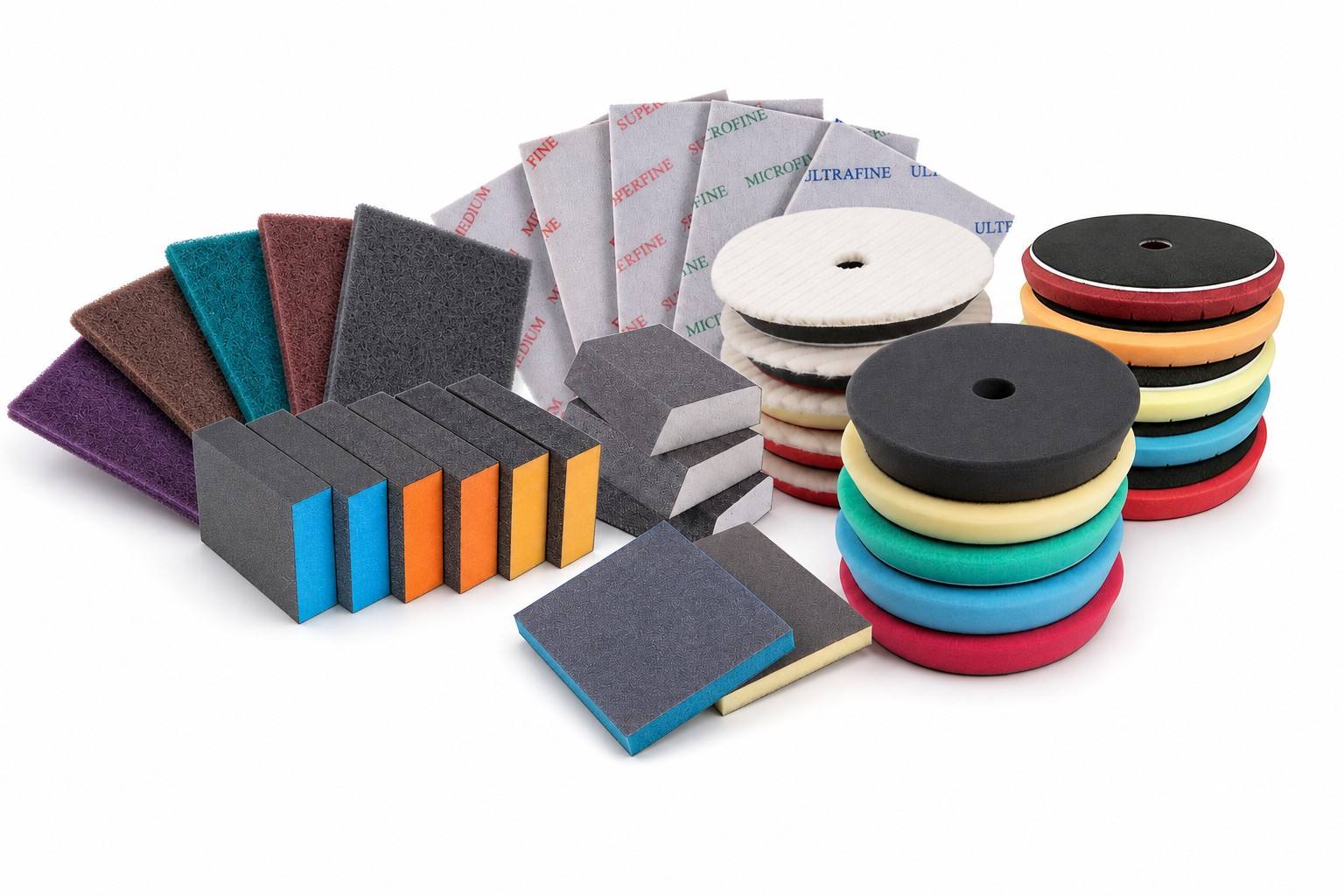
Abrasive sponges really shine when you're dealing with uneven or contoured surfaces. Traditional sandpaper tends to tear or skip over curves, but the flexible foam backing lets you press into grooves, rounded edges, and tight corners without wasting material. In auto body work, for instance, a medium-grit sponge can feather out paint chips or scuff a bumper before priming in half the time it would take with folded sheets, and because the grit is distributed throughout the sponge, you get fresh abrasive as it wears instead of throwing away half-used paper.
Another area where they cut costs is routine metal and wood maintenance. For removing light rust from hand tools, cleaning up saw blades, or knocking down dried finish drips on furniture, a single sponge often outlasts several sheets of sandpaper. They rinse clean under running water and keep cutting, which means fewer supply runs and less downtime. Contractors also use them for drywall touch-ups and de-nibbing between coats of varnish, where the sponge's ability to conform to slight imperfections prevents oversanding and rework.
On top of that, abrasive sponges are handy for household jobs that would otherwise require specialized tools. Scouring grout lines, refreshing painted window sills before repainting, or smoothing rough fiberglass edges all become quicker when the abrasive can bend and compress. The time saved on these small but frequent tasks adds up, and the sponges themselves are inexpensive enough to keep in different grits without a big upfront investment.
Material Compatibility: From Wood to Metal to Drywall
The right fastener or adhesive depends entirely on what you're attaching to. Wood offers a forgiving grip for nails and screws, but its grain can split under pressure if you skip pilot holes. Metal demands a sharper bite—self-tapping screws or specialty bits make the difference between a clean joint and a stripped mess. Drywall, by contrast, needs anchors or toggle bolts; sinking a screw straight into gypsum is a shortcut to a hole that won't hold.
Each surface also reacts differently to moisture and temperature swings. Wood expands and contracts, so rigid connections may loosen over time. Metal can corrode against certain fastener coatings, especially outdoors. Drywall crumbles under concentrated weight, so spreading the load across a bracket or rail keeps the wall intact. Matching the hardware to the material isn't just about immediate strength—it's about how the two will behave together months down the line.
A practical test before committing often saves cleanup later. Press a thumbtack into drywall to gauge its density; on wood, tap lightly and listen for hollow spots that signal knots or voids. For metal, a magnet tells you if you're dealing with steel or aluminum, which changes your drill speed and bit choice. Small checks like these turn guesswork into a confident install, no matter what the wall is made of.
Durability and Reusability: The Hidden Cost Advantage
Many buyers still judge a product by its upfront price, but that number rarely tells the whole story. Items built to survive repeated use quietly erase the need for constant replacements, and those avoided purchases add up faster than most people expect. A slightly higher initial outlay can easily become the cheaper option within months once the math includes everything that doesn't need to be bought again.
Reusability works the same way. A design that holds up to cleaning, transport, and daily wear shifts spending away from disposable cycles and toward a single dependable asset. Instead of budgeting for a steady stream of short-lived alternatives, you're paying once and moving on. That's where the hidden advantage lives—not in a dramatic feature, but in the ordinary absence of recurring cost.
Over time, the savings become visible in places people rarely look: fewer emergency runs, less waste to manage, simpler inventory. Durable goods also tend to age more gracefully, so the late-life performance often justifies the original decision all over again. When the total cost of ownership is considered, longevity isn't a premium; it's the discount wearing a different name.
Achieving Uniform Finishes on Contoured and Curved Surfaces
Getting an even finish across a curved panel starts with reading the surface the way the material actually behaves, not the way a flat spec sheet suggests. On gentle convex crowns the abrasive or pad can bridge across the high spot and skip the surrounding valleys, so many finishers end up polishing the center line while the edges stay hazy. A short-nap interface pad or a semi-rigid foam block lets the abrasive follow the radius without digging in, and moving in short overlapping arcs instead of long straight passes keeps the scratch pattern from telegraphing through the final coat.
Pressure control matters more than speed once the contour tightens. On concave areas and compound curves, backing off near the transition lines prevents cutting through the clear coat or primer at the edges where film build is naturally thinner. Many painters intentionally use a worn disc on these zones—it cuts less aggressively but still refines the texture. Checking the surface under a low-angle light after each pass reveals glossy streaks and dull patches early, before they become visible after full cure.
When the shape changes direction quickly, switch to a smaller pad and treat each facet of the curve as its own small flat section, blending the boundaries with a foam interface. Dry sanding with a vacuum-assisted tool helps keep the dust from loading the abrasive and creating pigtails, but it also lets you feel the drag change as you cross the crown. That tactile feedback is often the difference between a finish that looks uniform in the booth and one that stays uniform under direct sunlight.
Selecting the Right Grit and Density for Your Project
Grit choice comes down to how much tooth you actually need. A coarse grit, somewhere in the 36 to 60 range, chews through material fast and leaves a noticeable scratch pattern. That's fine if you're knocking down high spots or prepping for a heavy coating, but it's overkill for a final pass. On the other end, something like 120 or 150 grit barely removes anything—it just refines the surface. The mistake most people make is jumping straight to a fine grit, then wondering why the floor still shows waves from the previous step.
Density matters just as much, especially on open or porous concrete. A softer, more open matrix exposes fresh diamonds quickly, which keeps the tool cutting instead of glazing over. Hard, dense concrete needs the opposite—a harder bond that wears slowly and holds the diamonds longer. Think of it like sandpaper: soft wood clogs fine paper, hard steel eats coarse paper. Matching the bond to the slab hardness stops you from burning through pads or polishing forever with no progress.
A simple test is to run one pad for a couple of minutes, then check the surface. If you see fine powder and the scratch pattern is even, you're close. If the pad looks shiny or the floor feels slick, the bond is too hard—drop down a step or switch to a more aggressive grit. If the pad is shedding diamonds fast and the scratch pattern is uneven, go the other way. No chart replaces that kind of hands-on check.
FAQ
Abrasive sponge has a flexible foam core that conforms to curved or contoured surfaces, reducing the risk of over-sanding edges. China-made options often combine consistent grit bonding with a washable, reusable structure, so you get more mileage before replacing the pad.
Yes, most quality abrasive sponges work both ways. Wet sanding helps control dust and prevents clogging on painted or primed surfaces, while dry use gives faster material removal on bare wood or metal. Just rinse the sponge occasionally to keep the abrasive face clear.
For stripping old paint or rough shaping, start with 60-100 grit. For intermediate smoothing, 120-180 grit works well. For final surface prep before paint or clear coat, go with 220-400 grit. The open-cell structure lets you feel the surface through the sponge, so it is easier to avoid gouges.
They shine on wood furniture, drywall joints, metal parts, automotive body panels, and even plastic trim. Because the foam flexes, you can work inside recesses, around edges, and on rounded profiles without creating flat spots.
Chinese manufacturers often use high-quality aluminum oxide or silicon carbide grit bonded to dense foam. The sponge resists tearing and can be rinsed multiple times, so even if the upfront price is modest, the per-use cost stays low in busy workshops.
Use light, consistent pressure and let the grit do the work. Move in circular or cross-hatch patterns for flat areas, and fold or compress the sponge to reach tight corners. For wet use, dip the sponge in water frequently and wipe away slurry to check progress.
Coated paper or cloth tends to crease and can cut through edges on curves. A sponge distributes pressure more evenly, adapting to the part's shape. Chinese suppliers often offer multi-grit variety packs, letting you tackle rough and fine stages with one product line.
Keep them away from excessive heat and store flat to avoid permanent compression. Rinse after each session and let air dry. If used with water, do not leave them soaking, as that can weaken the foam bond over time.
Conclusion
Abrasive sponges sourced from China have changed the way painters, woodworkers, and metal fabricators approach surface prep. Unlike flat sandpaper that folds, clogs, and wears out quickly at edges, these flexible blocks keep their shape and cut consistently even when wet or dry. Their open-cell structure lets dust and debris escape rather than loading up the face, which means fewer passes and less wasted material. For anyone tired of swapping sheets every few minutes, the difference shows up in the first hour on the job. The foam backing also provides more even pressure than fingertips alone, reducing deep scratches that later need filling.
The real payoff is broader than convenience. They work across wood, metal, drywall, and painted surfaces without shredding or scratching, and they follow curves, beads, and corners that would snag a rigid sheet. Because the abrasive is distributed through the entire foam, you can rinse them clean and reuse them many times, cutting hidden costs on large or repeated projects. Choosing the right grit and density matters: coarser, firmer sponges strip and shape, while finer, softer ones blend and polish. In auto body work, furniture refinishing, and drywall touch-ups, that adaptability saves both time and money. That is why a growing number of professional shops and dedicated DIYers keep a range of these sponges within arm's reach.
Contact Us
Contact Person: Amanda Wang
Email: [email protected]
Tel/WhatsApp: +86-13602569854
Website: https://www.sunabrasives.com.cn