

Best Surge Protective Device Company You Can Rely On for Whole-Home Safety
2026-11-02
Most homeowners don't realize their biggest electrical threat isn't lightning—it's the everyday surges from appliances, power tools, and grid switching. By the time a surge fries your expensive electronics, it's too late to think about protection. That's exactly why SINGI focuses on whole-home safety, not just single-outlet fixes—and why they've become the name to trust when your home's electrical backbone is on the line.
Not All Surge Protectors Are Built for Whole-Home Demands
A plug-in surge strip tucked behind the entertainment center does a fine job guarding a TV, game console, and streaming box from modest voltage spikes. But expecting that same strip to shield every circuit in your house is like using a bike helmet to protect a whole football team. Whole-home surge protection operates on a completely different scale, intercepting surges at the service entrance or main breaker panel before they ever reach branch wiring, outlets, and hardwired appliances.
True whole-home units—typically Type 1 or Type 2 surge protective devices—are installed by an electrician and rated to handle tens of thousands of amps of surge current. They use banks of metal oxide varistors that clamp down on transient overvoltages from lightning strikes, utility grid switching, or large motor startups inside the home. These devices sacrifice themselves over time, absorbing repeated hits so your refrigerator compressor, HVAC control board, and smart home hub don't have to.
The difference becomes painfully clear during a major storm or a nearby transformer failure. A power strip might sacrifice itself after one big spike, but the surge continues through the panel and into every connected load, frying electronics that were never plugged into that strip. If you only rely on point-of-use protectors, you're leaving the most expensive and hard-to-replace equipment—like a built-in oven or a well pump—completely exposed.
The Real Difference Between Power Strips and Whole-Home Defense
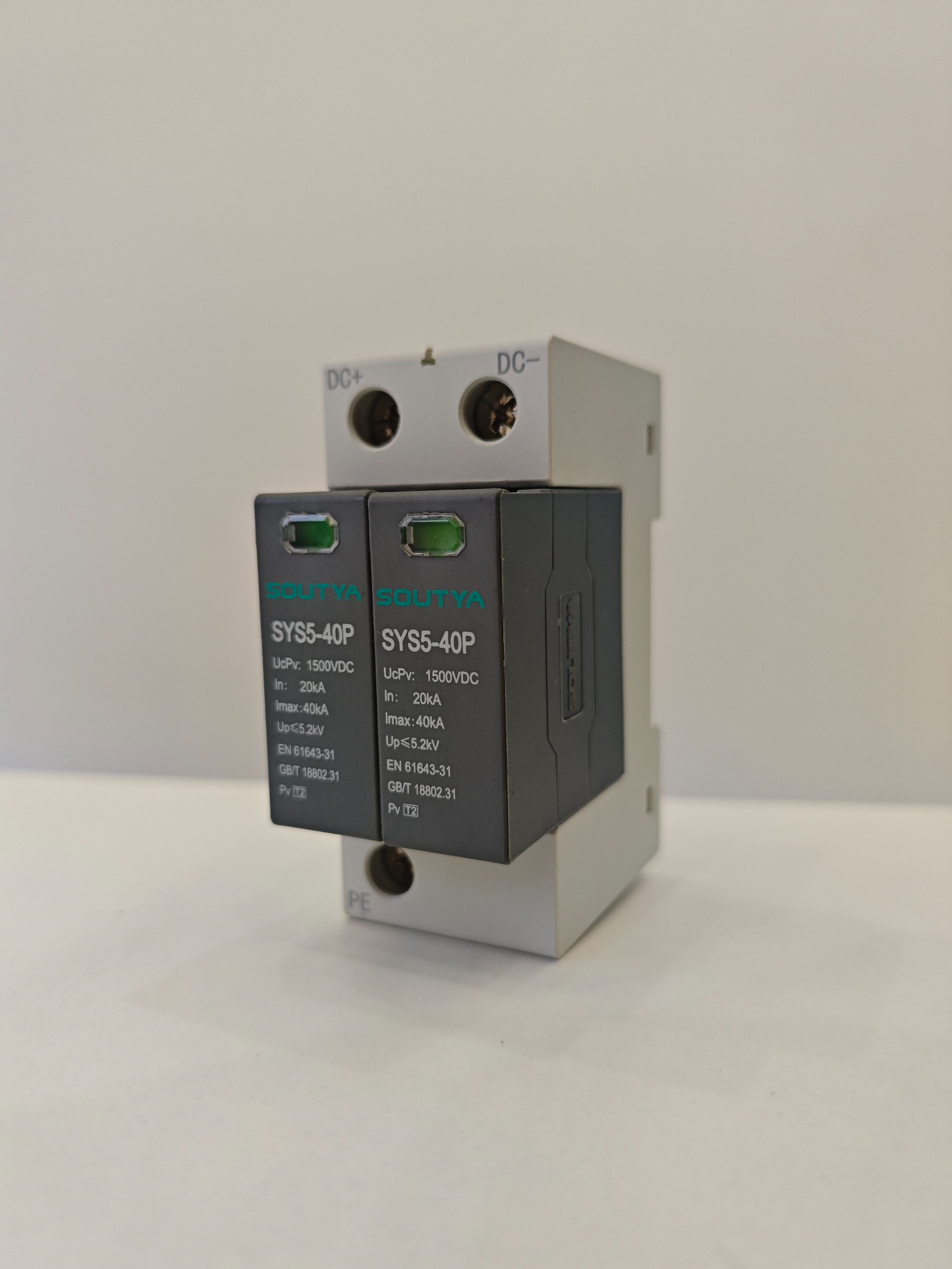
Most people think a power strip is just a cheap way to multiply outlets, while whole-home defense sounds like something only a mansion would need. The truth is far simpler: a power strip protects whatever happens to be plugged into it, but it does nothing for the wiring behind your walls. If a surge enters through a cable line or travels along your home's own circuits, that strip won't even blink.
Whole-home defense works at the electrical panel itself. It sits between the grid and everything you own, clamping down on excess voltage before it can spread to a single outlet. Instead of hoping you remembered to buy a surge protector for each device, you get one centralized choke point that covers the fridge, the furnace, the router, and even the garage door opener.
But that doesn't make power strips useless. They're still the right tool for localized protection, especially for electronics that are sensitive and expensive. The mistake is treating them as equivalent. A strip is a last-minute guard at the door; whole-home defense is a fence around the entire property.
Inside Our Testing Lab: How We Push Devices Past Their Limits
Our test benches are not gentle places. Devices get dunked, dropped, baked, frozen, and shaken until something breaks—then we figure out why. We treat every gadget like a rental car with no deposit, because real-world abuse is the only honest spec sheet.
Beyond the standard drop tests and waterproof ratings, we run extended thermal cycling, rapid charge/discharge loops under load, and signal torture in crowded radio environments. If a phone survives a week in our humidity chamber, a sweaty pocket is nothing. We often run units until they throttle, reboot, or simply give up mid-benchmark.
The goal isn't to destroy things for fun—it's to map the exact point where performance collapses, battery life nosedives, or glass cracks. That failure threshold becomes the number you see next to "durability" in our reviews.
Installation Day: What Our Crew Actually Does in Your Home
Most crews roll up with a truck full of gear and a vague plan. Ours arrives with a printed layout, a marked-up site survey, and a lead installer who actually walks you through the day before anyone unloads a single box. We lay down floor runners from the entry to the work area, tape off vents, and cover furniture that can't be moved. It sounds like overkill until you've seen how much dust a single cut can kick up.
Once the space is prepped, the lead installer confirms outlet placement, mount height, and any last-minute changes with you face-to-face. Then the team starts the messy work in a specific order: cutting, running cable, mounting back boxes, and only then making final terminations. Every cable gets labeled at both ends, even the ones hidden in walls. If something doesn't match the original plan, the crew stops and checks with you instead of improvising.
Before we call it done, we test every connection, clean the work area with a HEPA vacuum, and walk you through what was installed and how to use it. Then we haul away the packaging, old parts, and any debris — not just to the curb, but off your property. You shouldn't have to spend the evening sweeping up after us.
Why Our Customers Stop Worrying About Brownouts and Spikes
Once a brownout dims the lights or a spike rattles the lines, most people brace for the worst. Our customers used to do the same—constantly checking gear, resetting clocks, and crossing their fingers that the next fluctuation wouldn't fry something expensive. That changed when they realized the protection built into our systems doesn't just soften the blow; it removes the worry entirely. The moment voltage begins to wander outside safe limits, the response is automatic and silent, so there's nothing to watch or manage.
What really sets their minds at ease is that the equipment downstream never sees the ugly side of the grid. Instead of relying on a single sacrificial component, the design spreads the stress across multiple stages, clamping down on surges before they reach anything sensitive and holding output steady during long sags. Customers stop thinking about brownouts and spikes because the evidence is right in front of them: months go by, nothing reboots, nothing loses its settings, and the only surprise is how quickly they forgot to worry.
The Long-Term Support Promise That Outlasts the Warranty Card
Most warranties read like a countdown clock, ticking away from the moment you open the box. We've never been comfortable with that idea. When a customer invests in our equipment, we treat that date on the card as a starting point for service, not a finish line. Our support team routinely troubleshoots units that are five, seven, even ten years old without asking when you bought it.
That promise shows up in ways a warranty document can't capture. A firmware patch released last spring still covered models from 2016 because a user spotted a rare Bluetooth dropout. When a replacement part for a discontinued batch was needed, our engineers pulled the original CAD files and machined a small run rather than telling the owner to buy new. Those decisions never made it into a marketing plan; they just felt like the right way to stand behind our work.
Over time, this has created a quiet loyalty. We hear from second owners who received the unit free from a friend and call us expecting nothing, then end the conversation with a working device and a repair guide in their inbox. The warranty card may yellow and fade, but the expectation that we'll pick up the phone, dig into a schematic, and help you keep things running doesn't expire.
FAQ
They focus on residential electrical safety rather than treating surge protection as an afterthought. Their devices are tested under real-world power surges, and they offer clear installation guidance, so you're not left guessing when a storm rolls through.
A power strip only guards the few devices plugged into it, while a whole-home unit sits at your main electrical panel and blocks surges before they reach your wiring. That means your refrigerator, HVAC system, and hardwired appliances get the same level of defense as your computer.
If you rely on electronics daily or live in an area with frequent lightning, brownouts, or even routine utility switching, your home is a candidate. Modern homes packed with smart devices and LED fixtures are more sensitive to voltage spikes than older, purely analog setups.
It's strongly recommended to hire a licensed electrician. The unit connects directly to your breaker panel, and proper grounding matters more than the device itself. A professional can also check for existing wiring issues that would undermine the protection.
No, surge protectors wear down as they absorb spikes. Many models include an indicator light or alarm to signal when the protection has degraded, and replacing a spent unit is usually quick and affordable compared with repairing fried electronics.
They provide compatibility details and often have models designed for legacy panels, but the real value is their support team walking you through what your home can accommodate. If a full panel upgrade is needed, they'll be straightforward about it instead of pushing a sale.
Look beyond marketing claims. Ask about clamping voltage, response time, thermal fusing, and whether the unit includes a warranty for connected equipment. A trustworthy company will publish these specs openly and explain what they mean for your daily life.
Conclusion
When it comes to protecting every circuit in your home, the typical power strip simply doesn't cut it. Most surge protectors on the shelf are designed for a single outlet or a small cluster of devices, not the complex electrical loads of a modern household. We built our company around the belief that whole-home safety demands a different class of hardware—one that sits at your main panel and intercepts surges before they ever reach a wall socket. In our testing lab, we push each device to failure under repeated high-energy spikes, brownouts, and induced lightning strikes, far beyond what any certification requires. That's how we know our units won't fold when your air conditioner kicks on or a tree branch clips a power line outside.
On installation day, our crew doesn't just bolt a box to the wall and leave. They map your breaker layout, check grounding integrity, and walk you through exactly what the system will and won't stop. Customers tell us the same thing after a few months: they stop flinching when the lights flicker, because they finally understand the difference between a nuisance voltage drop and a real threat. And while the warranty card is nice, what keeps people with us is the follow-up. We call at six months, then yearly, to re-test your surge counter and replace worn modules at no charge. No fine print, no expiry on the promise—just a company that treats your home's electrical safety like its own.
Contact Us
Contact Person: Jack
Email: [email protected]
Tel/WhatsApp: (+86) 13757759651
Website: https://www.singi.com