

Best Cabinet-Type Smart Fresh Air System for a Healthier Home Environment
2026-11-25
If your home still smells like last night’s dinner by morning, the real problem isn’t the kitchen—it’s stale air with nowhere to go. More homeowners are chasing the best cabinet-type smart fresh air system for a healthier home environment, but not every unit earns its space. ROTER takes a quieter, sensing-first approach, and the difference matters more than spec sheets suggest.
What a Cabinet-Type Fresh Air System Does Differently From a Wall Unit
A cabinet-type fresh air system isn't just a bigger box bolted to the wall; it changes where and how air is moved. Wall units tend to push treated air straight into one zone and rely on that single point of entry to spread it around. A cabinet unit, by contrast, can sit centrally and connect to short duct runs, so it pulls stale air from multiple rooms while delivering filtered outdoor air through a quieter, more balanced path. That central position also gives you room for a much larger heat-exchange core and thicker filtration without turning the living space into a noisy mechanical closet.
The real difference shows up in maintenance and comfort. Wall-mounted units often have compact filters that clog quickly, especially in high-pollen or high-dust seasons, and cleaning them means working at shoulder height against a wall. Cabinet systems typically use larger, longer-life filters and put the service side at a practical height, so replacing a filter or checking the core takes minutes instead of a ladder and a flashlight. Because the unit sits on the floor or a low platform, vibration and motor hum stay out of earshot in bedrooms and main sitting areas.
There is also a matter of capacity. A wall unit is usually sized for a single room or an open-plan area, so a whole home may need several of them. A cabinet-type system can handle a larger air volume from one location and maintain steadier pressure across connected spaces. That makes it a better fit for homes with hallways, closed doors, or multiple floors, where one point-source unit would leave dead zones and uneven fresh air distribution.
How the Smart Controls Adapt to Cooking, Sleep, and High-Pollen Days
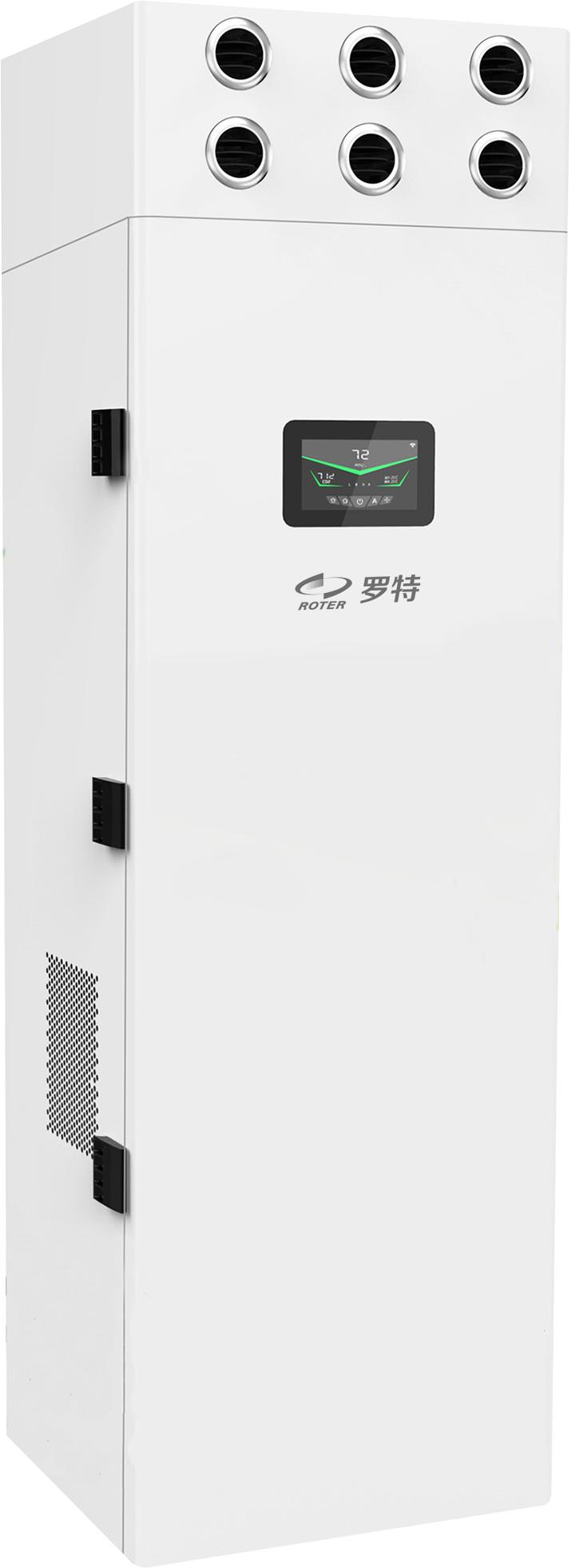
Smart controls don't just switch on and off, they read the room—literally. During cooking, sensors detect rising heat, humidity, and airborne particles, then quietly step up ventilation or adjust air purification without being asked. The system learns how your kitchen behaves on a Tuesday pasta night versus a slow Sunday roast, shaping its response to the level of activity rather than a fixed timer.
At night, the shift is even more subtle. Light temperatures soften, fan speeds drop, and air movement is tuned to support deeper sleep cycles instead of fighting them. If pollen counts climb overnight, the controls preemptively close fresh air intake and lean on filtered recirculation, so you wake up without that familiar scratchy throat. It's less about automation for its own sake, and more about removing the small frictions that make a home feel unresponsive.
High-pollen days get their own logic. The system cross-references local air quality trends with your usage history, then biases the house toward positive pressure or upgraded filtration before you even open the windows. Over time, it notices patterns like evening dog walks that drag pollen inside, and schedules a quiet purification burst shortly after—never intrusive, just a background habit that keeps the indoor air from turning against you.
Where These Systems Fit in Homes With No Existing Ductwork
In older homes where adding ductwork would mean tearing into plaster walls, lowering ceilings, or sacrificing closet space, ductless units often make more sense than trying to force a conventional system into a floor plan that was never designed for one. A slim outdoor condenser can sit on a side wall or small ground pad, while indoor heads mount high on a wall, recess into a ceiling, or tuck into a knee wall. That flexibility matters in houses with radiators, baseboard heat, or wood stoves where the only missing piece is cooling and the owners want to avoid a major remodel.
New additions, attic conversions, sunrooms, and detached studios are another natural fit. Instead of extending the main duct system—which may already be near its airflow limits—a separate ductless system can condition that space on its own schedule. It gives the room its own thermostat and avoids the pressure imbalances that often come from long, undersized duct runs. For a garage workshop or a finished basement with low clearance, a ceiling cassette or floor-mounted unit can be placed where sheet metal ducts would simply not fit.
There is also a practical middle ground for homes that only need targeted comfort. A single-zone unit in a primary bedroom or a multi-zone system covering a kitchen and family room can handle the rooms people actually use most, rather than treating the entire house as one thermal box. In many older properties, this means the original heating stays in place for cold months, while the ductless equipment picks up cooling and shoulder-season comfort without disturbing the home’s structure.
Air Quality Changes You're Likely to Notice During the First Two Weeks
In the first few days, the shift is often more felt than measured. Dust stops settling as quickly on shelves and windowsills, and a faint stale or plastic odor that used to greet you at the door starts to fade. The air feels less heavy, especially in bedrooms that were closed up overnight.
By the end of the first week, many people notice they are reaching for tissues less often. Pet dander, frying smells, and that faint mustiness around upholstery no longer linger the way they once did. Mornings tend to feel clearer, and the dry tickle at the back of the throat can ease once the filter has cycled through the room several times.
Around day ten to fourteen, the change becomes part of the background. Sheets stay fresher between washes, the fine dust on electronics takes longer to return, and the room simply feels easier to sit in for hours. It is rarely one dramatic moment; it is more like noticing the air no longer asks for attention.
A Realistic Look at Filter Replacements and Operating Costs
Filter life ratings are usually based on controlled test conditions, so treating them as a fixed schedule can be misleading. In a home with hard water, shedding pets, or nearby construction, a filter may clog well before the stated month count. Watching for reduced flow, odd tastes, or a drop in suction often gives a more honest replacement signal than the label.
Operating cost also goes beyond the price tag on the replacement cartridge. A dirty filter makes fans and pumps work harder, which pushes up energy use and can shorten the life of the equipment itself. Sometimes a slightly pricier filter with more media area lasts longer and keeps the whole system running cheaper, even if the upfront number looks less attractive.
Building a Healthier Indoor Routine Without Watching the Dashboard
Indoor air quality monitors can quietly take over your attention if you let them. Instead of checking the dashboard every few minutes, treat the numbers as occasional feedback rather than a scoreboard. Start with the room itself: notice whether the air feels stale after sleeping, if cooking smells linger longer than they used to, or if certain corners feel stuffy by late afternoon.
Build a routine around timed actions that do not require a screen. Open windows on opposite sides of the home for ten minutes in the morning, run the exhaust fan while frying or chopping onions, and move dusty hobbies near a vent or outside when possible. These habits lower the things monitors detect, but they also make the space feel more comfortable in ways a sensor cannot capture.
Check in with your body instead of the display. If your eyes feel less irritated in the evening, if sleep comes a little easier, or if you stop noticing a musty smell near the closet, that is useful information. Keep the dashboard for a weekly glance at long-term patterns, not as a number to chase throughout the day.
FAQ
Think of it as a ventilation unit that lives inside a closet or cabinet. It brings filtered outdoor air in, pushes stale indoor air out, and uses sensors to adjust the airflow when CO2 or humidity climbs.
Purifiers mostly clean the air already in the room. This one actually exchanges indoor air with outdoor air, which matters for CO2, moisture, and smells that a filter loop cannot fix.
The cabinet version tends to be easier to tuck away in a utility room or wardrobe. You usually get room for bigger filters and a proper heat recovery core, so it handles more air without turning a wall into a metal box.
For many households, yes. The constant low-level airflow keeps CO2 down, limits condensation, and filters incoming pollen or traffic pollution. People often notice the air feels less heavy and bedrooms do not get stuffy overnight.
Not much with current models. EC motors are efficient, and the heat recovery core reuses some of the indoor temperature. Smart controls also lower fan speed once air quality readings stabilize.
Filters need replacement or cleaning every few months, depending on how dirty the outdoor air is. The heat exchanger benefits from a vacuum now and then, and sensors may need a quick recalibration about once a year.
It takes more planning than a plug-in purifier because you need outdoor ducting and a route for supply vents. Still, a cabinet-type unit keeps the core components together, which can make retrofits less scattered.
Look at heat recovery efficiency, noise at the speed you will actually use, filter costs, and whether the smart features talk to the rest of your home. And size the airflow to your square footage instead of chasing the highest number.
Conclusion
A cabinet-type fresh air unit earns its place by behaving more like a quiet appliance than a wall-mounted afterthought. Instead of punching through an exterior wall and forcing air through one room, it sits close to a utility area or balcony, pulls outdoor air through a multi-stage filter, and lets it drift into the main living space with noticeably less noise. That difference matters in homes without existing ductwork: no ceiling runs, no major drywall surgery, just a discreet cabinet that can serve an open floor plan. The smart side is also more practical than flashy. During cooking it can boost exhaust or hold back incoming air when outdoor particle counts spike, and at night it drops into a lower setting that does not compete with sleep. On high-pollen days, the controls lean on recirculation and filtration instead of dragging raw pollen indoors.
In the first two weeks, most people notice subtler changes before they see dashboard numbers: waking with less congestion, less cooking odor lingering into the next morning, and less dust settling on shelves. That pattern is more useful than constant monitoring. Filter replacements are predictable rather than punishing. Coarse pre-filters can be vacuumed, while the main high-grade element typically lasts several months depending on outdoor air and cooking frequency. Operating costs stay reasonable because the fan runs at low speed most of the time, and the real habit shift is simple: set a schedule, ignore daily readings, and change filters when the unit reminds you. Over time the system fades into the background, which is exactly what a healthier indoor routine should feel like.
Contact Us
Contact Person: Rhea
Email: [email protected]
Tel/WhatsApp: +8618800560886
Website: https://www.rotorairtech.com