

Bathroom Bath Chair Supplier Options for Safe and Comfortable Showering
2026-08-25
Finding a bath chair that actually feels safe—and doesn’t make you dread your next shower—is harder than it should be. Too many suppliers treat bathroom seating as an afterthought, leaving you with wobbly frames or hard, slippery surfaces. Suncare takes a different approach, combining sturdy design with shower-friendly comfort. In this guide, we’ll explore what to look for in a bathroom bath chair supplier, and how the right choice can turn your daily rinse from a risk into a relief.
Finding a Bath Chair That Actually Fits Your Shower Space
Most bath chairs are sold with generous dimensions that look fine in a catalog but turn awkward once you slide them past a curved shower rod or a narrow glass door. Start by measuring the actual floor area where the chair will sit, not just the tub or stall footprint. Leave at least an inch of clearance on every side so water can drain and you can shift your weight without banging an elbow. If you have a neo-angle shower or a bench seat already built in, look for chairs with a tapered base or removable backrest—those few inches you gain make the difference between a stable seat and a constant wrestling match.
Pay attention to the leg spread, because a chair that fits the floor might still block the drain or interfere with the faucet. Models with adjustable legs let you level the seat on a sloped shower pan, but check the minimum and maximum width at the base. Some chairs flare outward for stability, which is great in an open roll-in shower but useless in a 30-inch stall. Consider a wall-mounted fold-down seat if floor space is truly tight; it tucks away when not in use and keeps the shower clear for other family members.
Finally, think about how you will actually get in and out of the chair. A swivel seat sounds nice, but it needs room to rotate without hitting glass or a sliding door track. If your shower entry is narrow, choose a chair with armrests that lift or remove entirely, so you can slide in sideways. Test the fit with a cardboard mock-up of the base dimensions before you buy—it takes ten minutes and saves you from discovering an inch too wide after the box is open.
What Separates a Safe Bath Chair From a Risky One
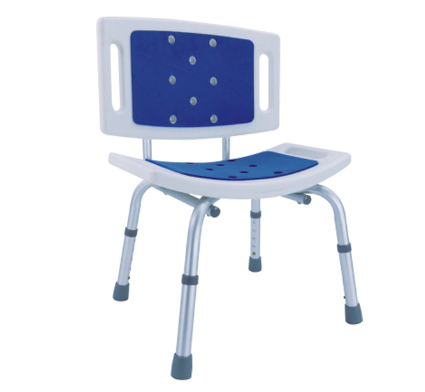
The clearest difference is how the chair reacts when you lean or reach. A safe bath chair stays planted because its legs form a wide base and the feet are thick, textured rubber that grip even on wet porcelain or fiberglass. If the height is adjustable or the frame folds, every pin and hinge locks positively—you should hear or feel it click into place. A risky chair tends to wobble on smooth tub floors, especially if the rubber tips are hard, thin, or have gone missing, and a folding joint that doesn't fully lock can shift or pinch when you're most off-balance.
Materials and drainage are just as telling. Safe options use anodized aluminum, stainless steel hardware, or dense molded plastic that withstands constant humidity without rusting or developing stress cracks. The seat needs several drainage holes so water doesn't pool beneath you, and the backrest and armrests should resist twisting when you push up. Risky chairs often cut corners with hollow tubing, painted steel that rusts around screw holes, sharp plastic edges, or seats that flex alarmingly under normal use.
Finally, look at the weight rating and how the chair holds up at its limit. A safe chair states a specific capacity—commonly 250, 300, or 400 pounds—and maintains its shape because of cross-bracing, a wider footprint, or thicker gauge tubing. Risky models may print a number on the box but creak, rack, or bow when you sit near that figure, and they often skip small but essential details such as textured armrests, fully seated height-adjustment pins, or leg extensions that stay put after you set them.
Comfort Features Worth Paying Extra For
If you spend long hours behind the wheel, a massaging driver's seat can transform a draining commute into something almost enjoyable. Many automakers now offer multicontour seats with adjustable bolsters, lumbar support, and even rolling massage nodes. The difference is subtle at first, but after a week of daily driving, your back will notice the lack of a good massage function in a base model. It's one of those upgrades that quietly improves your quality of life without demanding attention.
Acoustic glass and active noise cancellation are often bundled into premium packages, but they're worth every dollar on highways or rough pavement. The constant drone of wind and tire noise is fatiguing, even if you don't consciously register it. Vehicles with laminated side windows and microphones that emit counter-frequencies feel dramatically calmer at speed. You can hold a conversation at normal volume, enjoy music without cranking the volume, and arrive less drained. For anyone who treats driving as more than a chore, this is a comfort feature that pays for itself in reduced stress.
Ventilated seats rarely get the hype they deserve. On a hot day, cloth seats can feel sticky and leather can burn your legs. A properly ventilated seat pulls air through perforations, keeping your back and thighs dry even on long summer trips. It's one of those features that seems unnecessary until you've lived with it, then you can't go back. When combined with a heated steering wheel and fast-acting climate control, the cabin becomes a sanctuary rather than just a place to sit.
Questions to Ask Any Bath Chair Supplier Before Buying
Before placing an order, ask the supplier exactly how much weight the chair will safely support, and don’t settle for a vague “heavy-duty” label. Request the tested load rating, the type of metal used for the frame, and whether the seat and back are molded or padded. Check for rust-resistant finishes and non-slip rubber tips, because a bath chair lives in water and soap residue every single day.
Next, dig into adjustability. Ask for the full range of seat height settings and whether the legs lock into place or simply twist into holes. Have the supplier walk you through measuring your tub or shower base so you know the chair will sit level. If you have a curved or narrow tub, ask if they offer a model with flared legs or a smaller footprint. Also confirm whether the backrest and armrests can be removed or reversed for easier transfers.
Finally, don’t skip the after-sale questions. Find out how long the warranty lasts, what it actually covers, and how replacement parts like suction tips or leg extensions are ordered. Ask about the return window if the chair doesn’t fit, and whether you’ll be dealing with the supplier directly or a third party for service. A supplier that can answer these specifics quickly is usually one that stands behind the product.
Material Choices That Stand Up to Daily Moisture
Daily moisture rarely announces itself with a dramatic spill. Instead, it works through slow exposure—steam from showers, damp boots by the door, condensation on windowsills. Materials that handle this well tend to share a few traits: low porosity, stable dimensions through wet-dry cycles, and a surface that doesn't hold water in tiny crevices. A single “waterproof” label often misses the point; the real test is how a material behaves after hundreds of small moisture events rather than one quick splash.
Porcelain and vitrified tiles absorb very little water and won't swell or cup when a bath mat drips on them through the morning. Solid-surface sheets, when seamed tightly, avoid the grout lines where moisture lingers and eventually stains. In mudrooms and laundry areas, marine-grade polymer boards and dense engineered quartz composites earn their place because they shrug off both the water and the cleaning sprays that follow it.
Wood isn't automatically out of the running, but species and finish matter more than a generic promise. Teak, white oak, and thermally modified timber have natural or heat-altered structures that limit moisture uptake. The right finish also helps: a penetrating oil that lets the surface breathe often outlasts a thick film finish that can trap water underneath and peel away in sheets.
Installation Mistakes That Compromise Shower Safety
Shower safety starts long before anyone steps onto the tile. One of the most overlooked mistakes is skipping a proper waterproofing membrane behind the walls or under the floor. Without that barrier, moisture seeps into subflooring and studs, leading to rot that can make the entire surround unstable. A grab bar mounted into compromised wood might feel secure on day one, but after a few months of hidden decay, it can pull loose with very little force. The same goes for benches and corner shelves that are screwed into drywall rather than blocking — they’re accidents waiting to happen.
Another common shortcut involves the drain and slope. If the shower pan isn’t pitched correctly, water pools near the threshold instead of moving toward the drain. That standing water creates a slick film of soap scum and mildew, turning a normally safe floor into a skating rink. Even with a textured surface, a low spot that holds water will eventually grow something slippery. Installers sometimes “fix” this by adding more grout sealer, but that doesn’t change the physics — water still sits, and feet still slide.
Finally, there’s the mistake of guessing at support placement. Grab bars need to anchor into studs or solid backing, but many installations rely on hollow-wall anchors because the tiler didn’t mark blocking before hanging backer board. The result is a bar that holds under a slow, steady pull but fails under a sudden lunge or fall. A shower that looks finished isn’t necessarily safe — the hidden structure is what keeps a person upright when balance is lost.
FAQ
Look for a supplier that offers consistent material quality, clear weight-capacity testing, and responsive communication about lead times and customization. A track record with healthcare or hospitality buyers often indicates they understand real-world bathroom conditions.
Powder-coated aluminum frames with molded plastic seats and non-slip rubber feet tend to resist corrosion and mildew. Avoid untreated steel unless it has a marine-grade finish, and check that all hardware is stainless or coated.
Most standard models handle 250 to 300 pounds, but if you're buying for bariatric or higher-acuity users, look for reinforced chairs rated at 400 pounds or more. Always confirm the rating applies to the fully assembled chair, not just the seat.
Yes. Chairs with textured seats, drainage holes to prevent pooling, flared leg bases for stability, and easy-grip armrests reduce slip and fall risks. Some also include back support that curves slightly to keep the user from sliding forward.
Many manufacturers offer private labeling, color matching, and even logo embossing if you meet minimum order quantities. Ask about mold ownership or setup fees upfront so the per-unit price doesn't surprise you later.
Request a sample of the exact packaging type—flat-packed versus fully assembled—and confirm whether assembly requires tools. For high-volume orders, ask if the supplier can pre-assemble or include clear pictorial instructions and spare parts kits.
Reputable suppliers should share test reports for ISO or FDA registration, along with REACH or similar material safety data if you're importing. Avoid vendors who only offer verbal assurances without a certificate you can file.
Ask for a sample unit or a short trial period, and pay attention to seat width, depth, and whether the backrest angle feels natural. If that's not possible, request detailed dimension sheets and user feedback from similar facilities or home care providers.
Conclusion
Choosing a bathroom bath chair isn't just about grabbing any seat that looks sturdy; it means matching the chair to your actual shower footprint. One of the first things to check is whether the width and leg spread fit between your shower walls or tub edges without forcing awkward angles. A chair that barely fits may scrape tile or tilt on uneven surfaces, so measure carefully before shopping. Beyond size, safety comes down to details many overlook: non-slip rubber feet that grip wet floors, a wide base that resists tipping, and a seat texture that prevents sliding when soapy. Avoid chairs with sharp edges, thin plastic legs, or weak joints that can crack under repeated weight shifts. If the person using the chair has balance issues, look for armrests or a backrest that provide extra support without blocking the shower spray. Comfort often gets treated as a luxury, but a padded seat or an ergonomic contour can reduce pressure points during longer showers, making daily bathing less of a chore and more of a reliable routine.
When evaluating supplier options, ask direct questions: Do they offer replacement parts like suction tips or leg extensions? Can they confirm the chair's weight capacity with a safety margin rather than a bare minimum? What’s the return policy if the chair doesn’t fit your shower after a trial run? Material choice matters because daily moisture breaks down cheap metal or untreated wood quickly. Look for aluminum frames with rust-resistant coatings or thick, marine-grade plastic that dries fast and doesn’t harbor mildew. Installation often trips people up even with a good chair: failing to lock the legs into place, placing the chair on a sloped shower floor, or ignoring the need for a non-slip mat underneath can all reduce safety. A reputable supplier should provide clear assembly instructions and ideally a video or live support for troubleshooting. Finally, compare supplier warranties and real customer feedback that mentions long-term use rather than just unboxing impressions. That way you’re not just buying a chair; you’re investing in a shower setup that stays safe and comfortable for years.
Contact Us
Contact Person: Frank Chan
Email: [email protected]
Tel/WhatsApp: 0086-13924529088
Website: https://www.suncare-medical.com