

High-Quality Chip Resistor Manufacturer: How to Choose the Right Supplier
2026-09-04
Sourcing chip resistors can feel straightforward until a batch arrives with shifted resistance values or poor solderability. The real challenge isn't finding a manufacturer—it's finding one that delivers consistent quality over the long haul. At Milliohm, we've learned that choosing the right supplier comes down to a few often-ignored factors, from process control to honest failure-rate data. Here's how to evaluate potential partners before your next purchase, so your boards don't pay the price later.
Look Beyond the Spec Sheet: What Really Determines Resistor Quality
Most engineers flip straight to tolerance and resistance value, but those numbers only tell you how a part behaves on day one under ideal bench conditions. The real story emerges once the resistor gets warm, sees a voltage spike, or sits in a humid enclosure for a few months. Thin-film parts with a poor passivation layer can drift several percent even when their initial tolerance is a tight 0.1%. Pay attention to the temperature coefficient curve across the entire operating range, not just the single-point TCR printed in the datasheet.
Pulse and overload behavior separates robust components from fragile ones almost immediately. A resistor rated for 0.25 W continuous may fail outright or shift permanently after a single short-duration surge that stays within the voltage limit. Look at the element geometry, edge termination quality, and whether the manufacturer specifies pulse handling, not just average power. Ceramic-core metal film and niche bulk metal foil designs often maintain stability far better than ordinary thick film when exposed to repeated stress cycles.
Noise and voltage coefficient are rarely featured on summary tables, yet they matter in precision analog front-ends and low-signal paths. Excess noise in thick-film resistors can swamp a microvolt-level sensor signal, while a large voltage coefficient creates measurable distortion in high-voltage dividers. Ask for long-term load life data, humidity bias testing, and solder heat results. If the vendor cannot supply these, the part's polished datasheet number is probably hiding a much rougher reality.
The Hidden Costs of Cutting Corners on Chip Resistors
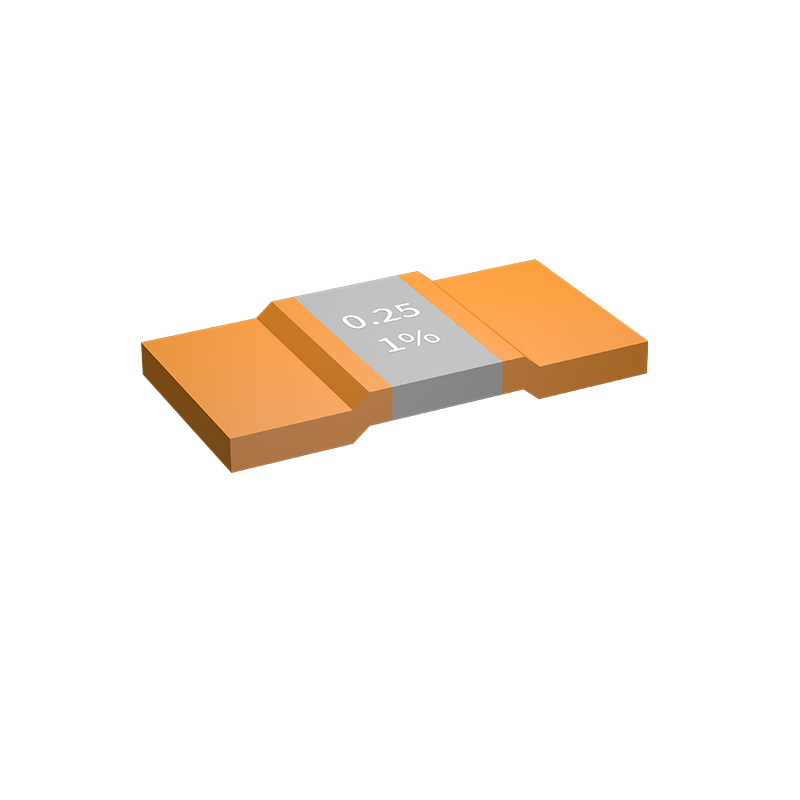
When procurement teams chase pennies on chip resistors, the real expense rarely shows up on the invoice. A resistor that drifts beyond its specified tolerance after a few thermal cycles may pass incoming inspection yet fail in the field, forcing costly rework or warranty claims that dwarf the initial savings.
Cheaper resistive films often sacrifice long-term stability and moisture resistance. Over months of operation, subtle shifts in resistance alter bias points in analog circuits or timing constants in digital designs, leading to intermittent faults that are notoriously difficult to diagnose. Replacing a failed resistor on a densely populated board can take hours, and the labor cost alone can exceed an entire reel of quality parts.
Beyond the immediate repair bill, there is a quieter cost: loss of trust. When a product fails in a customer's hands, the brand pays a price that no cost-down spreadsheet can capture. Engineers end up designing in guard bands or adding test coverage to compensate for unpredictable components, which adds complexity and slows down time to market.
Why Your Supplier’s Cleanroom Protocol Matters More Than You Think
A supplier's cleanroom protocol isn't just a folder of signed documents. It dictates whether the components arriving at your dock carry particulates, outgassing residues, or trace ionic contamination into your assembly line. A single missed glove change, an unvalidated pass-through, or a gowning room that tolerates street shoes can quietly undo months of process development.
The real exposure hides in details that rarely show up on a certificate. How often are garments replaced? Are tweezers and trays cleaned between batches, or just wiped when visibly dirty? Does the supplier segregate fiber-shedding packaging from sensitive optics? Without direct observation or a trusted audit trail, those small choices compound into yield loss that is hard to trace back to a single root cause.
Your own cleanroom controls end at the receiving door. If your supplier's protocol assumes a looser standard than yours, every incoming component becomes a potential contamination source. Matching cleanroom classifications on paper is not enough. You need daily habits, material handling discipline, and change control that actually reflect the class rating they claim.
From Wafer to Wire: Tracing the Manufacturing Chain
The journey begins with a thin, polished wafer of semiconducting material, usually silicon, sliced from a carefully grown ingot. On this disc, layer by layer, patterns are etched and deposited through photolithography, ion implantation, and metallization to form thousands of identical integrated circuits. Each die is then tested while still on the wafer, and only those that pass are separated and sent onward.
Once a working die is cut free, it is attached to a lead frame or substrate and connected to the outside world with hair-thin wire bonds—often gold, copper, or aluminum—stitching the microscopic pads on the chip to the larger pins that will eventually plug into a circuit board. This wire bonding step is deceptively delicate: a single misplaced stitch or over-tensioned loop can ruin an otherwise perfect device. The bonded assembly is then encapsulated in epoxy or ceramic, creating the familiar black package that protects the fragile internals from moisture, shock, and static discharge.
After packaging, each unit goes through final testing, burn-in, and inspection before it is taped, reeled, or tray-packed for shipment. Every step—from wafer fabrication to wire bonding to final test—leaves a traceable signature, allowing manufacturers to track a failed part back to a specific batch, tool, or even operator shift. That chain of custody is what keeps modern electronics reliable enough to ignore until something, very occasionally, goes wrong.
When 'Equivalent' Parts Aren’t: The Danger of Substandard Substitutes
A rebuilt alternator showed up with the right part number and a shiny casing, but the voltage regulator inside was a cheap knockoff. It failed three weeks later on a highway at night. That’s the trap of “equivalent” parts: they match the catalog, yet miss the material choices, tolerance stacking, and testing that the original design depended on.
In industrial settings, the gap gets sharper. A replacement bearing might carry the same dimensions but use softer steel or a thinner race. Under load, it wears unevenly, heats up, and takes the shaft with it. The buyer saved maybe fifteen percent upfront and lost a production line for a day. No datasheet flags this until the failure analysis comes back.
The real danger isn’t malice—it’s usually a supply chain that rewards price over process. When a buyer accepts a “fully interchangeable” substitute without knowing which specifications were quietly relaxed, they inherit someone else’s cost-cutting. The only reliable defense is to demand the actual test reports and, where possible, inspect the component against a known good sample before it goes into service.
Building a Supplier Relationship That Survives Shortages
Shortages expose the difference between transactional vendors and true partners. If you only talk to suppliers when placing orders or filing complaints, you'll be low on their priority list when capacity tightens. Start by sharing your production forecasts and inventory positions with key suppliers at least one quarter ahead, and ask for their constraints in return. This two-way visibility lets both sides spot potential bottlenecks before they become emergency phone calls.
Commit to a minimum purchase level or a rolling order window, even if it means paying slightly more during normal times. Suppliers remember who kept volumes steady when demand was soft, and they allocate scarce materials to those customers first. Build in contract terms that allow flexibility—such as agreed alternative specs or substitute materials—so a shortage doesn't force a full production stop while legal reviews drag on.
Keep communication honest and frequent. Don't hide your own demand swings; instead, give early warnings and accept the supplier's early warnings without penalties for the first notice. Visit their facility regularly or hold short video check-ins to see real conditions, not just sales reports. Over time, this kind of relationship earns you a place in their "must-serve" list, not just their invoice stack.
FAQ
Audits show compliance at a single point in time; field reliability reflects how the process holds up over thousands of batches. Look for suppliers that share ongoing lot traceability data, not just certificates. If they can walk you through their corrective actions from past nonconformities without hesitation, you're likely dealing with a partner whose quality system is alive rather than decorative.
Ask for incoming material certificates tied to specific production batches, and request cross-section photos or SEM images from random samples. A confident manufacturer will send you unedited micrographs and explain grain structure. If the answer stays at 'we use certified materials' without batch linkage, that's a warning sign.
IATF 16949 carries more weight than generic ISO 9001 for automotive-grade parts, while AEC-Q200 qualification data is non-negotiable for harsh environments. But don't stop there: check whether the certification scope matches the exact resistor series you plan to buy. A certificate covering through-hole parts doesn't guarantee the same rigor for thin-film chip arrays.
In-house trimming and testing give the supplier direct control over resistance tolerance drift and TCR stability. Outsourced steps can still work if the supplier audits the subcontractor aggressively and re-tests everything incoming. However, every extra handoff adds variance, so for precision or low-ohm parts, favor manufacturers that keep critical processes under one roof.
A supplier that can shift production slots without a six-week penalty is invaluable when your prototype run goes sideways. Ask for their actual track record on expedited orders: do they have a documented fast-track lane, or is 'flexible' just a sales phrase? Genuine flexibility shows up in how they handle a 20% upward or downward quantity change after PO placement.
If your design needs non-standard pad layouts, odd resistance values, or laser-trimmed matched pairs, custom capability prevents you from redesigning the circuit around catalog parts. The extra cost is justified when the alternative is adding compensation networks or accepting wider tolerances. A good custom supplier will also tell you when your request is over-engineered and suggest a standard alternative instead of just taking the order.
Plating and passivation directly affect solderability and long-term corrosion resistance. If a subcontractor uses a different plating chemistry or skips a cleaning step, you may not see failures until months after field deployment. Demand full disclosure of subcontractor names and process change notifications, not just a vague 'trust us' statement. A transparent manufacturer will treat subcontractor changes the same as internal changes.
Even chip resistors can generate complex issues: microcracks from board flex, sulfur corrosion in harsh atmospheres, or unexpected current noise in precision analog paths. A supplier with strong application engineers can help you interpret failure photos, recommend alternative termination materials, or adjust mounting pad geometry. That level of support often prevents a $0.01 part from causing a $10,000 field recall.
Conclusion
Selecting a dependable chip resistor supplier starts well before comparing datasheet numbers. A part can meet tolerance and TCR specs on paper yet still fail early if the manufacturer cuts corners in film deposition, laser trimming, or terminal plating. Cleanroom discipline is a strong proxy for overall process control; even small particle contamination can create latent defects that surface under temperature cycling or pulse loads. Those hidden costs rarely show up in initial qualification but appear later as field returns, rework, and compromised product reputation. When a vendor advertises the same footprint and rating at a fraction of the price, ask what changed: thinner resistive film, less stable laser trim, or cheaper termination materials all reduce long-term reliability. Beware of 'equivalent' resistors offered at a lower cost: without proof of identical materials, geometry, and process sequence, a substitute may drift differently or degrade faster under the same stress conditions.
Traceability across the manufacturing chain—from wafer fabrication and resistor element formation to wire bonding or termination attachment—gives you confidence that every lot was produced under the same validated conditions. A supplier that documents cleanroom class, process change notifications, and raw material sources is far less likely to ship mixed-quality batches during high demand. Without lot-level traceability, you cannot isolate a bad reel from a field failure, making recalls slower and more expensive. This matters most in shortages, when buyers feel pressure to accept alternate sources. A strong relationship built before a crisis means your supplier will reserve capacity, share lead-time forecasts, and work with you on qualification of controlled substitutes instead of leaving you to scramble. In the end, the right manufacturer is one that treats quality as a manufacturing discipline, not a marketing claim.
Contact Us
Contact Person: Yuying Gao
Email: [email protected]
Tel/WhatsApp: +86 18926013721
Website: https://en.milliohm.net/